





Delimitation 2026: Political Reset That Could Test India’s Federal Balance
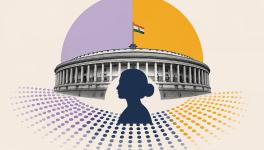
Image courtesy: The Leaflet
India will reach a significant constitutional milestone in 2026, when the long-standing freeze on delimitation—first imposed in 1976 and later extended in 2002—is set to end. The exercise that follows has the potential to fundamentally reshape political representation and test the balance of the country’s federal structure.
Delimitation is intended to align parliamentary representation with population. The current Lok Sabha has 543 elected members, a figure that has remained unchanged for decades despite India’s population rising from roughly 55 crore in 1971 to over 140 crore today. Discussions within policy and political circles suggest that the strength of the House could be expanded significantly, although no official number has yet been notified.
At one level, the principle is straightforward: a larger population should translate into greater representation. In practice, however, the implications are far more complex.
Population growth across India has been uneven. Northern states, such as Uttar Pradesh and Bihar have recorded significantly higher growth rates over the decades. In contrast, Southern states—Tamil Nadu, Kerala, Karnataka, Andhra Pradesh, and Telangana—have experienced relatively stable population trends, supported by sustained investments in healthcare, education, and social development.
Most analysts expect that any delimitation exercise based strictly on population will increase the share of seats for faster-growing states. Projections by policy observers indicate that the relative weight of the Northern states in Parliament could rise, while the proportional share of the Southern states may decline—even if their absolute number of seats increases.
In effect, some regions may gain in numbers but lose in influence.
This raises a deeper structural question: should representation be determined solely by population size, or should it also reflect governance outcomes, such as successful demographic stabilisation?
For the Southern states, the concern centres on political leverage. A reduction in proportional representation could affect their influence over fiscal allocations, national policymaking, and coalition dynamics. It also raises the broader issue of whether states that have effectively met national development goals might find themselves relatively disadvantaged in the political arena.
The 15th Finance Commission had flagged similar concerns in another context, cautioning that population-based criteria, if used in isolation, can create disincentives for states that have successfully controlled population growth. The upcoming delimitation exercise brings these concerns into the electoral domain.
Perception will play a critical role. A shift in parliamentary weight toward a cluster of larger states may be interpreted by some regions as a move toward centralisation. States like Uttar Pradesh already wield considerable influence in national politics, and any further increase in their relative share could reinforce such perceptions.
It is also important to note another institutional concern associated with the proposed delimitation framework. Critics argue that the exercise may effectively shift greater control over the delimitation process away from Parliament and toward the Union executive.
Since delimitation determines the drawing and redrawing of constituency boundaries, any perception of executive dominance over this process raises questions about institutional neutrality. In such a scenario, there are apprehensions that boundary demarcation could, even if indirectly, become vulnerable to political considerations, potentially opening space for gerrymandering or partisan advantage. This aspect, therefore, adds another layer to the debate on whether the redesign of India’s electoral map will remain strictly independent and impartial.
The debate is also shaped by its linkage with the women’s reservation framework, formally enacted through the Women’s Reservation Bill, which provides for 33% reservation for women in Parliament but ties its implementation to the completion of delimitation. This sequencing has raised questions about whether the two processes needed to be linked, or whether women’s representation could have been operationalised independently.
Historical context is essential. Prime Minister Indira Gandhi first froze delimitation in 1976 to encourage population control across states. Prime Minister Atal Bihari Vajpayee extended the freeze in 2002 with a similar rationale. The underlying intent was to ensure that states were not penalised for stabilising population growth.
That balance is now under review.
There is, as yet, no clarity on the final framework that will govern the 2026 exercise. However, experts broadly agree that the design of the process will be crucial. A purely population-driven approach may achieve numerical parity, but it could also trigger concerns about political equity and regional balance.
At the same time, delaying delimitation indefinitely is not a viable option. A representative democracy must periodically adjust to demographic realities to remain credible and functional.
The challenge, therefore, lies in balancing two competing principles: equal representation based on population, and equitable representation that sustains federal trust.
The delimitation exercise of 2026 will go beyond the technical task of redrawing constituency boundaries. It will shape how political power is distributed across regions for decades to come. The outcome will ultimately determine whether India can update its democratic framework while preserving the federal balance that underpins its unity and diversity.
The writer is a researcher in South Asian history, focusing on the socio-political and cultural history of Kashmir, with a special emphasis on minority religious communities, particularly the Ahmadiyya community. Shabeerhistory18@gmail.com
Get the latest reports & analysis with people's perspective on Protests, movements & deep analytical videos, discussions of the current affairs in your Telegram app. Subscribe to NewsClick's Telegram channel & get Real-Time updates on stories, as they get published on our website.