





Chickenpox Outbreak in Gaza Compounds Health Crisis
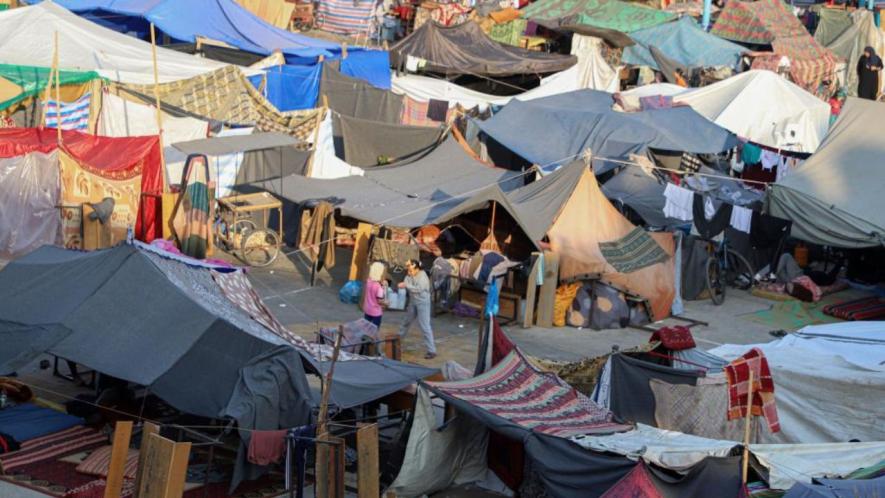
Refugees at a UNRWA shelter in Gaza. File Photo: Rizek Abdeljawad/Xinhua
A chickenpox outbreak has emerged as one of the latest consequences of Israel’s systematic attacks on Gaza’s infrastructure and obstruction of healthcare and hygiene supplies delivery.
Recent media reports indicate the number of infections might have reached 18,000 cases; by July 4, the United Nations recorded at least 9,300 suspected cases across 130 health points, with nearly half concentrated in Khan Younis.
Chickenpox, an infectious disease caused by the varicella-zoster virus, is highly contagious but typically resolves without complications under normal conditions.
However, in the context of the Gaza genocide, fears about consequences have been more pronounced. “Medical professionals have also warned that the current conditions may lead to serious complications from chickenpox, including pneumonia and encephalitis, complications that were previously considered relatively rare before the collapse of Gaza’s healthcare system,” Al Mezan Center for Human Rights stated.
The spread of the disease is compounded by displaced Palestinians’ life in overcrowded tents without adequate access to nutritious food, clean water, or hygiene essentials. Al Mezan emphasized that almost three years of Israeli attacks – leaving tons of uncleared rubble – have led to widespread infestations of insects, parasites, and rodents. The UN reported these pests in over 80% of displacement camps, representing another serious health risk.
In these conditions, patients infected with chickenpox, mostly children, cannot follow public health advice on isolation.
In conversation with Al Mezan, Gazan parents described how children diagnosed with the infection were forced to return to overcrowded tents shared with family members. “Later, the disease spread to her younger brother and her cousins because we all live in the same place, share the same bathroom and household items, and have no possibility of isolating her inside the tent,” a mother described her six-year-old daughter’s experience. “There is simply no separate space or alternative.”
This inability to isolate sick children can also increase exposure for adults who were previously uninfected, a group at higher risk for complications, particularly in the case of pregnant women and the elderly.
Chickenpox is not the only skin-related condition spreading in Gaza’s camps, where temperatures recently hit 40 degrees Celsius. “Continuous exposure to extreme heat and excessive perspiration, coupled with limited access to clean water and personal hygiene supplies, has led to increasing rates of skin diseases,” Al Mezan warned, “including rashes fungal and bacterial infections, while also heightening the risk of sunburn and heat related illnesses, particularly among children, older persons, and individuals living with chronic illnesses.”
“We are suffering tremendously because of the extreme heat,” a pregnant mother told Al Mezan Center. “There is no electricity and no clean water in the camp where we are displaced. We have no fans or batteries, and throughout the day we constantly fear for our children. We leave them without clothes or wash them with cold water in an attempt to protect them from the heat and disease.”
Palestinian health organisations and international networks continue calling for an end to Israeli attacks on Gaza’s health and civil infrastructure and the unimpeded delivery of essential supplies, including equipment for rubble clearance.
People’s Health Dispatch is a fortnightly bulletin published by the People’s Health Movement and Peoples Dispatch.
Courtesy: Breakthrough News
Get the latest reports & analysis with people's perspective on Protests, movements & deep analytical videos, discussions of the current affairs in your Telegram app. Subscribe to NewsClick's Telegram channel & get Real-Time updates on stories, as they get published on our website.