





Budget 2026-27: Why India Needs 'Great Fiscal Reversal'
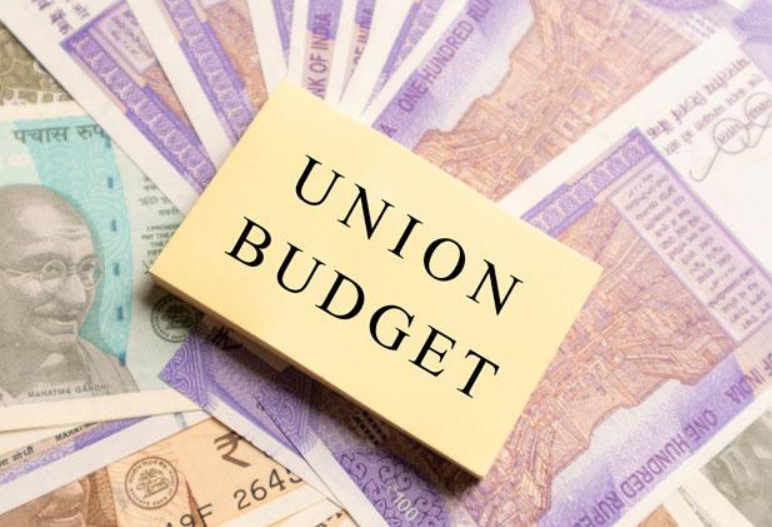
Last year, Finance Minister Nirmala Sitharaman presented the Union Budget 2025-26 against the clarion call of “Viksit Bharat”—a developed India by 2047. The rhetoric was one of ambition and global leadership. Yet, a cold analysis of macroeconomic data reveals not a breakthrough toward an upper-middle-income economy by 2032, but the consolidation of a narrow, exclusionary growth model. The 2025-26 Budget, rather than being a launchpad for a transformative decade, entrenched policies that prioritise fiscal consolidation and capital accumulation over human empowerment. As we approach Budget 2026-27, its lessons are not just cautionary; they are a blueprint for the profound fiscal reversal India desperately needs.
Human Capital Deficit: Austerity in Disguise
The most glaring failure of the last budget lies in its continued neglect of education and health. While nominal increases are announced with fanfare, their share of GDP (gross domestic product) —the true measure of priority—remains stagnant, betraying a profound lack of commitment to India’s greatest resource: its people.
In education, the allocation for school education represents a static 2.9% of GDP, unchanged from the previous year and hovering near the 2.8% level of 2014-15. This is half the 6% target pledged in the National Education Policy 2020. Higher education sees a similar story, failing to keep pace with the exploding demand for quality public institutions. We are attempting to build a knowledge economy on the foundation of a neglected public education system.
The health sector narrative is equally bleak. Total public health expenditure remains frozen at approximately 1.8% of GDP, ensuring India retains one of the world’s lowest public health spending rates. The expansion of Ayushman Bharat, while broadening coverage, reinforces an insurance-based model that funnels resources to private providers rather than strengthening the crumbling public hospital infrastructure essential for universal healthcare.
This neglect extends to rural livelihoods. The rebranding of the rural employment guarantee scheme MGNREGA to VB-GRAMG, coupled with a shift to a 60:40 Centre-state funding ratio from the earlier 90-100% Central share, is a fiscal sleight of hand. It transfers responsibility to resource-crunched states while undermining the Act's legal guarantee. An allocation of ₹86,000 crore against an estimated demand of over ₹1.1 lakh crore is not prudent budgeting; it is a policy designed to manage rural distress, not solve it, forcing in-year cuts and delaying wage payments by months.
Regressive Tax Architecture: Burdening Many, Sparing Few
The 2025-26 Budget confirmed and accelerated a deliberate “Great Fiscal Reversal”: a historic shift of the tax burden from capital to consumption and labour. The data is stark. Corporate tax as a share of gross tax revenue has declined from 34% in 2014-15 to a projected 26.5% in 2025-26. Meanwhile, the share of indirect taxes (goods and services tax and customs) has surged from 33% to 49.5% in the same period.
The GST, projected to grow by 12%, remains the largest revenue pillar. Its inherently regressive, multi-rate structure taxes items of mass consumption, disproportionately burdening the poor. While the budget offered minor tweaks for the salaried middle class, it systematically avoided taxing extreme wealth. The effective tax rate for the top 0.1%, with their income from capital gains and dividends, remains a fraction of that paid by a salaried professional. In a country with stark inequality, the absence of a wealth or inheritance tax is not an oversight; it is a policy choice that exacerbates disparity and fuels inflation.
Implementation Chasm: Promises vs. Delivery
The budget continues a tradition of over-promising and under-delivering. The Budget Estimates for key schemes are set knowing these are insufficient. The Agriculture Ministry’s allocation, in real terms, shows negative growth. This creates an inevitable cycle: either a significant mid-year hike is forced, or funds lapse and needs go unmet. Schemes, such as Special Assistance to States for Capital Investment come with heavy conditionalities, often leaving funds unutilised by states with lower capacity, thus perpetuating regional inequality.
The Finance Minister’s speech spoke of “ease of living,” but the expenditure preference tells another story. The skew toward capital expenditure on physical infrastructure (roads, ports) over social infrastructure (clinics, schools) is pronounced. While investment in concrete is needed, the chronic under-investment in human capabilities threatens to make that concrete sterile.
Budget Blueprint: From Consolidation to Transformation
The 2025-26 Budget was a missed opportunity. Budget 2026-27 must be the corrective. The vision of Viksit Bharat is impossible without a foundational shift in fiscal priorities. Here is a three-fold agenda for a great fiscal reversal:
1.Invest in Human Capital with Legislative Backing: Announce a mandatory five-year pathway to raise combined public spending on health and education to 8% of GDP. Fund this through progressive taxation, starting with a 2% annual tax on net wealth exceeding ₹100 crore. Estimates suggest this could generate ₹1-1.2 lakh crore annually, earmarked exclusively for public education and primary healthcare. This is not redistribution; it is an investment in national productivity and social stability.
2. Make Employment Guarantee a Foundation, Not a Relic: Restore MGNREGA as a cornerstone of rural revitalisation. Increase its allocation to at least ₹1.25 lakh crore, index wages to a credible rural inflation index, and integrate it with land, water, and afforestation missions to build permanent ecological and livelihood assets.
3. Enforce Fiscal Transparency and Accountability: Legislate a real-time public dashboard tracking Budget Estimates versus actual expenditure for the top 20 Central schemes. Empower an independent Fiscal Council to audit and report on this quarterly, closing the gap between announcement and delivery.
The lesson from the last Union Budget is clear. India cannot build a high-income country on the foundation of a lower-middle-income state—one marked by educational deficiency, precarious health, and cavernous inequality. Such a path does not lead to a developed nation, but to an unstable, unjust oligarchy.
Budget 2026-27 presents a choice. Will it be another chapter of regressive continuity, or will it dare to initiate the great fiscal reversal that places India’s citizens at the heart of its development story? The data, and the lived reality of millions, demand the latter. The time for correction is now.
The writer is Professor, Department of Economics, Dr. Bhim Rao Ambedkar College, University of Delhi. The views are personal.
Get the latest reports & analysis with people's perspective on Protests, movements & deep analytical videos, discussions of the current affairs in your Telegram app. Subscribe to NewsClick's Telegram channel & get Real-Time updates on stories, as they get published on our website.