





Bengal: SIR Leaves Behind Most Corrosive Legacy – of Distrust
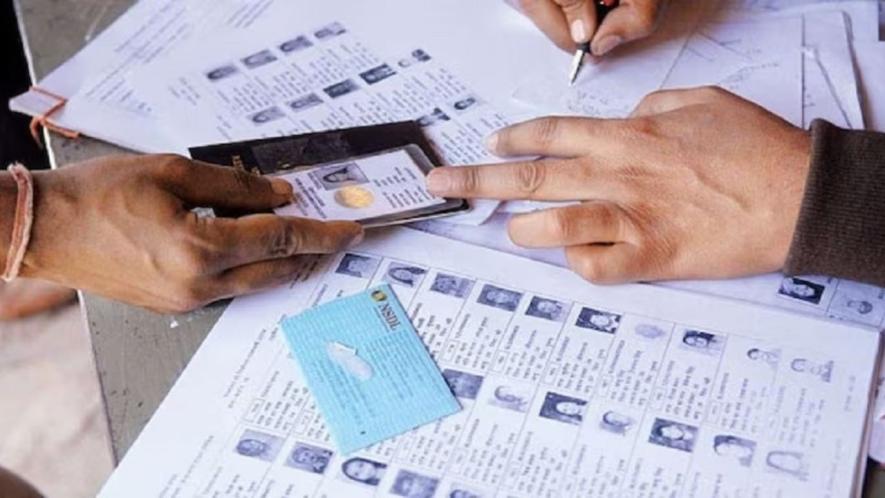
Image Courtesy: Sabrang India
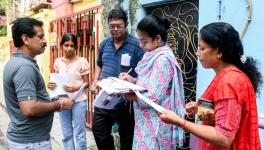
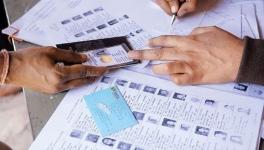
Kolkata: The Election Commission of India (ECI) has constitutional authority. Article 324 is unambiguous — the Commission has 'superintendence, direction and control' of the preparation of electoral rolls. The ECI did not break the law when it announced the Special Intensive Revision on October 27, 2025. It violated something less codified but no less important: the democratic compact between an institution and the citizens whose rights it exists to protect.
The SIR was rolled out in West Bengal — a state scheduled for elections in April–May 2026 — with a three-month window for what is, by any historical precedent, a two-to-three-year exercise. The previous intensive revision took place in 2002–2004. Between then and now, nearly two decades of demographic change accumulated — and the ECI chose to audit all of it, door-to-door, in 90 days, immediately before a high-stakes state election.
The ECI's stated rationale was the presence of 'illegal Bangladeshi immigrants' who had allegedly obtained voter ID cards through forged documents. That concern is legitimate in the abstract. But the manner of its execution — sudden, compressed, punishing of the poor and undocumented, applied exclusively to Opposition-governed states ahead of elections — exposed a troubling asymmetry between the stated purpose and operational reality.

The Human Cost
Before even a single name had been formally deleted, people were dying. Between October 28 and November 7 — in 10 days after the SIR announcement — at least 11 deaths were reported, which families and investigators attributed directly to the fear of disenfranchisement. The dead were not illegal immigrants. They were people who had lived, worked, paid taxes, and voted in Bengal for decades.
On October 28, Pradip Kar, 57, was found hanging in Panihati, North 24 Parganas — his suicide note blamed 'NRC' (National Register of Citizens). That same day, Kakoli Sarkar, 32, set herself on fire in Titagarh. In Chennai, Bimal Santra, a migrant worker from Bardhaman, fell ill and died allegedly consumed by anxiety. In Howrah, a sex worker reportedly hanged herself upon learning that her name did not appear in the 2002 list. In Egra, Sheikh Sirajuddin reportedly died of a heart attack after document discrepancies overwhelmed him.
The deaths cut across religion, caste, gender, and geography — united only by one cause: SIR.
The legacy linkage requirement — tracing names to the 2002 electoral roll — effectively functioned as a citizenship-by-paper test for communities whose migration histories are oral, informal, and document-poor. For the Matua community — Dalit Hindu refugees from East Pakistan and Bangladesh — this was an existential demand. The cruel irony: the deletions disproportionately punished the Bharatiya Janata Party’s (BJP)own base. The party that promised citizenship to refugees deployed an institution to strip those refugees of the franchise.
Why Now? Why Here? The Political Geometry of SIR
The most damning critique of SIR is not its content but its timing. Thirteen intensive electoral roll revisions have been conducted in India's post-Independence history. Not one was launched three months before a state election. Not one was conducted in a 90-day window. Not one was announced without multi-year preparation or publicly explained methodology.
Multiple Opposition parties — Trinamool Congress, Congress, Communist Party of India (Marxist), Samajwadi Party, Dravida Munnetra Kazhgham, Rashtriya Janata Dal— immediately alleged the exercise was designed to benefit BJP. If the 2002 legacy-linkage requirement disproportionately affects post-2002 migrants and documentation-poor communities, and those communities disproportionately vote TMC or Left, then the SIR effectively functions as targeted voter suppression — technically legal, operationally devastating.
The ECI's exclusion of Assam from Phase II — officially due to the ongoing NRC — drew particular scepticism. The NRC and SIR are distinct processes; neither precludes the other. ADR's documented findings of constituency redrawing in Assam suggested the exclusion was self-protective — shielding the EC's own prior actions from scrutiny.
Who Gains, Who Loses — BJP's Matua Miscalculation
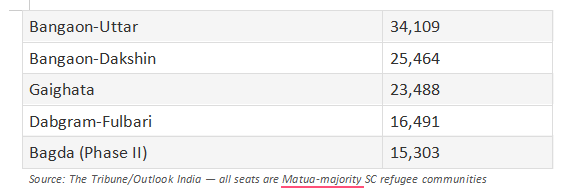
The SIR's political arithmetic has proven more complex than anticipated. The exercise was broadly expected to purge what BJP (the ruling party at the Centre) characterised as 'fake voters' inserted by TMC (the ruling party in West Bengal). But the deletions did not fall where BJP expected. The Matua community — 17% of Bengal's Scheduled Caste (SC) population, decisive in 50+ Assembly seats, largely BJP voters since 2019 — emerged as the most severely affected.
In Matua strongholds, the deletion rate reportedly reached 7.8% — double the state average of 3.8%. Analysts estimate that if even half of affected Matua voters are excluded, BJP could lose 10–15 seats in North Bengal alone. The irony is stark: the party that promised citizenship to refugees deployed an institution it effectively controls to strip those very refugees of the franchise.
When Umpire Picks a Side
The ECI was once ranked among the world's great electoral institutions. The appointment of Gyanesh Kumar as Chief Election Commissioner, following changes that removed the Chief Justice of India from the selection panel, marked a turning point in how the institution is perceived — and how it has acted.
The SIR has several disturbing tendencies: the use of a constitutionally sanctioned tool in a manner that systematically disadvantages Opposition-governed states; a timeline serving electoral rather than administrative purposes; inadequate preparation; no grievance infrastructure; and institutional aggression rather than democratic accountability. The Association of Democratic Reforms (ADR), a non-profit election watchdog, warned the Supreme Court explicitly: do not let the ECI use SIR as a mechanism to determine citizenship.
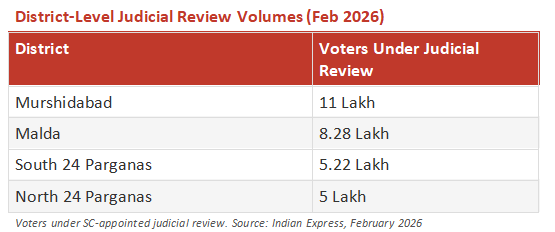
The Supreme Court intervened — ordering transparency, extending timelines, appointing judicial officers. But the intervention was reactive, not preventive. The deaths had already occurred. Panic had already swept through Matua villages. The damage — to democracy, to trust, and to individual lives — could not be undone by a January judicial order.
The SIR's most lasting damage may not be measured in deleted names. It may be measured in the hardest thing to rebuild once lost: the belief, held by ordinary people in ordinary villages, that the institution charged with protecting their vote is actually on their side. In Thakurnagar, people carry voter cards, Aadhaar cards, and ration cards — and still fear they will be rendered nobodies.
Get the latest reports & analysis with people's perspective on Protests, movements & deep analytical videos, discussions of the current affairs in your Telegram app. Subscribe to NewsClick's Telegram channel & get Real-Time updates on stories, as they get published on our website.