





Bengal is Not Being ‘Restored’. It’s Being Fought Over
There is a bigger idea behind every Assembly election in West Bengal. "Restoration" is the idea this time. It can be seen in speeches, interviews, and campaign messages all over the place. The word sounds calming, almost like it could fix something that was lost and can now be found. But the more you look at it, the more it starts to fall apart. Who is talking about getting Bengal back? And, more importantly, what will it be brought back to?
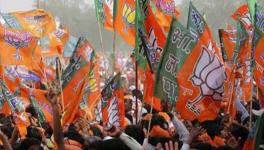
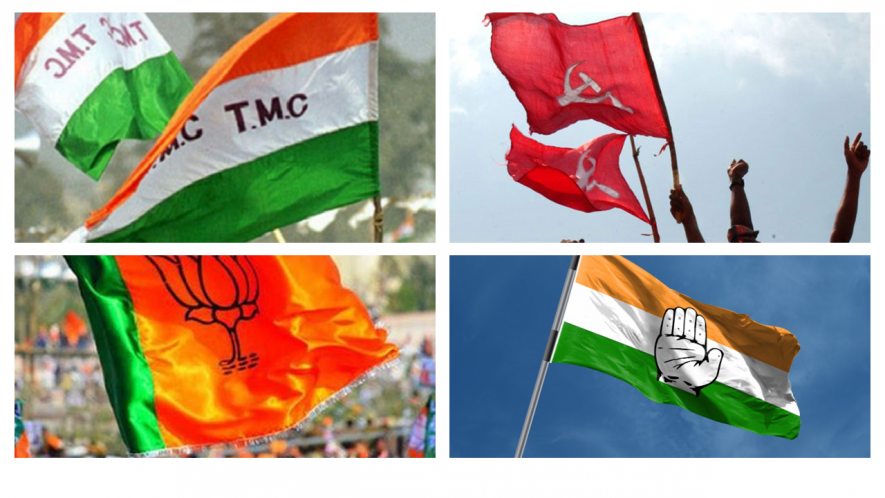
The answer depends a lot on who is talking. The Bharatiya Janata Party (BJP) says that "restoration" means a breakdown that happened over the past 10 years. The argument is well known: the rule of law has broken down, institutions have been weakened, and political competition has become too violent. In this story, Bengal is a state that has lost its balance in administration and needs to be brought back into line.
But there is still a lack of clarity in this story. The BJP doesn't often say which version of Bengal it wants to bring back. Is it talking about the past few years of the Left Front government, when institutions were more stable but the economy was stuck? Or is it suggesting something completely different, like how it runs things in other states? Politically, this lack of clarity is good, but it doesn't help with the idea of "restoration."
The ruling All India Trinamool Congress (TMC), which Mamata Banerjee leads, completely disagrees with the idea. From its point of view, there is nothing that needs to be fixed because nothing important has been lost. It shows the past 10 years as a time of growth in welfare, access, and the state's role in daily life instead.
This argument is based on plans that help people directly, such as cash transfers, subsidised services, or help for women. The TMC's political thesis is simple but strong: even though people don't like it, government is now clearer and more immediate than it used to be. For those who support it, the election is about keeping what they have won instead of fixing what has gone wrong.
The Left-Congress area, which is led by the Communist Party of India (Marxist), speaks in a quieter but historically important way. Its idea of restoration is based on memory, which includes land reforms, a government that isn't centralised, and a more programmatic way of doing politics. But this point of view has its own problems. A lot of the economic problems that people talk about a lot today, especially those having to do with industrial decline, started during the last years of the Left Front administration. Because of this, what is being given is not just a return, but a recalibration. This means that the previous model can be fixed and made useful again.
These three stories do not make up one debate. These take it apart. In Bengal, "restoration" can mean a lot of different things, and they often don't agree with each other.
And that's why the word works so well in politics. But there is something more basic going on behind these two stories. The way people talk about politics in Bengal is changing. For decades, the state's policies were based on class, land, labour, and redistribution. That language is still around, but it's not the most common one anymore.
Instead, identity has become a much more obvious part of the picture. The BJP's rise in Bengal is directly related to its efforts to change how people see themselves politically based on religion, which would create a bigger Hindu voter base that goes beyond traditional class lines. The TMC hasn't stopped using identity politics; instead, it has changed its focus to region, language, and a unique Bengali political identity.
The Left Front, on the other hand, still talks about class, even though that language doesn't affect political competition anymore. Younger voters, in particular, have a very clear choice. Not getting back to work or finding out who you are, but getting a job.
Bengal's industrial slowdown isn't new, but it's getting harder to ignore. Political parties keep saying that things will get better, but the roads are still unclear. Land is still a hot topic. Long-term perceived stability affects choices about where to invest. Changes to structures happen slowly, and sometimes even slower than elections allow.
In this environment, lofty political rhetoric seems far away. People may pay attention to debates about government or identity, but their decisions are often based on more practical things like access to programmes, local leadership, and the possibility of getting a job.
This is where Bengal's voters have always been different. It has shown that it can tell the difference between rhetoric and delivery and compare promises to reality. Campaigns may be based on big ideas, but results are often decided on a much more practical level.
This brings us back to the idea of restoration. Maybe the problem isn't that the word is unclear, but that it makes too many assumptions. It assumes that Bengal's history is a good place to start. It presupposes that decline is widely acknowledged. It presupposes that political trends can be easily reversed. None of these ideas are completely true.
Bengal has not moved in a straight line from order to chaos or from strength to weakness. It has changed, adapted, and rearranged itself many times over the years, each time with its own set of benefits and drawbacks. To talk about restoration is to make a much more complicated situation seem simple.
What is really going on in this election is less pretty but true. People are arguing about Bengal, not fixing it. At the same time, its institutions, identity, economic direction, and even how it runs its democracy, are all being questioned. The voter does not have to choose between going back or moving forward. It's a choice between different ideas about what the state is and what it should become. And this is a much harder choice than any word can say.
The writer is a columnist and climate researcher with experience in political analysis, ESG research, and energy policy. The views are personal.
Get the latest reports & analysis with people's perspective on Protests, movements & deep analytical videos, discussions of the current affairs in your Telegram app. Subscribe to NewsClick's Telegram channel & get Real-Time updates on stories, as they get published on our website.