





Bengal Burns: How Mamata Picked up Her Enemy’s Weapon & Got Burnt
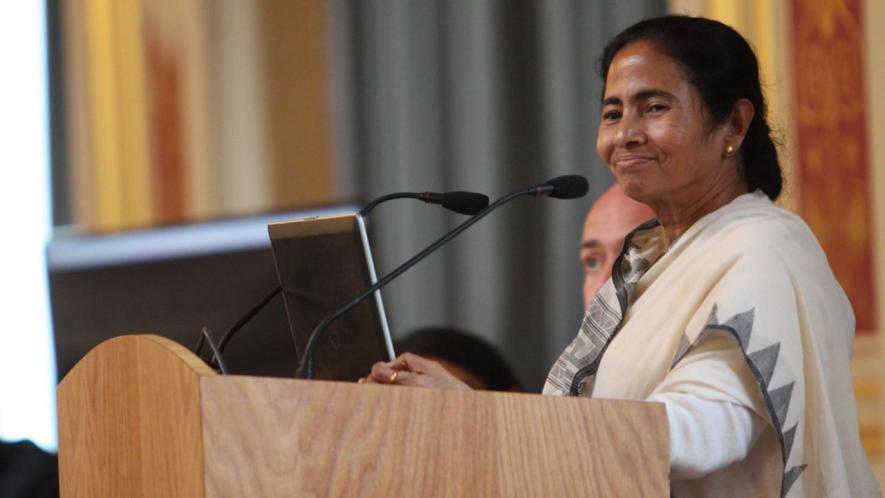
Image Courtesy: Flickr
Kolkata: The Assembly elections results in West Bengal are chilling. On the afternoon of May 4, as counting halls across the state processed ballot after ballot, a 15-year experiment in hatred-filled governance came to an end. The Bharatiya Janata Party (BJP), the electoral vehicle of Hindu majoritarian nationalism, won 206 of the state's 294 Assembly seats, reducing Mamata Banerjee's Trinamool Congress (TMC) to 79 seats, a historic rout that analysts are calling one of the most consequential collapses in Indian state politics.
For those who have watched with alarm as BJP dismantles India's federal, secular architecture state by state, the fall of Bengal is not merely an electoral outcome. It is a reckoning — and a deeply ironic one.
Before we indict BJP alone for this catastrophe, we must ask an uncomfortable question: who opened the door for it?
The Alliance That Should Never Have Been
In 1999, Mamata Banerjee joined the BJP-led National Democratic Alliance (NDA) government of Atal Bihari Vajpayee, becoming the Railways Minister, one of the most powerful portfolios in the Union cabinet. This was not a reluctant marriage of convenience. It was an enthusiastic embrace, and it achieved exactly what she needed: it drove out the Left Front from power in Bengal in 2011. But it also did something she never accounted for. It gave BJP its first serious foothold in Bengal's political imagination. Banerjee told voters, workers, and organisers across the state that the BJP was a legitimate partner — a party you could work with, share power with, be photographed with.
That legitimacy, gifted by Didi (as Mamata Banerjee is popularly called) herself, became the foundation on which the BJP quietly built its Bengal machine over the following two decades.
The Soft Hindutva Trap
When BJP's cultural offensive intensified after 2014, Banerjee's response was not to stand firm on secular principles. It was to compete. She progressively increased financial assistance to Durga Puja committees over the years, from Rs 10,000 per committee in 2018 to Rs 85,000 per committee in 2024, benefiting over 43,000 organisers at a state expenditure of more than Rs 365 crore.
The TMC leader introduced a 'Ganga Aarti' along the Hooghly river, announced Rs 1,500 crore in infrastructure projects for the Hindu pilgrimage site of Gangasagar, and personally performed religious rituals — including Chokkhu Daan on Durga idols — which she broadcast on social media to reaffirm her Hindu identity.
TMC cadres even co-opted and amplified the Tribeni Kumbh — an event whose "700-year-old tradition" had been debunked as largely fabricated by Hindutva groups — legitimising what had begun as a Sangh Parivar (Rashtriya Swayamsevak Sangh) project.
The strategic logic seemed sound: neutralise the BJP's Hindutva appeal by showing Bengal's Hindus that Didi, too, worshipped their gods. The outcome was a political catastrophe. By playing on BJP's turf, Banerjee did not neutralise the saffron agenda, she normalised it. She trained an entire electorate to evaluate their leaders through the lens of Hindu identity. And when the test came, voters chose the original over the imitation.
The Purge That Swung the Election
Rights activists and observers believe that the Special Intensive Revision (SIR) of electoral rolls disproportionately disenfranchised Muslims before the elections. The SIR removed around 9 million voters — nearly 12% of the electorate — with roughly 65% of those whose status remained undecided being Muslims. The BJP secured 2.88 crore votes compared with TMC's 2.56 crore — a difference of just 32 lakh votes. Had the disenfranchised voters participated, the outcome could have been different.
The Supreme Court did not restore the voting rights of millions affected, but directed the Election Commission to publish a list of those impacted.
"Once the question of whether 'I should be on the voter list' became the dominant question for vulnerable populations, it's not politics as usual," said Neelanjan Sircar of the Centre for Policy Research, who travelled across Bengal before the polls. "The level of polarisation that the voter revision caused is something that people outside the state do not really grasp," he added.
Paramilitary Forces and the ‘Theatre of Occupation’
The Narendra Modi government deployed 2,400 companies of paramilitary troops to West Bengal — a record for any provincial vote. The TMC and other Opposition parties argued that these forces were used to intimidate their workers rather than protect voters. When a Central government floods an Opposition-ruled state with its own security apparatus on the eve of a critical election, the line between election administration and federal coercion ceases to exist.
The BJP's groundwork in Bengal was laid nearly a decade ago by the RSS and the Modi–Shah (Union Home Minister Amit Shah) leadership, who after experimenting with electoral roll revision in Bihar deployed it in Bengal as a decisive strategy. This was a well-thought-out game — patient, methodical, and ultimately devastating.
What Bengal Loses
As counting trends became clear, reports of arson and attacks on TMC offices emerged from Tollygunge, Baruipur, Kamarhati, Baranagar, Baharampur, Howrah, and Kasba. The BJP denied involvement. The fires were real.
Bengal is the land of Rabindranath Tagore, of Ram Mohan Roy, of a syncretic humanist tradition that spent centuries weaving Hindu and Muslim culture into something irreducibly its own. In Murshidabad, where Muslims constitute over 66% of the population, BJP has surged from two seats in 2021 to nine this time. A district that was once a fortress of pluralism is now a BJP territory.
Mamata Banerjee is not the sole villain of this story — the architects of institutional voter suppression, communal mobilisation, and paramilitary intimidation hold that distinction. But she is its tragic protagonist: an agent who picked up her enemy's weapons, forgot her own, and lost everything. May 4, 2026 will be remembered as one of the most ill-fated days in India's electoral history.
Bengal, the land of the Renaissance is now under new Hindu majoritarian management. And those who helped pave this road must now reckon with where it leads.
Be Prepared to Fight BJP’s Anti-People Policies: CPI(M)
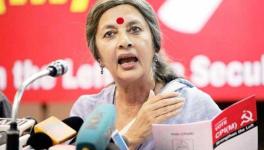
In a statement, Mohammed Salim, secretary, CPI(M) West Bengal, said the elections results of the West Bengal Legislative Assembly elections “make it clear that the people have voted against Trinamool's boundless corruption and authoritarian rule, “adding that “BJP has taken advantage of this anger.”
Salim also highlighted that in this election, crores of voters' names were deleted under the supervision of the Election Commission through the SIR process, various central agencies were misused, massive central forces were deployed, and the provocations of the Prime Minister and Central ministers created an atmosphere of fear.
“Alongside this, communal polarisation was promoted by both the Central and state ruling parties. BJP also exploited this opportunity,” he added.
The CPI(M) leader said a broader Left unity was forged, with Indian Secular Front as an ally, but “despite our sincere efforts, due to Congress not joining the alliance against Trinamool Congress, BJP managed to capture the space as an alternative.”
He said from the experience of the entire country, “we know that BJP is an autocratic and anti-democratic party. The people of this state must be prepared to fight against their anti-people and anti-democratic policies.”
After a long time, CPI(M) has one MLA will now be present in the State Legislative Assembly, he said, adding that the party was “committed to continuing the struggle both inside and outside the Assembly for the interests of the people.”
“We call upon political parties and the administration to ensure that no environment of political violence or unrest is created after the election, and that any attempt to use it for communal polarization is firmly countered. The rule of law in the state must be strictly maintained,” he added.
Get the latest reports & analysis with people's perspective on Protests, movements & deep analytical videos, discussions of the current affairs in your Telegram app. Subscribe to NewsClick's Telegram channel & get Real-Time updates on stories, as they get published on our website.