





Bengal: BJP Govt in a Soup Over New Industry Policy Promise
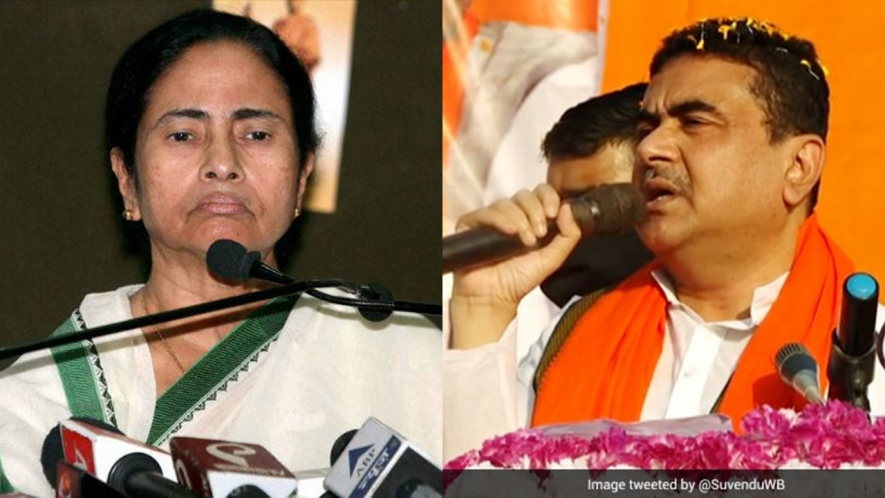
Kolkata: West Bengal’s first Bharatiya Janata Party (BJP) ministry, which stepped into its 101th day on August 17, and during which period Chief Minister Suvendu Adhikari and other top brass spoke number of times about a new industrial policy being in place “at the earliest”, is now trying hard to cope with loss of face.
Along with the assurance of an industrial policy at the earliest, the top functionaries made a related promise. Which is that the state’s first BJP ministry is certain of persuading Bombay House to commit sizeable fresh investment in West Bengal.
By implication the Chief Minister and his colleagues have been trying to convey to the public that they are determined to live down the Singur small car project failure engineered by Trinamool Congress Chief Minister Mamata Banerjee, and usher in a new phase of understanding and cooperation with the Tatas.
But, here too, recent developments in Bombay House culminating in the decision of Tata Sons chairman N Chandrasekaran to resign in September, will act as a dampener for the BJP ministry. A search committee to select a successor to Chandrasekaran has been set up by the Bombay House top brass, which is going to be a time-consuming affair, if past such exercises are any pointers.
Moreover, it won’t be easy for the Chief Minister to reach out to the ‘current Bombay House boss Noel Tata’, who also may hesitate to give a green signal to any big ticket investment proposal for West Bengal in the absence of a regular Tata Sons chairman. This is how knowledgeable quarters have assessed the situation (Noel is chairman of Tata Trusts and a member of the Tata Sons board).
Apart from chief minister Adhikari, those who have repeatedly spoken about the government putting in a place an industrial and land policy “very early” are industry minister Tapas Roy and BJP state president Shamik Bhattacharya. The latter, at times, has given the impression that he is and will be involved in policy-making and interestingly some industry associations acted smart in inviting Bhattacharya to their meetings for gracing the occasion as chief guest. There has, of course, been a halt to that process as the policy announcement has not materialised.
Finance minister Swapan Dasgupta, who is a senior journalist, has spoken on the subject once in a while, and in recent days Dasgupta has been conceding that “they had underestimated the complexity of the job” because of the mess left behind by the Mamata-led TMC regime which ruled the state for three terms.
The Opposition has not said a word against the finance minister’s comments, which may be seen as a tacit admission that industry affairs had been mismanaged by the TMC ministry, which began with Mamata Banerjee’s prolonged agitation against the Singur land acquisition which forced the Tatas to opt out of the 80% plus implemented car project for which Ratan Tata had chosen West Bengal at the specific request of then Left Front Chief Minister Buddhadeb Bhattacharya. This is despite the fact that several states, including industrially advanced ones, were in the queue for the project, which was to be the first of its kind in the country.
One glaring example of what Dasgupta mentioned is the quiet withdrawal of the incentive scheme for industries by the Mamata Banerjee regime. This was done by getting passed by the Assembly the Revocation of West Bengal Incentive Schemes and Obligations in the Nature of Grants and Incentives Act, 2025. The worst part of it was that incentive commitments were withdrawn retrospectively.
The revocation of the incentive scheme triggered litigation over outstanding industrial promotion assistance, capital subsidies, contractual state liabilities and power tariff remissions, leaving over Rs 20,000 crore in disputed or unresolved dues. The revocation has to be undone, and a fresh Act for providing incentives has to be in place as part of the new policy. The finance minister has made it clear that the government “may not be able to clear past dues at one go and we have to consider installments and in that the SMEs should have preference”.
Two points deserve mention in this context. First, neither Mamata Banerjee nor any of the TMC leaders still with her, has contradicted Dasgupta. Second, Banerjee was holding business conclaves with much fanfare and claiming each time “so many lakh crores worth of investment proposals had been received”.
The quiet revocation of the incentive scheme did not gel with her holding of business summits once a year on an average, industry sources told NewsClick. “Seniors in her ministry should have cautioned her against the revocation. But, then she was known for acting without consultations. The litigations proved industry’s displeasure”, they added.
Chief minister Adhikari, since his swearing-in on May 9, has been repeatedly saying that his ministry will prefer to acquire land directly from owners and hand over the same to entrepreneurs. He has managed to hand over more than 400 hectares land to the Border Security Force for fencing along the India-Bangladesh border. The Union Home Ministry’s repeated requests for land for fencing was ignored by Mamata Banerjee. The Home Ministry wanted Adhikari to accord the highest priority on assumption of office and he did precisely that.
However, it can argued that getting land for fencing the border and buying land for industries in logistically convenient locations is not the same thing. It’s a stark reality in West Bengal that availability of large, contiguous plots of land is a major bottleneck. The state has around 55.77 lakh hectares of cultivable land, as per data submitted by the Union Agriculture Ministry in Parliament earlier this month. However, fragmented, small landholdings and cropping intensity stand in the way of large-scale acquisition. This apart, there is the issue of density of population.
Significantly, NITI Aayog vice-chairman Ashok Lahiri, who was one of the BJP MLAs in the last Assembly, has expressed the view that large tracts of land are crucial for the state to attract large-scale and heavy industries. If necessary, the state must consider limited conversion of multi-crop farm land for industrial use. Lahiri thinks that conversion of even 1-2% of agricultural land for industrialisation can mean a significant boost to the state’s overall economic growh (Lahiri, an eminent economist, has already emerged as a key person for consultation for the BJP ministry, particularly the finance minister. He himself is counseling key state functionaries].
The possibility of pooling land, in vogue in some states, has also figured in official discussions. What is certain is that the state has to be specific about making available land in the new policy. It is also certain that in the proposed revival of incentive scheme, job creation is going to be the key criterion. The size of investment won’t matter in incentive entitlement.
Judging by the chief minister’s initial announcements, it appeared the state’s new policies would be in place latest by mid-July. Subsequently, ministers were emphatic about the announcement by mid-August. In the past one week, the finance minister has said that hopefully the inherited mess, the adverse impact of which could not be grasped, will be sorted out in the coming weeks and the policies will be part of public domain latest by September-end.
Perhaps, as a matter of caution, state industry minister Roy has gone on record at least twice in recent days saying that if not comprehensive announcements “we will at least come out with a framework approach”.
It is worthwhile to mention in this context that BJP’s euphoric phase is over and politically the going has become tough for the chief minister, who was an important member of the Mamata Banerjee ministry for a long time. The situation now is forcing him to pay attention to charges of involvement of BJP leaders in cases of extortion, corruption and incidents of violence. His personal involvement in industry promotion and land policies, therefore, seems doubtful at this stage.
The writer is a senior freelance journalist, based in Kolkata, West Bengal.
Get the latest reports & analysis with people's perspective on Protests, movements & deep analytical videos, discussions of the current affairs in your Telegram app. Subscribe to NewsClick's Telegram channel & get Real-Time updates on stories, as they get published on our website.