





Bengal: Acts Violated, Rules Flouted? Sebashray Project Raises Alarming Questions
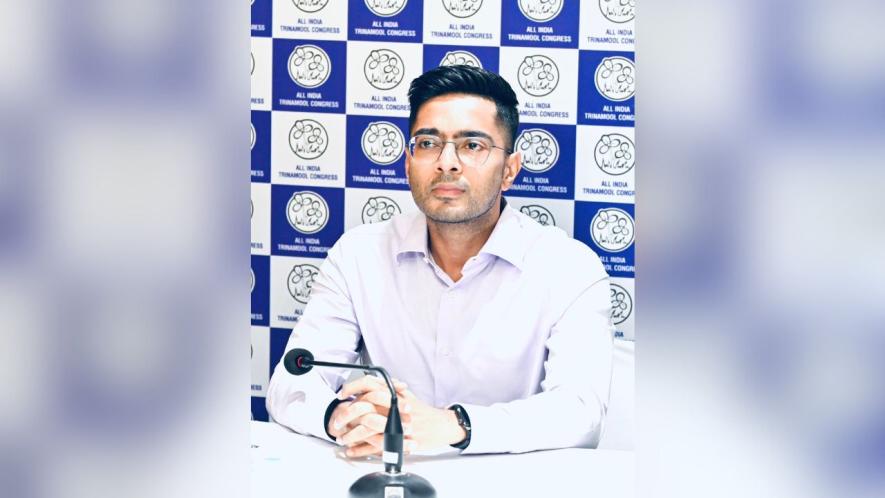
Image Courtesy: Twitter/@abhishekaitc
Kolkata: The flagship Sebashray project of Trinamool Congress MP Abhishek Banerjee, nephew of Chief Minister Mamata Banerjee, has come under scrutiny after RTI (right to information) activist and socio-legal researcher Biswanath Goswami demanded a criminal case against him for alleged violation of law and reckless medical practices in Diamond Harbour and beyond.
RTI Sparks Alarm
In a letter to the Health Secretary, Director of Health Services, the Chief Medical Officer of Health, and the Chief Secretary of West Bengal, Goswami alleged that ultra-sonography machines and other diagnostic equipment were illegally relocated and used in temporary and mobile medical camps under Sebashray. He alleged the practice was “random, reckless, and politically motivated,” accusing the organisers of exploiting the State machinery for “publicity and popularity seeking.”
“The identity and authority of the medical practitioners and technicians remain in question. Such illegal, irresponsible and reckless practice, showing political and administrative power over the law, is very serious and alarming,” Goswami wrote in the letter seen by NewsClick.
‘Contradictions’ in Healthcare Delivery
The activist contrasted the state-of-the-art facilities showcased at Sebashray camps with the dire state of government hospitals, where patients often wait months for basic tests like USG or ECHO. In many cases, he alleged that trainees conducted these tests “casually, producing erroneous reports that harm patients.”
Yet, in Sebashray camps, advanced equipment was deployed with the presence and endorsement of senior government officials and medical administrators. Goswami argued this not only undermined public healthcare infrastructure but also raised suspicions of vested interests and collusion.
Ganga Sagar Mela: A Comparison
Drawing parallels with the annual Ganga Sagar Mela, Goswami alleged that despite a budget of over ₹300 crore and deployment of nearly 933 medical staff, essential diagnostic tools like USG and ECHO machines remain absent. Pilgrims with chest or abdominal pain were examined without proper equipment and often advised emergency airlifting.
He questioned why private camps like Sebashray were allowed to use such machines “recklessly” while government-run facilities continued to lack these, calling it a gross violation of the PC & PNDT Act, 1994 (amended 2003).
Demand for FIR and Legal Action
Goswami urged the authorities to conduct a thorough investigation, cancel licenses, impose penalties, and lodge an FIR under the Bharatiya Nyaya Sanhita (BNS) against Abhishek Banerjee and other organisers. He also demanded accountability from medical units that supplied equipment and professionals who operated them in violation of law.
Official Silence and Denial
Attempts by Newsclick to reach the Director of Health Services, Dr. Swapan Soren, were unsuccessful, while CMOH Dr. Mukti Maity expressed no knowledge of any such use of USG machines in public camps. Officials noted that the Sebashray project had already concluded.
Camps Beyond Diamond Harbour
Reports suggest that similar camps were organised in Nandigram, East Medinipur, with the principal of Calcutta Medical College present. Media accounts claim that lakhs of patients were treated, with laboratory tests conducted through mobile facilities.
A Larger Pattern
The controversy around Sebashray exposes a troubling pattern: while public healthcare infrastructure remains starved of basic diagnostic tools, politically-backed private initiatives flaunt advanced facilities, often with the tacit presence of government officials. The allegations, if proven, point to systemic misuse of power, erosion of legal safeguards, and deepening inequities in healthcare delivery.
The Association of Health Service Doctors (AHSD), the largest body of government health practitioners, commenting on the issue, told Newsclick: "We have raised such questions earlier. The way the Sebashray project has been administered is grossly illegal. Government doctors without doing their duty are being attached with these projects. The main spirit of the PNDT Act is being violated.”
“The main issue was debarring the sexual determination of the foetus nature, this also can be violated,” Dr Utpal Banerjee, general secretary of AHSD, said.
The Sebashray controversy isn’t just about administrative irregularities or misuse of government doctors. It strikes at the very spirit of the PC & PNDT Act, 1994 (amended 2003), which was enacted to prevent the misuse of diagnostic technologies for sex determination of the foetus, he said.
AHSD said that by allowing ultra-sonography machines to be relocated and operated in temporary camps without proper oversight, the safeguards built into the Act were directly being undermined.
The PNDT framework requires strict registration of machines, regulated use by licensed practitioners, and mandatory record-keeping precisely to prevent clandestine sex determination. “When these machines are moved around recklessly, operated by questionable personnel, and used outside authorised facilities, the risk of illegal foetal sex determination becomes real,” it alleged.
What makes this even more alarming is the alleged involvement of the State i—government doctors being attached to these camps instead of fulfilling their duties in public hospitals, said AHSD, adding that this not only weakens accountability but also blurs the line between public service and political patronage.
The law was designed to protect vulnerable communities, especially women, from systemic discrimination and violence linked to sex-selective practices. If political projects bypass those protections, the consequences go far beyond administrative lapses—they strike at the very foundation of reproductive rights and gender justice, it said.
In investigative terms, the Sebashray project has raised three layered questions:
• Legal: Were the PNDT provisions on machine registration, authorised use, and reporting violated?
• Ethical: Did government doctors compromise their duty by lending legitimacy to camps that bypassed public healthcare systems?
• Political: Does the project represent a dangerous precedent where political patronage overrides statutory safeguards meant to protect women and ensure equitable healthcare?
Critics say this is why Goswami’s demand for an FIR isn’t just procedural—it’s about forcing accountability where the law was designed to prevent precisely this kind of alleged misuse.
Get the latest reports & analysis with people's perspective on Protests, movements & deep analytical videos, discussions of the current affairs in your Telegram app. Subscribe to NewsClick's Telegram channel & get Real-Time updates on stories, as they get published on our website.