






April 2027 Bank Reforms & Hidden Burdens: What Citizens Must Know
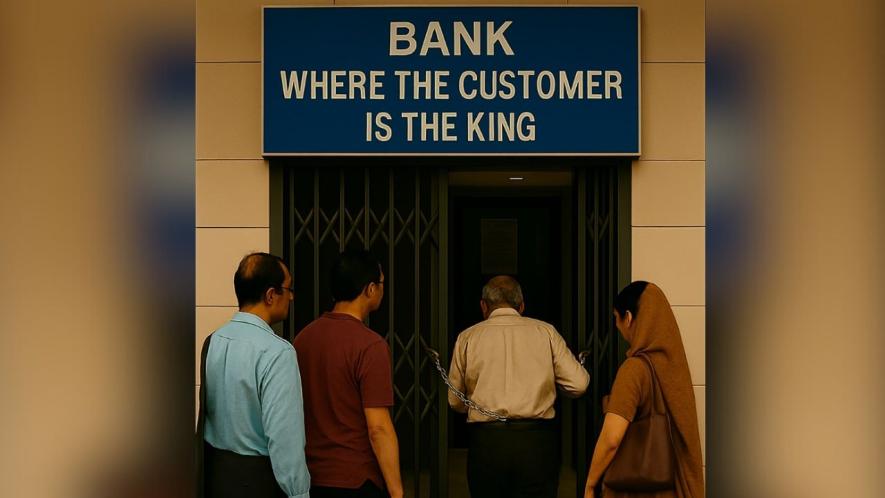
India’s banking sector is entering a decisive phase of reform. From April 2027, the Reserve Bank of India (RBI) will require banks to adopt the Expected Credit Loss (ECL) framework, replacing the current incurred loss model. This means provisions must be made in advance, based on the probability of default, rather than waiting for loans to turn non‑performing. A long runway has been offered until March 2031, but the financial impact on capital and profits is front‑loaded.
To prepare, public sector banks are already planning to raise capital buffers. The two main channels are equity issuance and Tier 1 bonds. These instruments are presented as strengthening stability and aligning with global standards. Yet, the essential fact is that this capital must be subscribed — directly or indirectly — by citizens. Whether through taxes, deposits, or investments, the public will underwrite the transition.
This article sets out these coming events clearly, beginning with how banks plan to raise capital to meet ECL requirements. Reforms are binding, the requirements are real, and the costs will be felt across the system. By enumerating them, the aim is to provide citizens with explicit knowledge, so they understand the implications before the burden arrives.
Mechanics of Capital Raising
The transition to the Expected Credit Loss framework is not only a regulatory adjustment; it is a financial restructuring that demands stronger capital buffers. Public sector banks, in particular, must raise fresh capital to absorb the higher provisioning requirements. Two principal channels are being used:
Equity Issuance: New equity issues dilute government shareholding and invite fresh subscription from investors. While presented as a move toward market discipline, the reality is that institutional investors, mutual funds, and government‑linked entities often step in — meaning household savings are indirectly channelled into stabilising banks.
Tier 1 Bonds: Additional Tier 1 (AT1) bonds are marketed as high‑yield instruments to attract investors willing to take risk. Yet past experience — notably the Yes Bank write‑down — shows that when stress arises, retail and institutional investors bear losses. This demonstrates how risk is transferred to the public, often without full awareness of the consequences.
Historical Pattern
India has seen repeated recapitalisations over the past decade, where taxpayer funds were injected into public sector banks to cover large corporate defaults. Each time, the narrative was one of strengthening stability. Each time, the burden was quietly shifted onto citizens. The current capital‑raising exercise follows the same pattern, only now under the banner of international compliance.
The Risk Make‑Over
The Expected Credit Loss (ECL) framework marks a structural shift in how banks recognise risk. Under the current incurred loss model, provisions are made only after a loan has defaulted. ECL requires banks to anticipate losses in advance, using probability‑based models. This fundamentally alters the economics of lending.
Stage‑Wise Provisioning
ECL divides assets into three stages, each with escalating requirements:
- Stage 1 (performing loans): 0.25–1.25% provision, even when loans are current.
- Stage 2 (heightened risk): 1.5–5% provision, covering loans that show early stress signals.
- Stage 3 (credit impaired): 25–100% provision, depending on aging and collateral.
Even performing loans now carry a cost, which translates into higher pricing for borrowers. This reduces flexibility for banks and compresses profitability.
Capital Impact
Rating agencies estimate that the transition could erode banks’ core equity capital (CET 1) — the strongest layer of shareholder funds and retained earnings — by 60–120 basis points. For public sector banks, this means a 3–9% erosion of net worth.
Case Illustration: Impact on Capital and Profitability
Consider a public sector bank with a net worth of ₹50,000 crore and a CET 1 ratio of 11%. A 100-basis point erosion reduces CET 1 to 10%, wiping out nearly ₹5,000 crore of capital. Similarly, a ₹10,000 crore portfolio of standard MSME loans would now require ₹100–125 crore in upfront provisions, even though the loans are current. These provisions directly reduce profitability and create a capital shortfall that must be replenished — typically through equity or Tier 1 bonds funded by household savings and taxpayer resources.
This immediate capital strain is only one side of the story. To understand the deeper implications, we must look at where systemic shocks have historically come from — and how ECL may reshape the treatment of different borrowers.
The Real Risk Pattern
History shows that large corporate loans have been the true source of systemic shocks, with write‑offs running into lakhs of crores and recapitalisations funded by taxpayers. Yet under ECL, banks will be required to provision more heavily for any loan that shows early stress — often including MSMEs, farmers, and retail borrowers. The irony is clear: while corporates have caused the biggest losses, the mechanics of ECL may result in tighter credit conditions for smaller borrowers, because banks will treat them as higher‑cost segments under the new rules.
Operational Burden
Beyond the financial impact, ECL requires banks to upgrade data systems, risk models, and governance frameworks. Independent audits, board‑level oversight, and highly detailed disclosures — meaning banks must report loan risks and provisions in much finer detail — will add compliance costs. For institutions already struggling with efficiency, this is a significant challenge. And ultimately, these compliance costs are passed on to customers through higher fees and spreads.
Hidden Costs and Citizen Impact
Behind the language of reform lies an imbalance in how losses are absorbed and narrated. Large corporate defaults, often running into lakhs of crores, are treated as technical adjustments. They are buried in balance sheets, quietly recapitalised, and rarely debated in public forums. The burden of these losses is shifted onto taxpayers, yet the issue passes without scrutiny. Corporates too fall under ECL, but their losses are absorbed silently, unlike the scrutiny faced by smaller borrowers.
This pattern was visible in recent years: public sector banks wrote off over ₹10 lakh crore of loans between FY2017 and FY2023, the bulk of which were large corporate exposures. These losses were recapitalised through repeated taxpayer‑funded infusions, yet they attracted little public debate. By contrast, small borrower defaults — whether by farmers, MSMEs, or retail customers — are politicized and moralized. Each waiver or restructuring is framed as a threat to repayment culture, while systemic failures at the corporate level are normalized as unavoidable shocks.
ECL may change when losses are booked, but it does not change who ultimately bears them — citizens remain the silent backstop for corporate failures.
This asymmetry creates hidden costs that extend beyond finance:
- Economic cost: Smaller borrowers face tighter credit conditions and higher pricing, even though corporates have historically been the greater source of systemic risk.
- Fiscal cost: Taxpayer resources are repeatedly diverted to restore capital after large corporate write‑offs.
- Moral cost: Citizens are made to carry the burden of discipline, while institutions and elites are shielded from accountability.
Asset Reconstruction Companies (ARCs) Paradox
Alongside taxpayer‑funded recapitalisations, banks have increasingly turned to selling written‑off loans to ARCs. While this may unlock short‑term profits, it often risks fire‑sale pricing and opaque recovery practices. The paradox is clear: forward‑looking provisioning under ECL is being funded by backward‑looking recoveries, recycling past losses rather than building resilience.
What is presented as reform for stability thus becomes a mechanism for redistributing risk silently onto the public. This imbalance is both financial and ethical, raising the larger question of whether reform can be trusted to distribute burdens fairly. That question leads us beyond balance sheets, into the realm of society and accountability.
Wider Institutional and Citizen Perspectives
While the ECL framework reshapes capital and provisioning, its implications extend beyond balance sheets. These perspectives highlight how reforms touch households, regulators, and institutions alike:
- Retail Credit Fragility: With personal loans surging, even secured housing loans may attract Stage 2 provisions if employment or real estate indicators weaken. This means ordinary households could face tighter credit and higher spreads, even when loans are current.
- Supervisory Challenge: RBI must ensure banks’ internal models do not understate risk through optimistic assumptions. Stage migration oversight is critical — delaying movement to Stage 2 to avoid provisioning hits would undermine reform integrity.
Food for Thought
Taken together, retail fragility, supervisory challenges, and the paradox of ARC recoveries show that reform is not only about provisioning discipline. Banking reforms are not just about rules and compliance; they decide who pays the price for keeping the system stable. Under measures like the ECL framework, capital raising, and repeated recapitalizations, stability is rebuilt — but the costs are passed on to ordinary people. The real issue is whether this burden is explained openly or quietly hidden in technical reports.
The true test of reform lies beyond balance sheets. It lies in whether citizens are given clear knowledge, whether those at the top are held accountable as much as discipline is demanded from borrowers at the bottom, and whether openness becomes the norm instead of the exception.
The ECL framework is presented as reform, aligning India with global standards. Yet for citizens, it must also be read as a wake‑up call — a reminder to remain vigilant about how banker profligacy, lending lapses, and frauds are silently redistributed onto the public. True resilience lies not only in provisioning discipline but in transparency, accountability, and fairness in how burdens are shared.
The writer is a CAIIB (Certified Associate of the Indian Institute of Banking and Finance), has 37 years of work experience in the private sector and in a nationalised bank, and is the ex-All India Deputy General Secretary of the All India Bank Officers’ Confederation.
Get the latest reports & analysis with people's perspective on Protests, movements & deep analytical videos, discussions of the current affairs in your Telegram app. Subscribe to NewsClick's Telegram channel & get Real-Time updates on stories, as they get published on our website.