





Ambedkar Birth Anniversary: Whither Annihilation of Caste?
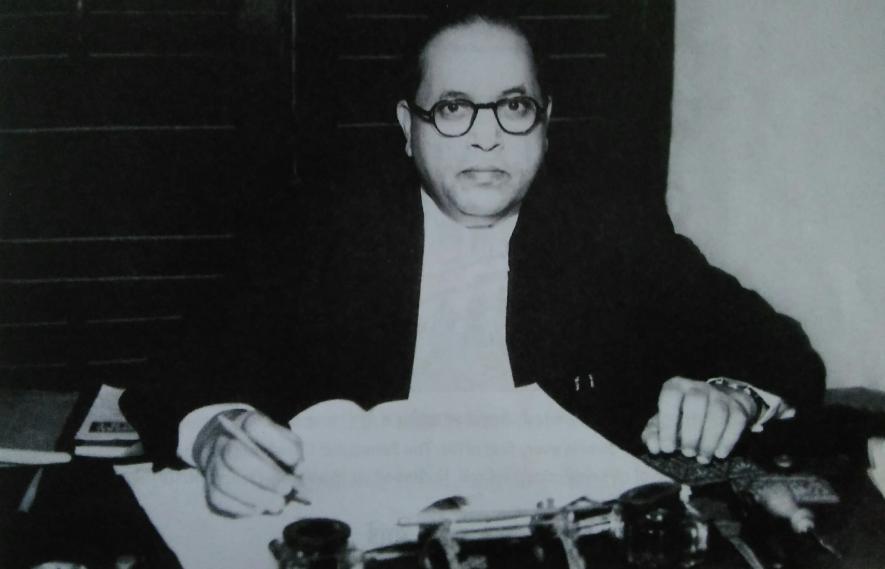
Dr Babasaheb Ambedkar. Image Courtesy: Wikimedia Commons
As we prepare to celebrate Babasaheb Ambedkar’s birth anniversary on April 14, 2026, it is also time to think as to what is the status of his major teaching about ‘annihilation of caste’. Caste-Varna system has been central to the practices of Hindu society, even before the term Hindu started being used. Our Holy scriptures did mandate strict Varna-Jati rules, starting from Vedas to Manusmriti and many other scriptures, respected here.
Lord Gautam Buddha was the first major voice against this system. This was called a ‘revolution by Babasaheb. Following this starting from Pushyamitra Shung, Buddhism was opposed along with the values it preached. This period called counter-revolution led to the restoration of caste-varna in an aggressive way. Buddhism was wiped out from India, while it did flourish in many South and East Asian countries.
The next major opposition to caste was from the saints of the genre of Kabir, Raidas, Dadu and the likes of them. These saints upheld humanism in contrast to rituals and primacy of priestly class and talked of equality in the society. Their articulation was very powerful but they met strong opposition from the priestly class in alliance with the feudal lords, the major beneficiaries of the caste system.
During the British colonial period, despite all the fallacies, the opposition to this inhuman system started coming up with a modern education system. The articulation of equality in modern times begins with Jyotirao Phule who took on the prevailing opposition to education for the low caste and succeeded in initiating putting forward the education and equal status for Dalit-OBC (Other Backward Classes). This got a boost from modern industrialisation and the struggle for society with equality got rooted here.
The education for women initiated by Jyotirao and Savitribai Phule was the ideal foil to the struggle against the rigidities of the system which saw women as subordinate to men. Fatima Sheikh stood rock solid with Savitribai to promote this process. The major leap in this march towards this process of striving for social justice came from Babasaheb Ambedkar, such as the movements for public drinking water (Chavdar Talav) and temple entry (Kalaram Mandir). His opposition to the religious sanction of caste was in the form of burning of Manusmriti.
Periyar Ramasamy Naicker’s movement for self-respect was a powerful one to shake the conscience of the society. All these efforts ran parallel to the freedom movement led by Mahatma Gandhi, culminating in the process of discussions in the Constituent Assembly for Indian Constitution.
Ambedkar becoming Chairman of the Drafting Committee of the Constitution was not just symbolic, it reflected the core role of this great leader for values of equality.
The seeds of opposition to this process of social change toward equality were present in the society. They were reflected first in the Hindu Mahasabha and then in Rashtriya Swayamsevak Sangh or RSS.
The Dalit-OBC movement was the major step that shook the rooted hierarchy of caste and gender -- the core of RSS ideology. RSS came up in opposition to the Dalits striving for equality in society, it found an external enemy, the Muslims, to consolidate its power in a gradual manner. Manusmriti was its central core and opposition to Islam and Muslims was the cover for its growth. It kept consolidating itself through its training module being reached to young boys who became pracharaks (full time workers and celibate) and swayamsevaks (volunteers).
While the Constitution did provide for reservation for the Scheduled Castes and Scheduled Tribes, the subtle propaganda against it continued through word of mouth. This culminated in anti-Dalit violence in 1980 and anti-OBC violence in 1985, both around Ahmedabad.
The implementation of the Mandal Commission recommendations (27% reservations for OBCs in jobs and education) supplemented the journey toward social justice. The Hindu nationalists responded through strengthening their kamandal, the Ram Temple, the Holy cow and “love jihad” in particular to distract from the process of opposition to Mandal. Organisations like Youth for Equality supplemented the opposition to Mandal.
This process of affirmative action was not accepted by the entrenched elements as the land reform process remained incomplete and the clergy and landlords kept changing their form, they did not disappear. To dilute the process of caste-based reservations, they did bring in economic criterion for the same. The reserved posts in academia went unfilled by the biased selection committees stating, ‘no suitable candidate found’. With the rise of Hindu Nationalist ideology and thinking, newer and newer elements are cropping in to halt to the march toward social justice.
There was opposition to the long-pending demand for a caste census. It has been accepted now and with its results, we will know about the status of various castes and their plight.
Another issue has been operating at a subtle level. This is the humiliation of SCs/STs in educational institutions in particular and in society in general. This subtle insults to the deprived sections of society have manifested in increasing number of suicides of Dalit/ST candidates. The institutional murder of a Dalit student Rohith Vemula had shaken a large number of people with humane values. A Dalit boy wanting to be a science writer was subjected to the worse type of treatment in Hyderabad Central University, leading to his suicide. A Rohith Act was formulated but remains unimplemented.
The case of Dr Payal Tadvi in Nair Hospital in Mumbai shook us as she was subjected to humiliation by some of her superiors on a regular basis, forcing her to take her life. Darshan Solanki in Mumbai IIT was mocked by other students on various occasions, again leading taking his life. These are just a few examples; there are dime a dozen such cases.
In this light, the University Grants Commission (Promotion of Equity in Higher Education Institutions) Regulations, 2026, were notified on January 13, 2026. It mandated strict anti-discrimination measures in all Indian universities. This was to ensure equality, targeting caste, gender, and disability discrimination. Its key mandates include establishing Equal Opportunity Centres (EOC), Equity Committees, 24/7 helplines, and appointing Equity Ambassadors. There was a massive opposition to this, massive protests were held and the matter was taken to the court, which struck down UGC’s mandate.
Today, when we remember Ambedkar, we need to be aware that the major and subtle opposition to the process of the march toward social equality comes from the well-entrenched RSS, which is spreading its retrograde agenda through multiple mechanisms. While RSS’s anti-Muslim agenda is more than visible, its anti-Dalit agenda is much more subtle and needs to be countered for the dream of “annihilation of caste.”
The writer is a human rights activist, who taught at IIT Bombay. The views are personal.
Get the latest reports & analysis with people's perspective on Protests, movements & deep analytical videos, discussions of the current affairs in your Telegram app. Subscribe to NewsClick's Telegram channel & get Real-Time updates on stories, as they get published on our website.