





78th Martyrdom Day of Father of Nation
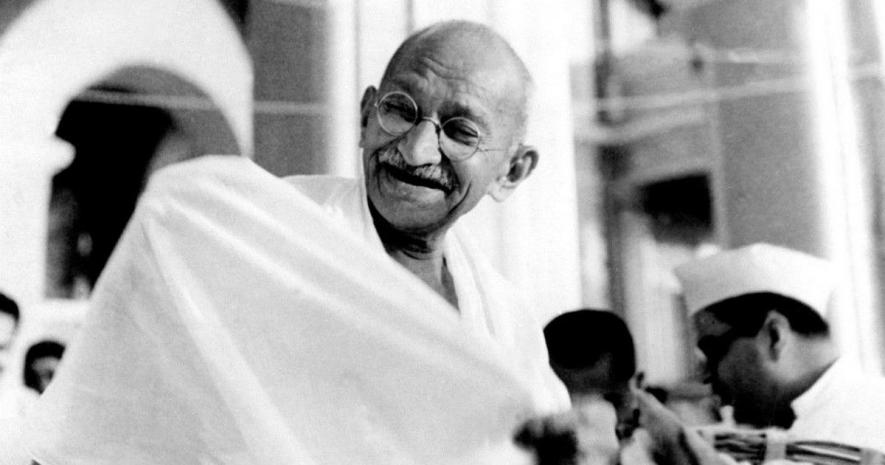
Image Courtesy: Wikimedia Commons
As we mourn on this martyrdom day of Mahatma Gandhi on January 30, we also realise that his values are being undermined blatantly. The propaganda by communal forces is intensifying by the day as social divisiveness is on the rise.
Hindu-Muslim Unity was the central credo of Gandhi’s life. This mission of the colossus is a major victim of contemporary dominant politics. We recall that the person who put three bullets into his chest was steeped in the ideology of Hindu Nationalism, Hindutva. This ideology was totally opposed to the values of the national movement, which had embraced the values of Liberty, Equality and Fraternity.
The communal forces, which were calling for a Muslim Nation, did get deflated after the formation of Pakistan, and the Hindu communal forces started gradually strengthening themselves. These forces did not have social respectability till they joined the Jayprakash Narayan Movement (JP) and came back to the political social space in a stronger way.
Since Gandhiji had an impeccable global image, even the RSS-BJP (Rashtriya Swayamsevak Sangh- Bharatiya Janata Party) had to make a show of respecting him. But that was a show. In the mechanisms developed by them through their shakhas (branches) and other platforms, they began to put lot of blame on Gandhi for making Hindu community defenceless, promoting Muslims at the cost of interests of Hindus, for not saving Bhagat Singh’s life, for ignoring the tall freedom fighter Subhash Chandra Bose and nominating Jawaharlal Nehru as his successor instead of more capable Sardar Patel, as the Prime Minister of India.
In most of this word-of-mouth propaganda initially, and later through different mechanisms, the RSS-BJP have achieved quite a success in creating a ‘social common sense’ against Gandhi, while at the same time glorifying his murderer, Nathuram Godse. There have been recreations of the murder scene of Gandhi, showing how deep hatred has been created against him. Plays and films glorifying Godse at the cost of Gandhi flourish.
Most of the propaganda against Gandhi is a construct of Hindutva forces, to give themselves legitimacy and to oppose the values of our freedom movement, which did get reflected in the Indian Constitution.
In 1919, the global movement of Muslims for restoration of Khilafat in Türkiye was a great opportunity to ensure the incorporation of Indian Muslims into the anti-colonial struggle. Gandhi did seize it with both hands and ensured the broadening of the struggle in a very effective way. The parallel Non-Cooperation Movement was the first major mass movement against the British. We had already seen the mass uprising opposing the Partition of Bengal. The breadth of the Non-Cooperation Movement was unimaginable, but unfortunately due to the Chauri Chaura incident, it had to be suspended.
The Dandi Salt March movement began from March 1930 and initiated the Civil Disobedience Movement. While the Salt March ended in April the same year, the Civil Disobedience Movement lasted till 1934. Meanwhile, as Bhagat Singh, Sukhdev and Rajguru were facing death sentence, the falsehood spread was that Gandhi could have prevented their hanging. Interestingly, those who spread this falsehood, did not raise even their little finger to support the revolutionaries. Gandhi wrote twice to Lord Irwin to commute their death sentence. He also brought in the discussions with Irwin, who was the Viceroy. Irwin considered it but was overruled by the British government as the British officers in Punjab threatened to resign if the death sentence of the revolutionaries was suspended or commuted.
Distinguished historian V. N. Datta also reached the conclusion that "from the extracts of Gandhi - Irwin correspondence and also contemporary evidence, it is clear that Gandhi was deeply interested in saving Bhagat Singh's life, and was constant in his appeals to Irwin not to hang him." According to Datta, in order to understand Gandhi's role, "we have to relate his negotiations with the Viceroy to the political climate of the times, the pressure of public opinion, the role of the Viceroy, and the working of British bureaucracy, and Imperial system in India and England".
The other major myth being spread is that Gandhi ignored the efforts of Netaji Subhash Chandra Bose. As a matter of fact, Bose left the Congress, with full dignity, due to the difference in approach to the anti-British struggle. While the majority of Congress party opted for launching an agitation against the British government, Netaji wanted to ally with the Axis powers -- Japan and Germany -- to take on the British powers. Hindutva forces were helping the British war efforts and efforts against Netaji by helping them in recruitment in the army, which countered Netaji’s Azad Hind Fauj (AHF).
Despite the differences, Netaji and Gandhi shared the highest respect for each other. While Netaji called Gandhi the ‘Father of the Nation’, Gandhi called Bose a ‘Prince Amongst the Patriots’. And in one of the meetings, Gandhi told Netaji that he fully disagreed with his path but if that gives India freedom, he will be the first one to congratulate him. Netaji also named the first battalion of AHF as Gandhi Battalion. It was Congress which, after the war, formed a committee in defence of the prisoners of AHF. Its prominent leaders, Bhulabhai Deasi, Kailashnath Katju and Nehru fought legal battles for the AHF prisoners.
As far as the inheritors of Gandhi are concerned, Gandhi said in the early 1940s that neither Rajaji nor Patel “will be my successors”. It will be Jawaharlal Nehru. In a practical sense, Nehru was the major architect of elections in 1937 and 1946. Patel stated that Nehru has put in unimaginable energy in these elections to ensure Congress victory. As the President of Congress was being elected in 1946, after Maulana Azad’s presidentship, Gandhi had asked Patel to withdraw his nomination for the race. Patel, as a Gandhi loyalist and long-time associate of Nehru, held no grudges about it and worked with Nehru as a Congressman all his life. They did have differences, but these were sorted out in personal meetings or Cabinet meetings. Patel went on to say that Nehru was his younger brother and his leader.
Gandhi had a unique mandate and grasp of the nation. He did know that Nehru was the most popular among the people after him. And also, that Nehru was very popular among the youth.
Gandhi, the tallest leader of the century, was unique in understanding our country. Today, the communal forces are playing games with popular perceptions in directly blaming Nehru for every failure on one hand, and on the other, subtle efforts to undermine Gandhi are on.
(Grateful to Kapil Sibal, Prof Purushottam Agarwal and Prof Mridula Mukherjee for a discussion on the topic, however, lapses, if any, are mine)
The writer is a human rights activist, who taught at IIT Bombay. The views are personal.
Get the latest reports & analysis with people's perspective on Protests, movements & deep analytical videos, discussions of the current affairs in your Telegram app. Subscribe to NewsClick's Telegram channel & get Real-Time updates on stories, as they get published on our website.