





‘You Quote, We Pay’ Isn’t Working: Why India’s Doctor Shortage Runs Deeper Than Salaries
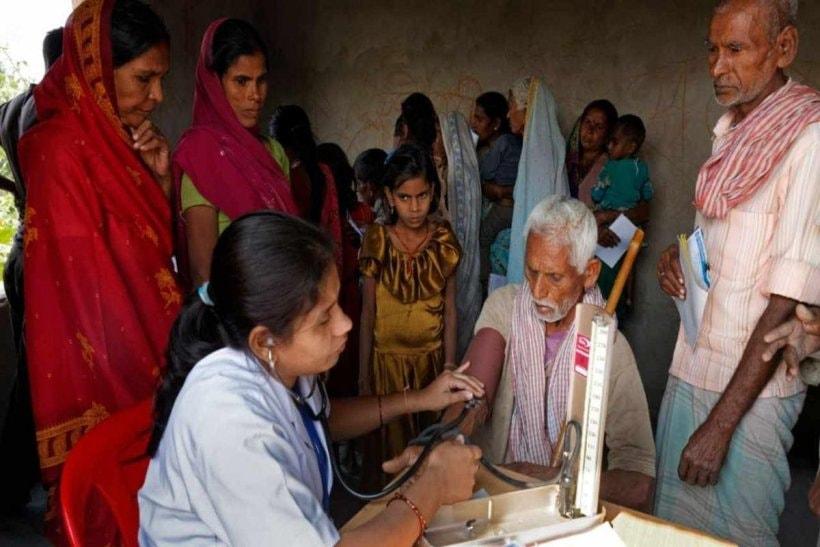
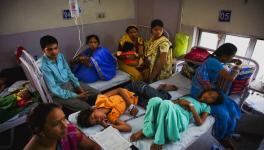
Free health check up being done at a village under National Rural Health Mission (2013) programme. Representational Image. Image Courtesy: Facebook(NRHM)
New Delhi: The Union government’s “You Quote, We Pay” scheme was meant to be the ultimate fix for public healthcare staffing. Along with flexible pay, the offer included hard-area allowances, post-graduate incentives, and other non-monetary benefits. Yet, the outcome has been sobering.
Despite these assurances, some of the country’s most prestigious Central government hospitals, located in the heart of the national capital, continue to face acute manpower shortages. The Ministry of Health and Family Welfare recently informed the Rajya Sabha that more than 1,500 sanctioned posts for doctors, nurses, and paramedical staff remain vacant across Central government hospitals in Delhi.
At Vardhman Mahavir Medical College and Safdarjung Hospital, nearly 19% of doctor positions are unfilled. The situation is more dire at Lady Hardinge Medical College and its affiliated hospitals, where around 40% of authorised paramedical posts remain vacant. Even Dr Ram Manohar Lohia Hospital, often associated with treating VIPs, including senior policymakers, has over 350 unfilled vacancies.
The figures have punctured the long-held perception that Delhi’s so-called “VIP hospitals” are immune to staffing crises.
In a written reply to Parliament, Union Minister of State for Health and Family Welfare, Prataprao Jadhav, acknowledged that Central government hospitals continue to face “significant vacancies” despite existing incentive mechanisms. The data has forced policymakers to confront an uncomfortable reality: the healthcare manpower crisis is no longer just about money or infrastructure—it is about people and systems.
More Than Buildings and Budgets
Dr Abhijit Neog, COO of Arya Hospital in Guwahati and Anti-Quackery & Vigilance Officer of the Assam Council of Medical Registration, argues that the assumption underlying schemes like “You Quote, We Pay” is fundamentally flawed.
“The idea that India’s healthcare manpower crisis can be solved by simply offering doctors higher salaries is not just naïve—it is dangerous,” he told this writer. “It allows the system to pretend it has done its job, while the real failures remain untouched. Money matters, yes—but money is not the solution. Peace of mind is. Systems are. Support is,” he added.
Rejecting the narrative that doctors avoid public or rural postings out of greed, Neog said the real issue was structural abandonment. According to him, doctors are being asked to function “bare-handed in a battlefield”.
At the level of Primary Health Centres (PHCs) and Community Health Centres (CHCs), Neog said young doctors were often posted without the most basic support systems. “If a lab technician goes on leave, the lab shuts down. If a radiographer is absent, even an emergency X-ray becomes impossible,” he said, describing the situation as “institutional negligence, not medicine.”
While governments have invested heavily in physical infrastructure, Neog pointed to a critical gap.
“The State builds buildings. It buys machines. It inaugurates facilities,” he said, adding “but it does not staff them. It does not maintain them. And it certainly does not protect the people who work inside them.”
In such an environment, appeals on patriotism and public service ring hollow. Asking doctors to “serve the nation” without ensuring safety and functional systems, Neog said, amounted to moral pressure rather than sound policy.
Missing Social Infrastructure
Beyond hospitals and equipment, Neog emphasised the neglect of social infrastructure. While road connectivity has improved in many rural and semi-urban regions, questions of housing, schooling, personal security, and dignity at work remain unresolved.
“Where does the doctor live? Are there safe residences? Are there schools for their children?” he asked, noting that these concerns are routinely dismissed as luxuries when they are, in fact, prerequisites for long-term service.
Referral failures further compound the problem. “An ambulance without trained accompanying staff is useless. A referral without transport money is a joke,” Neog said, warning that doctors are left dangerously exposed when complications arise. Violence against doctors, he added, was not accidental but a predictable outcome of a system that isolates frontline professionals.
Delhi as a Warning Sign
The vacancy figures from Delhi have broader implications. If specialists are unwilling to join well-equipped institutions in the national capital despite financial incentives, Neog said, the situation in remote regions was likely far worse.
The contrast, he noted, was stark. “India’s irony is that our tertiary care is world-class—often comparable to the best in the US or Europe. But our primary and secondary care, where most patients actually enter the system, is structurally weak.”
As a result, tertiary hospitals are flooded with cases that should have been managed earlier, overwhelming facilities and delaying care. The system collapses upward, and rural patients suffer first.
Abandonment, Not Aversion
“Doctors are not afraid of hard work,” Neog said, adding “They are afraid of being abandoned by the system.”
He argued that holding doctors accountable without providing tools, staff, or safety was not governance but abdication. Drawing parallels with uniformed services posted in difficult terrains, he said doctors in rural India were also frontline workers, yet they get little beyond symbolic praise during crises.
Recognition, institutional respect, and stability, he stressed, were as important as pay.
“Until we fix manpower planning, ensure backup staffing, create functional referral chains, and guarantee social and workplace security, no amount of money will bring doctors to rural postings,” Neog said.
And until that happens, the doctor warned, it was the rural population that would continue to bear the brunt—left to quacks, delayed care, preventable deaths, and a healthcare system that promises access but delivers excuses.
“High pay without systemic reform is not a solution,” he said, adding that “It is a distraction.”
The writer is a Delhi-based freelancer who writes on health issues and medical discoveries.
Get the latest reports & analysis with people's perspective on Protests, movements & deep analytical videos, discussions of the current affairs in your Telegram app. Subscribe to NewsClick's Telegram channel & get Real-Time updates on stories, as they get published on our website.