





Why Worker Wages Fell 9% While Pvt Sector Profits Grew 4-Fold
File Image
Since 2008, when the then Manmohan Singh government leading the United Progressive Alliance was in power, the value of the rupee vis-a-vis the dollar has consistently been falling. The most basic reason for this is that India consistently imports more goods in terms of valuation than it exports. These primarily constitute, petroleum, gold, precious stones, electronics, machinery and chemicals. To finance these purchases, India converts rupees into dollars. This is because the dollar is recognised as the global reserve and settlement currency, meaning all central banks store dollars to be able to finance transactions between any two countries.
India’s primary partners for these imports are China, from whom the country purchases electronics, machinery and pharmaceutical agents, the US, from whom LPG, oil, machinery and defence equipment is imported, the UAE from whom gold and oil are purchased, and finally Saudi Arabia, Russia and Iraq, from whom we purchase oil.
On the face of it, you may think that a depreciating rupee vis-a-vis the dollar would diminish the competitiveness of Indian exports, however, counter-intuitively it makes them more competitive. This is because a T-shirt sold in the US market that has been made and exported by India would require fewer dollars to purchase. This same mechanism would make US goods less competitive in the Indian market because it would take more rupees to buy them.
At present, to take just one of the commodities that has been mentioned above, say, petroleum, India is highly reliant on import for its transportation industry. As much as 87% of petroleum used in India is imported from other countries, namely, Russia, Saudi Arabia, Iraq and the US, in that order in terms of volume.
While it may be favourable for exports, or trade from India to other countries, to have a devalued rupee vis-a-vis the dollar, within the country, a depreciating rupee means that the purchasing power of the currency in terms of the commodities or services it can buy is diminished. It also means that imports into the country are more expensive because more rupees have to be spent to buy a more valuable dollar, to purchase the same commodity. The only exceptions to this are the limited cases of trade with Russia, the UAE and some SAARC countries.
One may think that a depreciating rupee would mean that the purchasing power of the average Indian customer would have gone down, however, there is a significant factor that is holding this up, and that is the fall in the Consumer Food Price Index, which has, year-on-year measured in October, seen a decline of just over 5%.
So, falling food prices have allowed the purchasing power of the Indian customer to relatively stabilise. In fact, if we were to look at inflation overall, we see that the Consumer Price Index indicates that it has fallen to 4.6 %, the lowest since 2018-2019.
There is, however, another side to this picture, and that is the fact that the real average wages for the salaried workforce in 2023-2024 stand below the 2017-2018 levels, according to the annual Economic Survey. This means that despite the fall in the Consumer Food Price Index, the real purchasing power of the Indian customer has actually either fallen or stagnated during the same period.
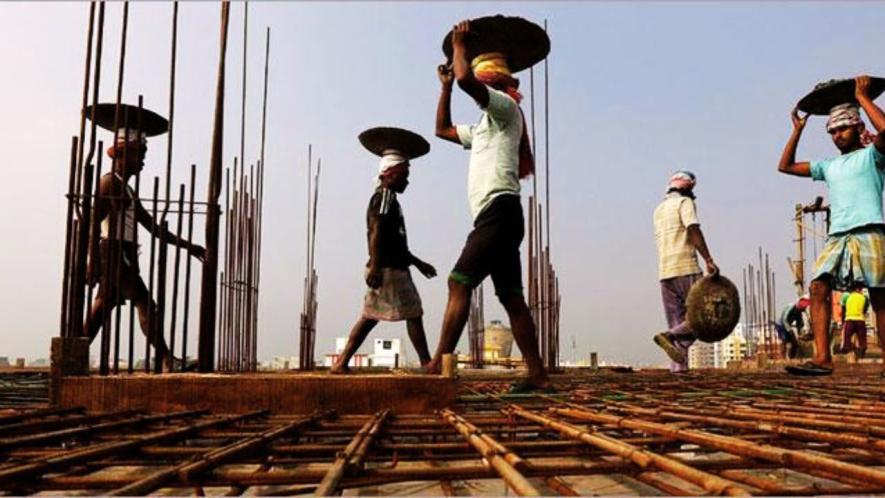
From 2017–2024, we can actually see that there has been a measurable decline in the real wages of all workers by 9.81%. This is made up of a decline of 20.65% of the self-employed workforce, and 9.45% of the salaried workforce. Only casual labourers have seen an increase in their real wages by 20.7 %, but they make up a little less than one-fifth of the total labour force, and lack a regular contract and payment frequency. To clarify, the terms these figures are all reflections of the average real monthly wage, which are calculated by dividing nominal wages by the price index and then multiplying the result by a hundred.
The factors that have led to this decline include successive economic policies, such as demonetisation, and the Covid lockdown, and subsequent supply chain constraints that has led to high inflation. Arun Kumar, former professor at Jawaharlal Nehru University, adds that while the profits of the private sector have risen, the wages of workers have not risen proportionately.
From 2020 to 2024m private profits grew four-fold, however, the wages of workers employed in that sector, as already shown, have fallen by a little over 9% for the economy at large.
Even if we were to look at the formal sector, where one may suspect that the wages may have been higher or at least more stable than the informal sector, we see that the rise in wages, which is between 0.8% to 5.4% is, even at its highest limit, below average retail inflation rate of 5.7 %. Which means that even isolating the formal sector specifically, there has been a decline in real wages.
There is a cognisable relation between the weakening of the rupee vis-a-vis the dollar, and the fall in the real purchasing power of Indian customers, and this is through what is referred to as import inflation. India, as summarised above, is dependent on imports for commodities, such as oil and gold. When the rupee is weak, it takes more dollars to buy the same volume of either commodity. This is transferred to the hiking of the Consumer Price Index, which weighs down the real purchasing power of the Indian customer.
The writer is an independent journalist who is pursuing his PhD. The views are personal.
Get the latest reports & analysis with people's perspective on Protests, movements & deep analytical videos, discussions of the current affairs in your Telegram app. Subscribe to NewsClick's Telegram channel & get Real-Time updates on stories, as they get published on our website.