





Venezuela: Resurgence of Imperialist ‘Diplomacy’ a Month After Attack
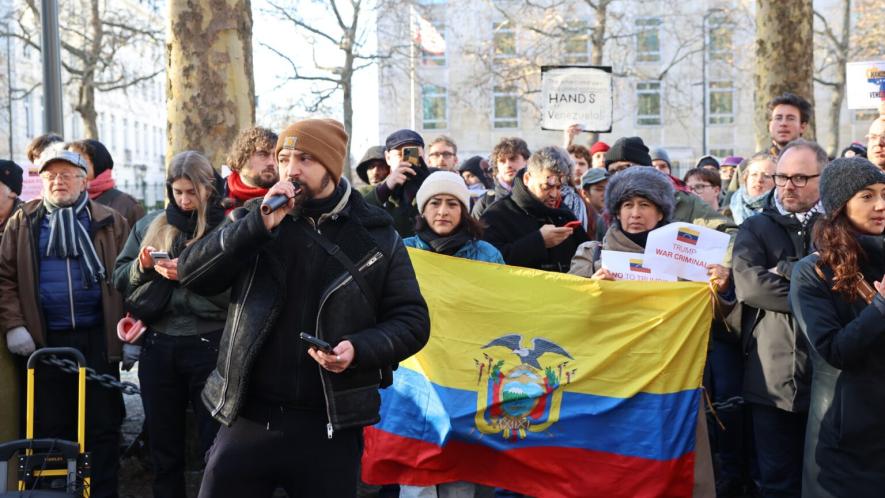
Solidarity demonstration with Venezuela, Brussels, January 4, 2026. Source: Workers' Party of Belgium/Facebook
The Cambridge Dictionary defines imperialism as: “a system in which a country rules other countries, sometimes having used force to get power over them.” Although it is a concept that has sparked considerable debate in various sciences, few would deny that it corresponds to a concrete phenomenon in recent human history. However, many authors and politicians insisted after the fall of the USSR that such a phenomenon no longer operated in the world of supposed cosmopolitan multilateralism heralded by the 21st century.
Obviously, many denied that imperialism, understood as a form of geopolitical domination, had disappeared. However, there was no doubt that the former colonial empires, joined in the 19th and 20th centuries by the United States, had adopted an apparent diplomacy that also reflected a hierarchical order among countries, but one that was justified by a purported collective human good.
During the invasion of Iraq in 2003, the authorities of the government of then-president George W. Bush claimed that their intervention in a sovereign country was justified by the alleged existence of weapons of mass destruction. We now know that such weapons were never found. Some claimed that it was a historic scam. But it is undeniable that the United States had to justify its military action in some way.
The attack on Venezuela
That need to justify one’s attacks seems to have disappeared. The attack on Venezuela on January 3, 2025 (in which more than 100 people were killed) revealed a US political class that did not fear resorting to historical colonial language, whereby the justification for an attack on another sovereign nation lies in the strength of its military capacity and its national interests. Nothing more and nothing less. In effect, imperialism also operates as a discourse in which weaker nations only have a reason to exist to the extent that they satisfy the aspirations of dominant nations.
This political logic, which violates all the principles of the United Nations, was already evident during the attack on Iran’s nuclear power plants, but became even more apparent when US authorities no longer resorted to the supposed narrative of fighting drug trafficking and the so-called Cartel of the Suns, according to which the political leadership of Chavismo in Venezuela was part of a transnational criminal and terrorist structure.
Before the attack, the United States promised that it would seek a change of government in Venezuela, which already signals an openly imperialist intention, but which still raised a question: What are the desires behind the US authorities after the attack? Are they doing so in defense of supposedly universal political values?
The answer soon came to light, but not through in-depth analysis or Hollywood-style journalistic investigation. It was confirmed by the US president himself when he stated, without hesitation, that his military forces had assaulted a sovereign country, captured its president, taken him to the United States, and that from now on they would control Venezuela to benefit the interests of US oil companies. No more, no less.
A large part of the Venezuelan opposition, which celebrated the attack, could not believe what was happening. The United States decided to keep Chavismo in charge of the state administration, under the clear and direct threat that if they did not meet their demands, they would attack a second time in a much more forceful manner.
There are various hypotheses as to why Washington decided to keep Chavismo in government. Some suggest that it is a strategy to destroy Chavismo in the long term, which would become an operator for Washington, causing it to lose the popular support it enjoys among large sectors of the population and the armed forces. Others think that it is simply based on an economic calculation that an invasion could cause a new Iraq and further weaken the Trump administration; after all, why invade Venezuela if better economic returns can be obtained through negotiations “with a gun on the table”?
Beyond interpretations, the truth is that today the Venezuelan government has to accept Washington’s impositions in order to avoid, on the one hand, a military invasion and, on the other, the conquest of the state by an opposition that could easily be of an extreme right-wing nature and seek to annihilate Chavismo. The decisions of the Venezuelan presidency have been controversial within Venezuela and even within the ranks of Chavismo itself.
The reforms of the Rodríguez government
Currently, the government of Delcy Rodríguez, in alliance with the Chavista-majority legislature, has issued a series of decrees that are more or less in line with what was announced by Donald Trump and his secretary of state, Marco Rubio. At the same time, Rodríguez has attempted to maintain internal social policies promoting equality, which are often Chavismo’s calling card with the civilian population.
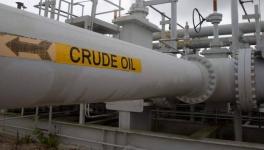
Since the United States began its indirect military offensive against Venezuela by seizing Venezuelan oil tankers and confiscating the oil, there has been enormous interest in the country with the largest oil reserves in the world.
After the attack on January 3, this objective became the Trump administration’s main mission with regard to Venezuela. Following Trump’s statements, Delcy Rodríguez’s government promoted a radical reform of the Hydrocarbons Law, which was approved by parliament.
The new law allows foreign capital to invest in the oil sector, which for decades (long before the arrival of Chavismo) was controlled by the state-owned company Petróleos de Venezuela (PDVSA), one of the most powerful Latin American oil companies in the world. The reform is specifically aimed at reducing state control over oil production and contracts derived from this activity.
In addition, it opens up the sector to international arbitration, which eliminates Venezuela’s recent tradition of not obeying international rulings that threaten the country’s interests. This is undoubtedly a historic and structural change in Venezuelan oil policy, which has been characterized by its autonomy and nationalism. Now, the Caribbean country’s tax regime for oil production will be more flexible and open to being co-opted by international capital, which many suspect will be almost exclusively US-based.
Rodríguez has also promised political reforms. On January 30, the president presented a General Amnesty Law, according to which hundreds of “political prisoners” who have not committed crimes of murder, drug trafficking, or human rights violations will be released.
The Amnesty Law will consider detainees from 1999 (the year that marks the beginning of the Chavista process) to the present who have been prosecuted for crimes related to political activity, including protests, conspiracies, etc.
Rodríguez also proposed the closure of the Helicoide prison, a former shopping center that currently serves as a detention center, which, according to the opposition, is used to hold political prisoners and where human rights violations are committed. Chavismo, for its part, acknowledges that Helicoide is a detention center but denies that its government violates human rights.
Rodríguez has stated that such reforms and laws seek to eliminate extreme polarization in Venezuela and generate a de-escalation of tensions, as well as greater political openness to various expressions of Venezuelan politics.
What are Washington’s plans for Venezuela?
The imposition by force of US economic interests above any Venezuelan political will, whether right-wing or left-wing, is evidence of clear imperialist imposition in the region.
Marco Rubio himself recently said in his speech to the US Congress that Washington ultimately wants a “democratic transition,” although he does not rule out his country using military force against the South American country again: “Let there be no doubt: as the president has stated, we are prepared to use force to ensure maximum cooperation if other methods fail.”
“We want a transition to a friendly, stable, prosperous, and democratic state where all sectors of society are represented in free and fair elections … We are not going to achieve this in three weeks. It will take time,” said the head of US diplomacy.
In addition, Rubio issued a warning to Rodríguez, stating that Nicolás Maduro’s future could also depend on Chavismo’s willingness to accept Washington’s decisions. Rubio said that Rodríguez is aware of Maduro’s fate, so “we believe that his own interests coincide with the advancement of our key objectives.”
Rubio also clarified that the money obtained from the sale of Venezuelan oil will be deposited in an account supervised by his government, which will ensure that it is spent “for the benefit of Venezuelans,” which shows that Venezuela has lost its economic sovereignty.
Furthermore, Rubio clarified that the central objective of the US operation in Venezuela, which is not yet over, is to convert the South American country back into the trading partner it was before Hugo Chávez became president in 1999.
How Washington will rebuild that relationship is not entirely unknown. It has already shown that it is willing to impose it by force if necessary, arguing that it is unthinkable (for US economic, geopolitical, and national security interests) that a country in “its hemisphere” should not adhere to the precepts of the dominant country.
For now, Washington seems to consider the wishes, interests, and plans of Venezuelans for Venezuela to be secondary. The United States affirms that “democratic” (democratic, as in approved by Washington) elections will be held at some point in the future, although it has never ruled out the possibility that Washington will lose its ability to influence the decisions of the Venezuelan state in that future.
Courtesy: Peoples Dispatch
Get the latest reports & analysis with people's perspective on Protests, movements & deep analytical videos, discussions of the current affairs in your Telegram app. Subscribe to NewsClick's Telegram channel & get Real-Time updates on stories, as they get published on our website.