





VB–G RAM (G) Act: Pure Cosmetic Deception!
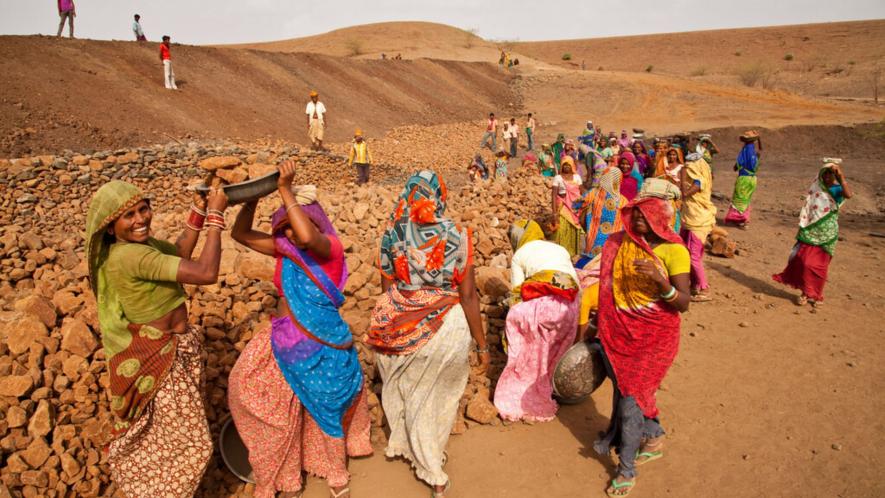
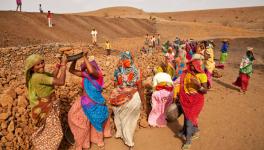
Representational Image. Image Courtesy: Flickr
Following the President’s assent to the VB-GRAM (G) Act, 2025, Union Minister for Agriculture and Farmers’ Welfare Shivraj Singh Chouhan published an opinion piece in The Hindu on December 24, claiming that the new law addresses the “structural gaps” in MGNREGA (Mahatma Gandhi National Rural Employment Guarantee Act) and that the widespread genuine concerns raised by workers, activists, economists, and academics, both in India and globally, are merely the result of a “misreading” of the Act. A careful reading of his article, however, suggests that it is the Union Minister who has chosen to misread the legislation he is defending.
Chouhan seeks to dismiss these concerns but offers little by way of substantive argument. Rather than engaging with these foundational questions, the Minister’s article reads less like a reasoned defence and more like a piece of government propaganda. He opens by reproducing the Act’s stated objective: “to promote empowerment, growth, convergence and saturation for a prosperous and resilient rural Bharat.” These slogans remain undefined and unexplained. When a law that dismantles a rights-based guarantee is defended through rhetoric rather than clarity, the issue is not public misunderstanding but deliberate obfuscation.
A Deliberate Lack of Reading by the Union Minister
Chouhan argues that the new legislation remains demand-driven because “demand for work continues to originate from workers.” This reasoning ignores the core principle that made MGNREGA demand-driven in the first place: the Central government’s legal obligation to provide funds whenever work was demanded.
Over the years, the Centre has steadily curtailed allocations, and the new Act seeks not to correct this trend but to legitimise this denial.
Section 4(5) of the Act empowers the Central government to fix a “normative allocation” for each state. It states that “the Central Government shall determine the State-wise normative allocation for each financial year, based on objective parameters as may be prescribed by the Central Government.” Section 4(6) then shifts the burden of any expenditure beyond this limit on state governments, specifying that excess spending must be borne by states in a manner prescribed by the Centre.
Once a budget cap is imposed and additional demand becomes a State liability, the employment guarantee ceases to be genuinely demand-driven. Chouhan himself notes that the 60:40 funding model follows the standard pattern of centrally sponsored schemes, an implicit admission that the Centre no longer intends to uphold the unconditional funding commitment that defined MGNREGA. In such a scenario, debating where “demand” originates becomes meaningless when there is neither adequate allocation nor political will to meet it.
125 Days of Work: Promise Without Substance
The Minister also dismisses concerns about centralisation by claiming that critics “overlook the architecture of the law.” In reality, the new Act significantly curtails the autonomy of Gram Sabhas. Under MGNREGA, Gram Sabhas had the authority to identify and approve works based on local priorities. The new legislation replaces this with a centrally defined framework. Schedule I, Clause 6(4) states that the “Viksit Bharat National Rural Infrastructure Stack shall guide States, Districts and Panchayati Raj Institutions.” This effectively subordinates local decision-making to a top-down priority system aligned with centrally driven initiatives such as the Viksit Bharat agenda and the PM Gati Shakti scheme.
Far from strengthening decentralisation, the new legislation hollow-outs the participatory foundations of MGNREGA and recasts a rights-based employment guarantee into a centrally managed, supply-constrained programme.
The article claims that the new Act preserves the statutory and justiciable character of the employment guarantee because it raises the ceiling of entitled workdays from 100 to 125. This argument is a master class in political sleight of hand. The National Democratic Alliance government deserves credit only for how deftly it has used this provision to undo MGNREGA in public perception while hollowing it out in practice.
Increasing the ceiling is meaningless when the guarantee itself is not honoured. Today, barely 2% of rural households are able to secure even 100 days of work. In this context, the promise of 125 days is not reform, it is pure cosmetic deception.
The Act further delegitimises the very idea of an employment guarantee by introducing an unprecedented provision to suspend work altogether under the pretext of facilitating the adequate availability of agricultural labour during peak agricultural seasons. Section 6(2) mandates a complete halt on work for up to 60 days during peak agricultural seasons.
An Act that guarantees demand-based employment throughout the year but legally authorises a shutdown of work for two months is a contradiction in terms. A right that can be switched off by design is not a right, it is a rationed benefit.
The erosion of the guarantee is taken even further through an ambiguous clause that gives the Union government sweeping discretion over where the Act will apply. Section 5(1) states that employment will be provided only in those rural areas “as notified by the Central Government.”
The implication is chilling: if an area is not notified, its residents may have no enforceable right to work at all. This transforms a universal, rights-based guarantee into a discretionary scheme - one where the Centre decides who qualifies and who does not. The Centre giveth, and the Centre taketh away.
Chouhan also claims that the Bill was preceded by extensive consultations with states, technical workshops, and multi-stakeholder discussions. This assertion strains credulity. Prior to being tabled in Parliament, there was virtually no public information about the Bill. Its introduction came as a shock not only to parliamentarians and academics, but even to individuals involved in drafting the original MGNREGA in 2005.
What was publicly available were repeated recommendations from the Parliamentary Committee on Rural Development and Panchayati Raj, calling for higher wages, addressing exclusion caused by digital authentication, correcting low budgetary allocations, and fixing systemic implementation failures. None of these find any place in the VB GRAM G Act.
Increased Allocations or Inflated Claims?
It is troubling that a Union Minister would resort to selective use of numbers to justify misleading economic claims about MGNREGA. In 2009-10, the first year after the scheme’s full roll-out, the allocation stood at Rs 39,000 crore, about 3.56% of the Union Budget. By comparison, the Rs 86,000 crore allocated last year by the Bharatiya Janata Party-led NDA government accounted for just 1.6% of the total budget.
The oft-repeated claim that MGNREGA’s funding was stagnant before BJP came to power does not hold up to scrutiny. While allocations have risen in absolute terms, the scheme’s share of the total budget has steadily declined under the NDA regime. Higher nominal figures alone do not translate into greater welfare or improved living conditions, especially when inflation and rising costs are factored in.
The erosion of wages under MGNREGA further exposes this gap between rhetoric and reality. As economist Jean Drèze notes in “A Short History of MGNREGA,” the wages initially exceeded agricultural wages but fell behind once they were frozen in real terms. By 2014–15, they were barely two-thirds of male agricultural wages—a gap that has persisted since.
The most recent wage notification underscores this neglect. Most states witnessed increases of only Rs 2–7 per day, an adjustment that can scarcely be called a raise when existing wages already fall well below what is required to meet a rural household’s basic consumption needs. Even if relative wages appear marginally higher, real wages remain distressingly low.
The NDA’s Dismal Record
MGNREGA 2005 was enacted under the Congress-led United Progressive Alliance (UPA) government but it is a false assumption that the act itself was brought in by UPA. It was the presence of the Left during the UPA government that resulted in the successful enactment of MGNREGA and ensuring its effective implementation. After the withdrawal of the Left parties from the UPA, MGNREGA’s implementation showed a steady decline but the principle of the Act remained unaffected.
In the first year of the BJP-led NDA government (2014–15), there was a drastic fall in employment generation. For the first time, total person-days dropped below 200 crore, reaching just 166 crore. This reflected the NDA’s lack of commitment to the scheme, which Prime Minister Narendra Modi openly mocked in Parliament, stating that after years in power, the UPA could only provide work for “a poor man to dig ditches a few days a month.”
MGNREGA faced major setbacks under the NDA. Under the pretext of improving implementation and fighting corruption, exclusionary technologies were introduced, leading to the deletion of crores of job cards and creating barriers for households seeking work. Between October 10 and November 14 this year alone, 27 lakh job cards were deleted from the MGNREG database.
The Parliamentary Committee on Rural Development and Panchayati Raj repeatedly recommended increasing MGNREGA wages to Rs 400 per day, extending work to 150 days per household, addressing wage payment delays, ensuring adequate budgetary allocations, and reconsidering the mandatory Aadhaar-Based Payment System. None of these recommendations were implemented. Renaming the scheme, rewording clauses, increasing centralisation, or capping budgets cannot resolve these structural issues.
Claims of corruption under previous governments do not negate the fact that corruption peaked during the NDA period. Audits conducted between 2020–21 and 2024–25 revealed 6,15,840 cases of fund misappropriation across 28 states and eight Union territories, amounting to Rs 889.19 crore. Recently, in Gujarat, a BJP minister’s son was arrested in connection with a Rs 71 crore MGNREGA scam, the full extent of which remains uninvestigated.
It is important to highlight how the NDA government completely shut down MGNREGA activity in West Bengal. Since 2003, no funds have been allocated to the state for MGNREGA works. The majority of these problems are owed to the government’s lack of interest in conducting proper social audits.
Beyond national-level failures, Rashtriya Swayamsevak Sangh and BJP activists have also created obstacles at the village level, further corrupting the scheme. MGNREGA has been deliberately undermined to project it as unviable, paving the way for the VB GRAM Act 2025. The problems cited by the NDA are largely self-created, making it easier to justify new legislation that threatens to dismantle hard-won gains in rural India and deepen rural precarity. It is nothing more than a Trojan horse.
Neither Welfare Nor Development
In concluding his op-ed, Chouhan again frames the criticism as a false debate between welfare and development. No serious critic has made this claim. On the contrary, there is broad agreement that welfare and development are interdependent. This rhetorical move serves only to mislead the middle class through academic-sounding jingoism.
The real critique of the new Act is far simpler and far more serious: it delivers neither welfare nor development. By capping Central expenditure and shifting the burden onto resource-strapped state governments, the Act abandons the demand-driven model that defined MGNREGA. There can be no welfare or development when legal rights are diluted, funding is capped despite rising demand, and citizens are reduced from rights-holders to beggars for employment.
Vikram Singh is Joint Secretary, All India Agriculture Workers Union. Sahil Budhwar is pursuing academics.
Get the latest reports & analysis with people's perspective on Protests, movements & deep analytical videos, discussions of the current affairs in your Telegram app. Subscribe to NewsClick's Telegram channel & get Real-Time updates on stories, as they get published on our website.