






US Hegemony and West Asian War: A Political-Economic Intervention
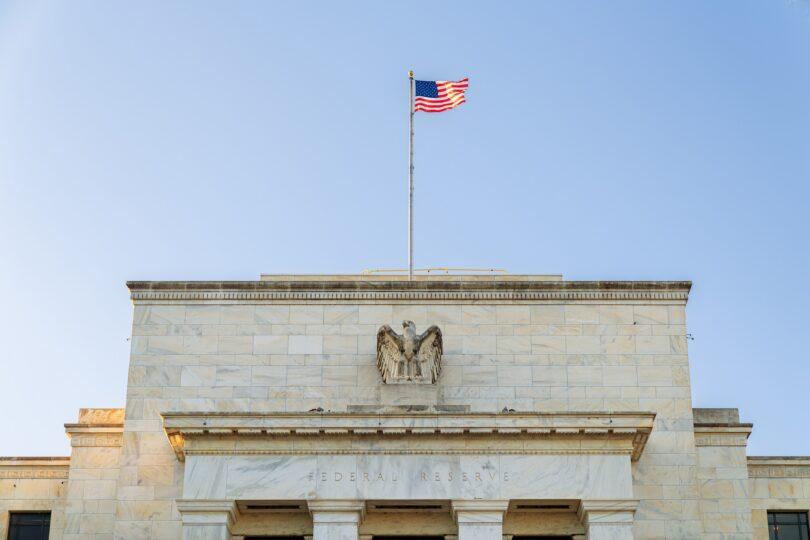
U.S. Federal Reserve building in Washington, D.C.
The West Asian war is well into its second month, with the purported ceasefire hardly materialising. The war is seen by several geopolitical scholars as a pivotal moment for the post-war global architecture. The global security cover of the United States has been viewed as dominant since 1945, and almost invulnerable since 1991. Although geopolitical strain with Russia, starting with Vladimir Putin’s 2007 speech at the Munich Security Conference, already indicated cracks in this order, and escalating with Russia’s interventions in Ukraine and Syria starting in 2014, it is the current West Asian war which has initiated a serious crisis of US global military domination.
By imposing inordinate costs on the global economy in a war initiated by the United States, Iran has exposed cracks in the accumulation strategies of world capitalism as well as called into question the United States’ institutional role as the headquarters of this global economic structure.
In particular, Iran’s ability to challenge the feasibility of the current maritime trade arrangement, render U.S. military bases in the region dysfunctional, and force the question of withdrawal of all US combat forces from the region onto the negotiating table, is genuinely remarkable.
Over the past century, West Asia has been a critically contested space in world capitalism due to the abundance of energy resources and trade chokepoints in the region. Since the culmination of the First World War, it has also been the centre of an epic conflict between imperialist domination and nationalist resistance.
The stability of metropolitan capitalism depends on the condition of the cheapening of the supply of primary commodities, which ensures that accelerating inflation can be avoided while rewarding the essential classes of metropolitan capitalism with both oligopolistic super-profits as well as stable real wages.
Second, the spectre of inflation is particularly an anathema to financialised capitalism, which has been the dominant mode of accumulation since the 1980s, as inflation erodes the real value of financial assets. Energy prices remain the single most important factor in inflation volatility in the United States. Recent reports of Iran’s adoption of toll payments in the Chinese renminbi have also called into question the dominance of the vaunted petrodollar, which is said to underlie US financial hegemony since the breakdown of the gold-dollar link in 1971 and the subsequent tumultuous years of the first oil shock.
In light of these developments, it is important to move beyond mere geopolitical analysis of military supremacy to pose critical political-economic questions about US hegemony today. The following analysis attempts to provide a brief description of the structure of contemporary world capitalism (which, of course, remains the dominant mode of production), and to locate the United States’ role within it.
Comparisons will also be drawn between the role of the United States and its nearest rival, China, for reasons that shall become clear by the end of this essay. The analysis will be formulated across the following dimensions: production and trade, finance, and technology. These are deeply symbiotic dimensions, and no question of hegemony can evade their interrelations.
Before we venture into this inquiry, there is an important caveat. This is not a discussion about the absolute sizes of these economies or the tempo of their development. Rather, it is about their international role within the structure of global accumulation. Studies which merely compare the two economies proliferate in the field of comparative development. Rather, this inquiry places at its heart the particularity of the role of the hegemon in the capitalist world-system.
Production and Trade
Beginning in the early 19th century, the international division of labour of industrial capitalism concentrated manufacturing activities in the Global North. This in turn led to a “great divergence” of incomes between the North and the South, as manufacturing both provides increasing returns to scale and also exhibits a higher elasticity of demand (i.e., as global incomes rise, a greater share is directed to purchasing manufactured goods).
This international division of labour broadly survived till the penultimate decade of the 20th century. In 1990–92, the Global North accounted for 75.4 percent of global manufacturing value added. By 2018–20, this share had fallen to 43.8 percent. North America’s share reduced from 23.7 percent to 18.1 percent in the same period. Meanwhile, China’s share in global manufacturing value added increased from 2.2 percent to 28 percent.
There is reason to believe these changes are paradigm-shaping. However, to understand the shift, one must understand a still more fundamental shift in international production structures. In traditional trade theory, such as the Hecksher-Ohlin model, capital is assumed to be internationally immobile. It is in the context of low international mobility of capital that the division of labour in the period was primarily expressed in specialised trade.
However, with the offshoring of several activities to developing countries, international production became dependent on interlinked tasks divided among different countries. These interlinked processes of value addition constitute the Global Value Chain.
In the GVC, an increasing share of value began to accrue to pre-production activities (such as patents and design) and post-production activities (such as marketing and other services). This distribution of value is commonly referred to as the “smile curve.” Thus, an international division emerged between “headquarters economies” and “factory economies.” Between 1997 and 2022, the share of manufacturing in global GDP dropped from over 19 percent to under 16 percent. In 2024, the GVC participation rate (i.e., GVC-related trade as a share of total trade) stood at 46.3 percent. GVC-related trade amounted to $15.18 trillion in the same year.
The share of intangible assets in value added of global manufacturing trade rose from 28 percent in 2001 to 32 percent in 2007. Some estimates suggest that as early as 2007, intangible assets may have already represented up to two-thirds of the value of big firms. Cross-border intellectual property receipts were estimated at $539 billion in 2024, compared to just $30 billion in 1990.
Despite China’s steady rise, intellectual property receipts are dominated by the developed countries, including tax havens such as Ireland, Luxemburg, the Netherlands, Singapore, and Switzerland (despite their paltry share in world GDP). The United States maintains net exports of almost $87 billion while China maintains net imports over $40 billion. The tax havens are even more dominant in payments related to foreign intellectual property. Thus, the growing share of intangible assets is also intertwined with a variety of profit-shifting activities for the purpose of tax avoidance. In 2014, headquarter functions constituted over 64 percent of the labor share in high income countries’ export value added in manufacturing GVCs. The corresponding number for headquarter functions in China was only 38 percent.
Eighty percent of world trade is controlled by transnational corporations (TNCs), whose annual sales equal around half of world GDP. In 2025, over two-thirds of total profits recorded by the top two thousand TNCs accrued to TNCs headquartered in developed countries. The United States’ share alone accounted for 41 percent, while China’s stands at 15 percent. Over the past decade, the share of the United States has only increased (from 37 percent to 41 percent), while China’s share has marginally declined (17 percent to 15 percent). Thus, despite the fact that China accounted for almost 16 percent of world merchandise exports in 2024 (almost double the United States), the GVCs are still largely anchored in the dominance of the Global North.
There is a particular reason why this relationship between the North and the South is not merely one of inequality. GVCs are dominated by “lead firms” which enjoy monopsonistic power. Lead firms are able to directly control suppliers’ overheads, shifting responsibility for meeting delivery times and abiding by flexible production requirements onto the subordinate firms, and imposing other costs of compliance.
Moreover, lead firms’ position in the GVCs gives them a panoptic knowledge of the whole chains, giving them significant informational advantages through which they optimise systems and minimise competition. Control over knowledge presents potentially infinite returns to scale. The higher mark-ups then are utilised to inflate stock prices through dividend payments and share buybacks.
Global production networks are deeply intertwined with control over technologies as well as global financial structures. We shall turn to these questions in the following sections. While a significant contestation is apparent in global technology relations, it is really in the discussion regarding the global financial structure in which we can fully uncover the dominance of the United States.
Technology
Together with control over finance, dominance over technologies constitutes the superior position in global value chains. As discussed, what is at stake is not just IP-related receipts, but the very position of lead firms in value chains. As such, it is interesting to see how U.S. dominance shapes up in this field today.
Among the influential technology indices and reports, we witness the following: in the 2024 UNCTAD Frontier Technology Preparation Index, the United States maintains its top spot while China ranks twenty-first (although it is gaining quickly). The top ten spots are exclusively occupied by Northern countries. In the WIPO Global Innovation Index (GII) 2025, the United States occupies the third spot while China occupies the tenth spot. In the ASPI’s Critical Technology Tracker 2025, China is reported to have taken the lead in sixty-six of seventy-four critical technologies between 2020 and 2024, while the United States leads in the rest.
The ASPI’s tracker focuses specifically on the top 10 percent most-cited publications in each technology. The UNCTAD Frontier Technology Preparation Index is concerned solely with 17 “frontier technologies.” The index includes a cumulative of sub-indices like information and communications technology (ICT), skills, R&D, industry, and finance. China holds the first position in R&D and outperforms the United States in industry, but lags significantly in ICT and skills, thus dragging down its score. The GII comprises eighteen indicators ranging from those related to R&D and technology outcomes (such as robots, electric vehicles, and high-speed rail), to broader economic indicators such as labour productivity, poverty, life expectancy, and global warming.
The United States leads in late-stage venture capital deals, global brand value, global corporate R&D investors, “unicorn” valuations, software spending, and intangible asset intensity; China leads in creative goods exports, utility models, trademarks, and industrial designs.
It is also important to look at how R&D investments are mobilised today. In 2022, just one hundred companies constituted over one-third of business-funded R&D, with 2,500 companies responsible for 86 percent of such investment. Among the one hundred largest R&D investors, 49 are headquartered in the United States, 13 in China, 12 in Germany, and eight in Japan.
Technology is thus becoming an increasingly contested space between the two leading countries. As mentioned above, the United States still maintains a significant lead in IP receipts, and IP assets remain concentrated in the United States. However, these are increasingly legacy assets, as China is taking a lead in publications (particularly high-impact publications) and international patent filings.
On the other hand, US lead firms still appear to mobilise the bulk of R&D investments (though investments and outcomes can of course vary), which is tied to their dominant position in GVCs. In technology absorption, China’s results are more mixed; in certain domains, such as high-speed rail, the country has characteristics of an industrial superpower, while in others it appears almost indistinguishable from other developing countries. Nonetheless, as far as GVC position is concerned, we can expect increasing contestation in the medium term, as Chinese intangible assets grow thanks to advances in research.
Finance
Global production networks and the global financial structure are complementary in many respects. While the extraction of markups by lead firms and the shifting of profits provide surpluses which are recycled into financial markets, it is the financial structure which facilitates privileged positions in payment commitments, profit realisation, and storage of value in the form of financial wealth. Global production networks require access to dollar-denominated financial markets, both for direct investment and for the provision of working capital.
A wide variety of financial institutions and instruments facilitate such arrangements (which become necessary for honouring payment commitments). These thus allow US banks to expand their balance sheets. To protect against fluctuations in foreign exchange markets and financial risks, demand for derivatives increases as well. Derivatives have a self-reinforcing logic, as they allow for both hedging and boundless speculation. Simultaneously, the requirements of profit shifting also create demand for investment vehicles. The combination of these phenomena contribute to significant depth in dollar-denominated financial markets, and make the United States the natural home of global finance.
International financial markets have seen multiple phases of infusion of massive liquidity since the 1970s, when the gold-dollar link was severed. First, the oil shocks of 1973 and 1979 enabled the accumulation of large dollar-denominated oil surpluses, which left commercial banks flush with liquidity. Second, the growth of inequality during this period and the retreat of the State from social services has allowed the accumulation of surpluses, as well as a broad demand (including from the middle class) to subscribe to financial funds, both of which end up being recycled into financial markets.
Third, central banks of developed countries have followed easy-money policies since the early1990s, in the aftermath of Black Monday of 1987 (the famous “Greenspan put”). Of course, these easy money policies have continued until recently with the adoption of multiple rounds of Quantitative Easing after the Great Financial Crisis of 2007–08 (including during the COVID-19 pandemic).
Fourth, in the aftermath of the East Asian Crisis of 1997–98, several central banks now accumulate foreign exchange reserves to be able to intervene effectively during sudden periods of capital flight. These reserves end up being recycled into the financial markets of developed countries, particularly the United States.
The removal of the gold-dollar peg in 1971 put an end to a period of fixed exchange rates and capital controls (the latter being a sovereign right of countries under Article VI of the IMF Articles of Agreement). These new conditions created exchange rate fluctuations, and hence, demand for financial instruments to hedge against such fluctuations. Successive deregulation has allowed for the proliferation of foreign exchange (FX) derivatives. In June 2025, the notional value of OTC FX derivatives alone stood at $150 trillion. These remain heavily dollar-denominated.
The prioritisation of monetary policy since the Volcker Shock of 1979 has also created fluctuations in interest rates, as well as significant spillovers of the same in capital markets around the world. This in turn drives significant demand for interest rate (IR) derivatives. In June 2025, the notional value of OTC IR derivatives was more than three times that of OTC FX derivatives. The cumulative notional value of OTC derivatives in June 2025 stood at an astounding $846 trillion, almost seven times world GDP. In April 2025, the daily turnover of OTC FX derivatives stood at $9.6 trillion per day. For comparison, the total volume of global trade in 2024 was $32.2 trillion. Thus, daily turnover in OTC FX derivatives is almost one hundred times the volume of average daily trade. These are in large part speculative markets, which depend overwhelmingly on dollar financing.
Strategically speaking, it is doubtless true that a country’s ability to exercise sovereign autonomy is determined in part by that country’s position in international trade. However, it is really financial markets which make or break balance of payments, by orders of magnitude.
The dollar remains overwhelmingly dominant in financial markets. Despite their growing share in world production and trade, Global South countries actually represented a smaller share of global finance (i.e., combined value of stock market capitalization and fixed-income securities) in 2024 than in 2007, decreasing from 31 percent to 25 percent, respectively. Meanwhile, the dollar’s share in foreign exchange derivatives has largely remained stable, at over half the total notional value, and has in fact marginally risen as well (to around 55 percent), over the past twenty-five years. In international debt securities, the dollar and euro combined constitute over 86 percent of debt securities, with the dollar alone accounting for about 60 percent. In global investment and borrowing, the dollar’s share has increased from 45 percent of liability positions to 48 percent between 2000 and 2024, and from 50 percent of asset positions in 2000 to 52 percent in 2024. The United States alone continues to represent 50 percent of the global equity market and 40 percent of global debt stock, figures which have remained stable over the years.
The structure of global asset holding and returns can be seen in the following: between 2016 and 2024, the G7 countries maintained a positive annual average net primary income, equivalent to 1.1 percent of GDP, while China’s annual average net primary income was -0.5 percent of GDP (the loss is much greater for other countries of the Global South).
However, there are a few countervailing developments which should be noted. The dollar’s share within the currency composition held by central banks has seen a gradual decline since 2000. From a 70 percent share of the currency composition in 2000, it fell to 56 percent by 2025. However, there has been no demonstrable acceleration of this trend in recent years. What has instead happened is an increase in the share of gold held by central banks. From less than 20 percent of the total reserves in 2022, gold’s share surpassed 25 percent by 2025. Although central banks themselves increased the volume of gold held only by small amounts, the speculative rush towards gold in the financial markets, partly enabled by news of central banks diversifying their reserves, and partly enabled by the increased global volatility in 2025 due to the incumbent U.S. administration’s tariff measures, significantly increased the price of these holdings.
What explains this dominance of the dollar? This can best be understood through the concept of liquidity preference applied to international currency markets. International markets, particularly financial markets, are dependent upon constant liquidity, which is necessary to keep meeting payment commitments. Any disruption of liquidity would cause highly speculative assets to turn illiquid, destroying their value.
Liquidity of this kind may not be as necessary in trade, as valuations are less vulnerable to fluctuations, but it is absolutely vital in financial markets. Thus, financial markets are not predisposed to multi-currency systems. The dominance of one stable currency whose issuers are committed to ensuring global liquidity both protects the value of financial assets from erosion due to liquidity disruption and ensures the stable denomination of assets in a single currency.
More recently, uncertainty surrounding US tariff wars and the invasion of Iran have put the safe-haven status of the dollar into question. In response to tariffs, both equity and bond markets weakened, the latter even in relation to other preferred sovereign bonds. And in the first month of the West Asian war, while U.S. treasury yields again increased (although less than most other major treasury bonds), Chinese bonds emerged as a relative safe haven, with only marginally reduced yields.
Despite these disruptions, the depth of US financial markets explains their continued dominance. Unlike product and factor markets, financial markets are vulnerable to significant revaluations, as the solvency of firms often depends upon their ability to access liquid funds to honour their payment commitments. Failure to do so can quickly turn their assets illiquid and thus vulnerable to downward revaluation, which can have spiralling effects across markets.
Thus, the depth of US financial markets makes the dollar the preferred currency in which to secure contracts. Its reserve currency status also ensures that it can always be used to honour payment commitments even when other assets turn illiquid, creating all but infinite demand for access to dollar financing.
The same logic applies to other currencies, with the ability to honour payment commitments determining their “liquidity premium.” The lower the premium, the higher the yield required for assets denominated in that currency. This makes debt servicing costly for several developing countries, which effectively require asset-price bubbles to attract financial inflows.
The larger point is that, in the current conjuncture of global capitalism, growth models around the world are linked to several levers of financialisation. States become susceptible to volatile financial flows and thus reorient policies to maximise returns for investors as well as to immunise the latter from risks (which includes, in the final analysis, converting private debt to public debt during times of crisis).
Fiscal policies grow more conservative and central banks take charge of monetary policy. Central banks begin holding large volumes of reserves, which in turn forces them to undertake sterilisation operations to enable commercial banks to expand their balance sheets, both issuing and holding more securities. Due to the short maturities of such transactions, commercial banks also shift away from industrial credit to retail credit. Non-financial companies grow more dependent on holding securities, accessing market funding, and adopting practices such as share buybacks and increased dividend payments to maximize shareholder value.
Due to weakened social security systems, the middle classes are incentivised to save more. Their security becomes more dependent on subscribing to financial funds and perceived wealth through asset price inflation.
Lastly, the expansion of subprime loans ensures that the working classes grow dependent on credit to sustain their consumption levels; the resulting debt then serves as an asset for further securitisation, and so on. Add to this the inherently weaker position of peripheral countries, which occupy lower positions in global value chains, may still be dependent on primary commodity exports, and carry low liquidity premiums on their financial offerings. As this becomes the pattern of accumulation throughout the capitalist world, the importance of the financial hegemon becomes even more central to the sustenance of such accumulation.
Can there be an alternative hegemon within the structure of neoliberal accumulation? It appears not. Beyond all the turbulence that such a transition would necessarily entail, another important reason is that the only significant challenger, China, is exceedingly cautious about internationalising its currency. The renminbi is not freely convertible, and China continues to maintain twelve of the thirteen IMF classifications of controls on its capital account. Thus, even to the extent that there may be an increase in the share of global trade invoiced in renminbi in the emerging system, the question that concerns us is whether an alternative currency can support a large share of financial transactions around the world. Since the financial system asymmetrically rewards liquidity, it simply cannot sustain itself in the same way without the hegemony of the dollar.
The Nature of Hegemony Today
The economist Charles Kindleberger once argued that world capitalism requires a hegemon to stabilise it. In his view, the hegemon serves three purposes: (a) maintaining a relatively open market for distressed goods; (b) providing countercyclical long-term lending; and (c) discounting in crisis. It was Kindleberger’s view that these functions of the hegemon prevent crisis from worsening. In the neoliberal period, the United States has served each of these functions. Its large trade deficits provide markets to exporters; its hegemonic position in the IMF and several multilateral banks provides countercyclical long-term lending; and in the context of global financial crisis, the US Federal Reserve emerges as the global lender of last resort. Only in the domain of countercyclical long-term lending is the United States encountering a stiff challenge from China, and even in this case, much lending remains dollar-denominated.
However, the role of the United States far transcends that of a mere stabilizer, and instead serves as the pivot for the entire structure of global accumulation. Even as fiscal conservatism becomes a necessary policy orientation embedded in this structure, the United States itself is able to flout the principles of fiscal conservatism due to the special status of the dollar.
Thus, countries around the world, lacking the fiscal levers to sustain growth, turn to the United States, which runs large trade deficits, allowing its demand to boost economic activity around the world. The accumulated trade surpluses of different economies are deposited in US Treasuries, giving enormous depth to US financial markets. This in turn enables significant financial innovation in the United States, which allows for the expansion of retail credit, which in turn boosts demand, which in turn leaks out to the rest of the world through US trade deficits. Thus, the cycle sustains itself.
Naturally, this financialised growth cycle has several stress points; the world witnessed the consequences during and after 2008, when countries were forced to double down on fiscal austerity, further weakening global accumulation.
Moreover, the traditional paradox of the United States’ unique position in the world economy, articulated famously by economist Robert Triffin, retains its relevance. But today, instead of being tied to gold assets, it takes on a more multidimensional scale. The value of the dollar remains linked to U.S. dominance over production networks and intangible assets, as well as to U.S. military supremacy. Trade deficits exist in an uneasy tension with such dominance, as they plausibly weaken the country’s position in production and trade, while creating the material conditions wherein countries with effective industrial policies, like China, can pose a significant challenge to the hegemon’s control over knowledge assets in the medium to long term. This tension explains much of the turbulence in geopolitics over the past decade.
In the final analysis, however, the value of the dollar continues to hinge on the position of US financial markets, which are structurally central and irreplaceable for neoliberal accumulation, whose turbulence will inevitably increase. The world needs an alternative structure of accumulation, beyond neoliberalism, if US hegemony is to be decisively challenged. Given that the current system is already teetering on the edge of crisis, bringing this question to the centre of global discourse may not be as far-fetched as it appears.
Dhruv Golani is Research Associate at the Centre for Development Studies, Trivandrum, Kerala, India. The views are personal.
Courtesy: MRonline
Get the latest reports & analysis with people's perspective on Protests, movements & deep analytical videos, discussions of the current affairs in your Telegram app. Subscribe to NewsClick's Telegram channel & get Real-Time updates on stories, as they get published on our website.