





Teaching Children Critical Thinking Early is Crucial for Mental Hygiene: Microbiologists
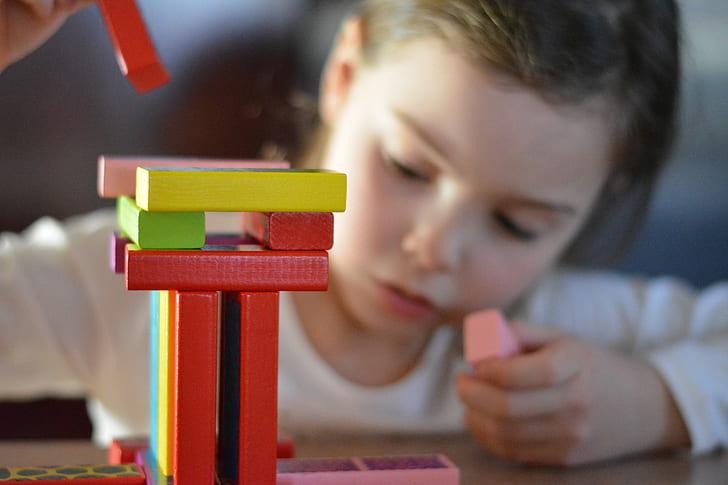
Representative image. Image courtesy: Pickpik
Viruses are no longer the only invisible threat to human health. Experts are now warning of a different, rapidly spreading danger: misinformation. From social media feeds to AI-generated content, fake news is quietly weakening society’s ability to think clearly and make smart decisions.
Global experts believe the solution requires a shift as fundamental as washing our hands to stop the flu. Their prescription? Teach critical thinking early and treat it as a form of "mental hygiene.
Scientists Call for Education Reform
This is the fundamental message of an editorial published in the peer-reviewed journal, Microbial Biotechnology, by an international team of academics, including microbiologists. The authors suggest that worldwide educational systems must urgently shift away from rote memorisation and towards independent, analytical thinking.
"Cultivating deep, critical, and systems-oriented thinking is no longer optional but essential in the face of global challenges such as climate change, biodiversity loss, and health crises," according to the authors.
They highlight that this process must begin early, in classrooms designed not only to transfer information but also to foster reasoning, curiosity, and active citizenship.
AI Is Numbing Our Ability to Think
Among the contributors is Dr Jake Robinson, a microbiologist at Flinders University in Australia, who cautions that unmanaged digital information flows endanger public health.
"AI-driven and internet misinformation is numbing our ability to think properly and make rational decisions," Dr Robinson writes in the Microbial Biotechnology paper.
According to him, the consequences are already visible: increased polarisation, poor discernment, and increased rejection of scientific evidence on topics ranging from vaccines to climate change.
"There is an urgent need to rapidly roll out effective education programmes in which critical thinking teaching is solidly embedded," Robinson elaborates.
He describes critical thinking, namely, the practice of asking "why" and demanding evidence-based explanations, as "a shield against bias, prejudice, propaganda, misinformation, and the incessant pressures of social media."
Why Are Microbiologists Leading the Charge?
The involvement of microbiologists, rather than just education specialists, may seem odd. However, the scientists believe that microbiology is ideally adapted to teaching critical thinking.
Unlike studies that focus on visible events or memorised data, microbiology teaches students to reason about invisible systems such as microorganisms, viruses, and ecological interactions that cannot be directly observed but have far-reaching repercussions.
"Microbiology offers a compelling context for cultivating imagination because its study requires learners to visualise invisible worlds and connect them to human and ecological health," says Dr Robinson.
Children can learn that unseen viruses can spread disease, as well as that unseen forces—algorithms, advertising methods, and online echo chambers—shape ideas and behaviour.
From Germs to Algorithms: Practical Tools
This method is already being tested through programmes like MicroChats, an educational platform created by the International Microbiology Literacy Initiative. The tool teaches youngsters about everyday concepts such as food degradation, hygiene, fermentation, and disease transmission.
By connecting daily experiences to cause-and-effect reasoning, educators urge students to examine assertions rather than accept them uncritically—a vital skill in the digital age.
Lesson for India and Global South
The scientists emphasise that the warning is especially important in nations like India and much of the Global South, where science education frequently prioritises memorisation over conceptual comprehension.
They claim that a child who has been trained largely to retain facts is especially vulnerable in an age where artificial intelligence may generate persuasive—but false—information quickly and on a large scale.
Is it Possible to Teach Critical Thinking at Early Age?
While researchers accept that very young infants cannot understand sophisticated abstractions, they believe that habits of asking can be fostered early through age-appropriate learning experiences.
They suggest that instead of rewriting textbooks, the solution is to move the focus from "what to think" to "how to think".
Critical Thinking and Public Health
Parents and teachers frequently wonder if critical thinking can actually safeguard pupils from bogus news, combat social media pressure, or even belong in the "hard" sciences. According to the scientists, the answer is yes on every point.
"Students must develop adaptive capacities that enable them to question, critically analyse, imagine, act, and empathise," says Dr Robinson.
Finally, the authors argue that critical thinking is a public health imperative rather than an academic luxury.
They believe that in an age of digital overload and manufactured narratives, critical thinking should be viewed similarly to hygiene—a fundamental protective activity required for mental, social, and civic health.
The writer is a Delhi-based freelancer who writes on health issues and medical discoveries.
Get the latest reports & analysis with people's perspective on Protests, movements & deep analytical videos, discussions of the current affairs in your Telegram app. Subscribe to NewsClick's Telegram channel & get Real-Time updates on stories, as they get published on our website.