





Steel Skeleton of Indian Capital: Production, Trade, Labour Exploitation
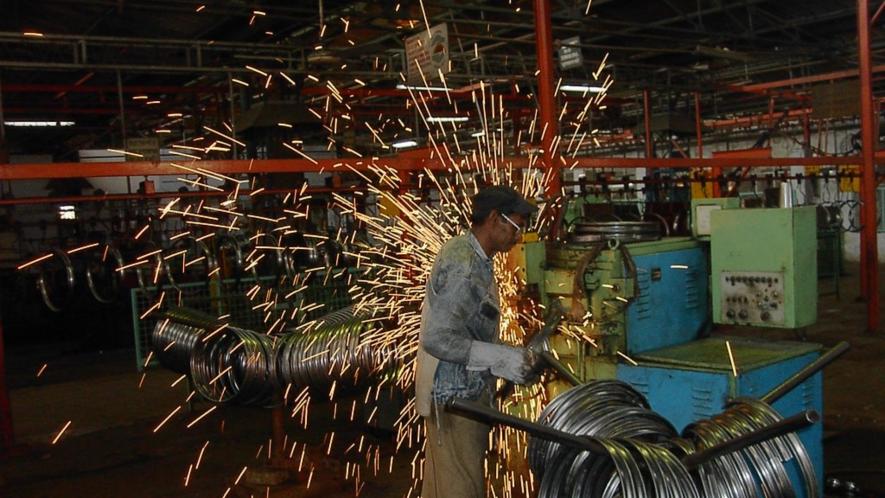
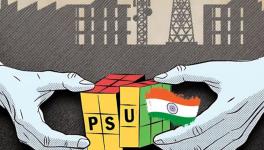
Representational image. Image Courtesy: Flickr
The material reality of modern industrial capital rests upon a foundational element: steel. In the political economy of contemporary India, iron and steel production serves as the central distribution system through which State-led infrastructural ambitions and private capital accumulation are invested. While official narratives celebrate national capacity expansion, an examination of trade valuations, labour relations, and material metallurgy reveals deep structural contradictions within India's industrial matrix.
Metallurgy of Accumulation: Production and Capacity
According to data from the Ministry of Steel, India’s crude steel-making capacity has reached approximately 220 million tonnes per annum, positioning the nation as the second-largest crude steel producer globally, behind China. Total finished steel production stands at over 139 million tonnes annually, alongside pig iron production exceeding 7 million tonnes.
This output is bifurcated between two distinct regimes of production and labour exploitation:
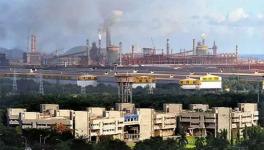
• Primary Producers: Large-scale conglomerates—such as Tata Steel, JSW Steel, and the state-owned Steel Authority of India Limited (SAIL)—employing integrated Blast Furnace-Basic Oxygen Furnace (BF-BOF) machinery. These primary facilities produce the majority of high-value flat products (hot-rolled and cold-rolled coils).
• Secondary Producers: Decentralised, energy-intensive units utilising Electric Arc Furnaces (EAF) and Induction Furnaces (IF) powered by domestic sponge iron and scrap metal. Supplying approximately 47% of national output (primarily non-flat items like thermo-mechanically treated rebars), this sector functions largely in the informal domain, relying on unorganised, low-wage manual labour.
Sectoral Allocation: How Capital Employs the Metal
The distribution and physical consumption of finished steel reflect the capital expenditure model of the Indian state. Tracking data from the Joint Plant Committee indicates that domestic finished steel is absorbed across key end-user sectors:
• Building & Infrastructure (60–65%): The primary consumer. It relies on thermo-mechanically treated rebars and structural sections to support urban expansion, real estate speculation, and state logistics corridors.
• Capital Goods & Heavy Engineering (10–12%): Employs forging-quality carbon and alloy steels for industrial machinery fabrication.
• Automotive & Transportation (9–10%): Utilises high-value flat steel, including high-strength cold-rolled sheets and galvanised auto-body panels.
• Energy, Oil & Gas (5–7%): Consumes seamless tubes and electric resistance welded line pipes for hydrocarbon extraction and transport.
• Railways & Defence (4–5%): Requires specialised metallurgy, including head-hardened rails and high-tensile armour plates.
SECTORAL STEEL CONSUMPTION BREAKDOWN
Building & Infrastructure - 60-65%
Capital Goods & Eng. - 10-12%
Automotive - 9-10%
Energy, Oil & Gas - 5-7%
Railways & Defence - 4-5%
Consumer Durables - 4-5%
Trade Valuation and Net Importer Paradox
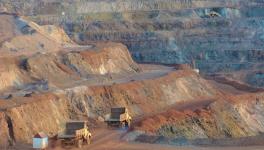
Despite substantial domestic raw material wealth—specifically high-grade hematite deposits extracted from the Odisha-Jharkhand belt at significant social and ecological costs—India faces a structural trade paradox. Reports from the Joint Plant Committee confirm that India transitioned into a net importer of finished steel.
• Import Dynamics: Finished steel imports rose to over 8.3 million tonnes annually, valued at approximately ₹68,193 crore or $8.2 billion. These imports consist of high-value flat items, such as electrical steel sheets, specialised alloy plates, and cold-rolled coils, sourced from South Korea, Japan, and China.
• Export Dynamics: Exports stood at 7.49 million tonnes, valued at roughly ₹59,157 crore or $7.1 billion, comprising lower-margin commodity products (standard hot-rolled coils and galvanised sheets) bound for Europe, the UAE, and Southeast Asia.
• The Valuation Deficit: This dynamic generates a trade deficit in finished steel exceeding ₹9,000 crore annually, illustrating India's dependence on foreign technological capacity for specialised metallurgy.
Political Economy of Labour, Industrial Accidents, and Extraction
A purely trade-centric analysis masks the human toll embedded in steel production, where worker mortality is routinely treated as an acceptable overhead cost.
• Casualisation and Fatal Explosions: The reliance on a two-tiered labour structure directly compromises plant safety. Contract labourers perform high-risk maintenance without structural protections. An investigative report by Groundxero into the 2018 disaster at SAIL’s flagship Bhilai Steel Plant documented how 14 workers—including contract maintenance workers and firefighters—were burned alive during a gas pipeline explosion while de-blanking a flange. Trade union investigations revealed that post-accident statutory safety recommendations had been ignored, while contract workers were deployed to high-risk zones without basic statutory protections.
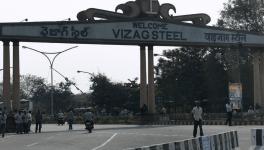
• Extreme Hazards on the Shop Floor: The physical precarity of the shop floor was again demonstrated in June 2026 at the State-run Visakhapatnam Steel Plant, as reported by The Hindu. A ladle carrying 150 tonnes of molten steel at 1,600°C exploded, spilling superheated liquid metal across the steel melting shop floor. The blast killed eight workers on the spot—including contract labourers Ramana, Trinadh, and N. Appala Raju—and critically injured six others with severe burns.
• Secondary Sector Informalisation: In unorganised sponge iron units and rerolling mills across Chhattisgarh and Odisha, informal labour absorbs the shock of volatile scrap metal and electricity prices. When electricity tariffs or coal prices surge, mills cut overhead by accelerating shift rhythms and dismantling safety protocols, leading to unrecorded limb amputations and burn injuries that never enter official statistics.
• Extractive Violence and Coking Coal Vulnerability: While iron ore is mined from forest regions through the displacement of indigenous communities, India lacks domestic high-grade metallurgical coking coal. Consequently, domestic blast furnaces remain dependent on importing over 70% of their coking coal from Australia and Russia, exposing the domestic valuation chain to external price variability.
Ultimately, the evolution of India's steel industry illustrates how intense physical expansion, resource mobilisation, and deep technological partnerships can serve as catalysts for modern globalisation. By anchoring critical foreign supply chains in high-value technologies, the sector has effectively integrated India's economy into global supply chains—fostering more reliable, trustworthy international relations and unlocking expanded cross-border trade opportunities across complementary and critical industries.
The writer is an independent journalist who is presently pursuing his PhD. The views are personal.
Get the latest reports & analysis with people's perspective on Protests, movements & deep analytical videos, discussions of the current affairs in your Telegram app. Subscribe to NewsClick's Telegram channel & get Real-Time updates on stories, as they get published on our website.