





Snakebite Deaths in India Far Lower than Feared: ICMR Study
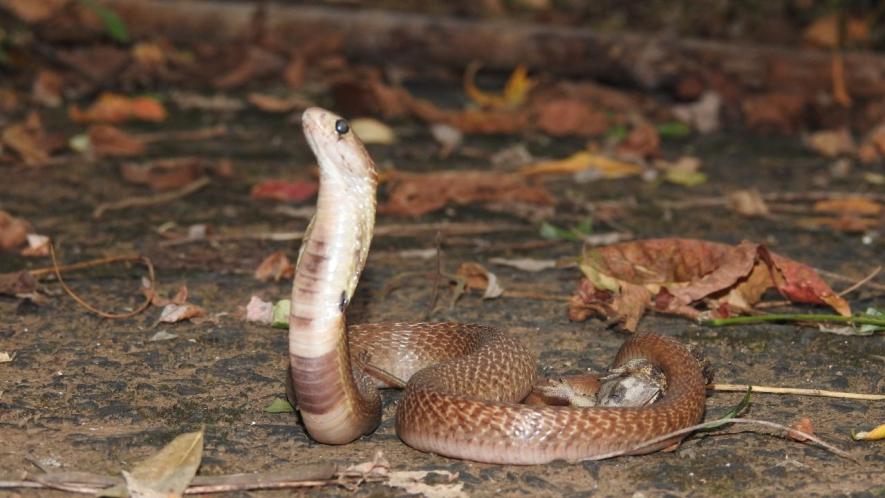
Representational image. Image Courtesy: Wikimedia Commons
India's first nationally representative community-based study on snakebites has delivered a surprising finding: the number of deaths from venomous snakebites may be significantly lower than previously believed. But the same research also exposes a deeply troubling reality — nearly half of all snakebite victims die without ever reaching a hospital.
The interim report of the ICMR-National Task Force study, published in Nature Communications, surveyed 7,094 snakebite cases across 31 districts in 13 states, covering a population of 83.9 million. The study recorded a mortality rate of 0.33 per 100,000 people — far below the 6 per 100,000 estimate derived from the Registrar General of India's One-Million Death Study. In Kerala, for example, the study recorded 31 snakebite deaths in 2024-25, whereas the older estimate would have predicted 2,100.
"The anticipated mortality for the study was estimated to be 6/100,000 based on the mortality data reported in the One Million Death Study. However, with a mortality rate of 0.33 per 100,000 population, the deaths captured in our study were much lower than the anticipated estimate."
Behind every statistic is a household suddenly pushed into crisis. The statistics reveal a troubling reality: 43.1% of deaths occurred outside of hospital settings, either at home or while in transit. That means nearly half of those who die from snakebites never get the chance to receive anti-snake venom (ASV) — the medicine made to neutralise snake venom.
Who is most affected?
Snakebites are a disease of poverty. The study found that 53% of victims were below the poverty line. The study further found that males (64.1%) in the age group of 30-39 years (20.9%) were the worst affected during monsoons (62.1%); they are India's farmers and daily wage labourers – people who work outdoors, often barefoot, in fields and forests.
"Snakebite envenoming (SBE) is a neglected tropical disease and a significant cause of mortality and disability in India," the researchers note. The World Health Organization classifies snakebite as a neglected tropical disease – a condition strongly linked to poverty, inequality and limited access to health care.
Why do so many die before reaching hospital?
Rural victims often rely on faith healers or traditional medicine for immediate care. A significant proportion of snakebites are from non-venomous species or are "dry bites", meaning bites without venom release, on which faith healers build their reputations. However, this reliance has dire consequences: valuable initial hours are wasted in cases of true envenoming, where venom enters the body following a poisonous snakebite.
The study also found that only 12% of victims had insurance cover, despite BPL cardholders being eligible for Ayushman Bharat. Treatment was predominantly availed in public sector hospitals, with exceptions like Kerala and Punjab. The average out-of-pocket expenditure for a victim was ₹6,500, while the mean treatment cost was ₹7,500 — rising to ₹27,400 in the private sector. For many farming families, the situation means a choice between medical care and food for the rest of the month.
What does the study mean for India's public health response?
The ICMR study, covering all five geographical zones of India, is the only nationally representative community-based assessment of snakebite incidence, mortality and economic burden. It was conceptualised to cover 13 of 28 states, though high-burden states like Uttar Pradesh, Bihar and Madhya Pradesh were excluded, and the study remains in progress in West Bengal.
Researchers acknowledge limitations: snakebite is a medicolegal case, which discourages reporting. In some communities, snakebite is considered a bad omen and kept secret. The study also relied on ASHA workers — frontline health workers whose primary role is in maternal and child health — to report incidents, which may have led to undercounting.
The way forward
One unmeasured outcome of the study is the training of ASHA workers in study districts on first-aid measures, identification of venomous species and recognising symptoms of neuro- and haemotoxicity suggesting envenoming.
"Trained health workers would be the interface between the victim and the health system, especially in remote regions with inadequate health facilities, thereby helping overcome the issue of victims depending on faith healers and alternate systems of medicine."
Researchers have identified several evidence-based solutions: strengthening primary health centres, improving round-the-clock emergency care, ensuring adequate anti-snake venom availability, training ASHA workers, promoting scientifically correct first aid, and expanding financial protection for vulnerable rural households.
The ICMR has also launched the "Zero Snakebite Death Initiative" — a four-year national implementation research project with a financial outlay of ₹13.5 crore, scheduled to begin in January 2026. The initiative aims to co-develop, pilot and implement a composite model of community engagement for snakebite prevention and mitigation.
For now, the message is clear: snakebite remains a disease of poverty, geography and delay. The solution lies not in better medicines alone but in better systems — systems that reach the farmer in the field, the labourer in the forest, and the family that cannot afford the journey to a hospital.
The writer is a Delhi-based freelancer who writes on health issues and medical discoveries.
Get the latest reports & analysis with people's perspective on Protests, movements & deep analytical videos, discussions of the current affairs in your Telegram app. Subscribe to NewsClick's Telegram channel & get Real-Time updates on stories, as they get published on our website.