





Saturation Warfare and Western Defence Paradox
Image Courtesy: Flickr
For much of the post-Cold War era, Western military power has been wrapped in an aura of technological invincibility. Precision-guided munitions, stealth aircraft, satellite surveillance, and multilayered missile-defence systems created the impression that advanced militaries--particularly the United States and its close allies -- had largely solved the problem of vulnerability from the air. Wars in Iraq, Afghanistan, and the Balkans reinforced this perception. The West appeared capable of projecting force with devastating precision while shielding its own territory and infrastructure from meaningful retaliation.
Yet the strategic landscape is beginning to look more complicated. Iran, a country with neither the financial resources nor the technological depth of the US or Israel, has spent the past two decades quietly developing a military doctrine designed not to defeat Western power directly but to expose its limits. Through a combination of missile forces, drone warfare, and saturation tactics, Tehran is steadily chipping away at the perception that Western defensive systems provide an impermeable shield.
This development matters less because of the physical damage Iranian strikes may cause and more because of what it reveals about the evolving balance between offence and defence in modern warfare. Military technology can reduce vulnerability, but it rarely eliminates it.
The Western approach to air and missile defence rests on a layered architecture. Radar systems detect incoming threats, command networks calculate trajectories, and interceptor missiles are launched to destroy hostile projectiles before they reach their targets. Systems, such as Patriot and other advanced interceptors, form part of a defensive ecosystem designed to create overlapping layers of protection. In theory, this architecture allows defenders to neutralise most aerial threats before they inflict damage.
In practice, however, these systems operate under constraints that are both technical and economic.
The first constraint is mathematical. Every incoming missile, drone, or rocket must be intercepted individually. Detection systems must track it, command networks must assign an interceptor, and defensive missiles must be launched within seconds. When the number of incoming projectiles remains limited, such systems perform effectively. But as the scale of an attack increases, the burden on the defensive network multiplies rapidly.
Iran has recognised this vulnerability and built its military doctrine around exploiting it.
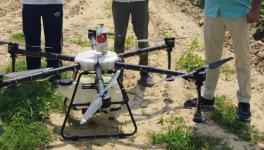
Rather than relying exclusively on a small number of advanced weapons, Tehran has invested in large inventories of ballistic missiles, cruise missiles, and drones. Many of these systems are relatively inexpensive compared with the high-end interceptor missiles used by Western defence networks. Their strategic value lies in their quantity rather than their individual sophistication.
The objective is not necessarily to overwhelm defensive systems completely. Instead, the goal is to create saturation conditions- situations in which the defender must simultaneously track and intercept large numbers of incoming threats. Under such conditions, even highly capable defensive systems begin to strain. Radar systems must manage dozens of targets, command networks must prioritise which projectiles to intercept first, and interceptor inventories are rapidly depleted.
Even a system with a high interception rate cannot guarantee perfect protection. If a defensive network stops 90% of incoming missiles, 10% still penetrate the shield. In a small exchange, that residual number may be insignificant. But in large-scale missile salvos, even a small penetration rate can produce meaningful strategic effects.
Iran’s strategy also exploits the economic asymmetry embedded in missile defence. Interceptor missiles are extraordinarily expensive. A single launch may cost millions of dollars, reflecting the advanced sensors, propulsion systems, and guidance technology required to destroy a target traveling at high speed.
By contrast, many Iranian drones and short-range missiles are comparatively cheap to produce. This disparity creates a troubling economic logic for the defender. Shooting down inexpensive drones with costly interceptor missiles may be tactically successful, but it imposes a financial burden that is difficult to sustain in prolonged engagements.
The result is a form of economic warfare in which the attacker forces the defender to spend vastly more resources simply to maintain defensive stability.
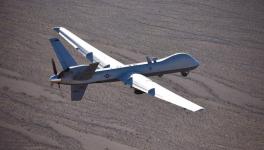
Iran has further refined this approach by combining different types of aerial threats in coordinated attacks. Ballistic missiles descend from high altitudes at extraordinary speeds. Cruise missiles travel at low altitudes, making them harder to detect on radar. Drones move slowly but can be deployed in large swarms, forcing defensive systems to engage multiple targets simultaneously.
These mixed attack patterns complicate the defender’s task considerably. Air-defence systems must deal with threats operating at different speeds, altitudes, and trajectories. The more complex the attack becomes, the greater the probability that some projectiles evade interception.
What Iran has demonstrated is not that Western defensive systems are ineffective. On the contrary, they remain among the most sophisticated military technologies ever developed. But their effectiveness has limits, and those limits become visible when they are confronted with large-scale, coordinated attacks.
The strategic implications extend beyond the immediate military balance. For decades, the credibility of Western military power has rested partly on the belief that technological superiority could guarantee overwhelming battlefield dominance. States contemplating confrontation with Western powers often assumed that their own capabilities would be neutralised quickly and decisively.
Iran’s approach challenges that assumption. By showing that missiles and drones can occasionally penetrate even advanced defensive systems, Tehran introduces an element of uncertainty into the strategic equation. It demonstrates that technologically superior militaries remain vulnerable to well-designed asymmetric strategies.
This does not mean that Iran has fundamentally altered the global balance of power. Western militaries still possess overwhelming advantages in air power, intelligence, and precision strike capabilities. The US and its allies retain the ability to project force on a scale that Iran cannot match.
Nevertheless, the Iranian strategy underscores a recurring pattern in military history. When dominant powers develop advanced defensive technologies, weaker adversaries respond by seeking methods to bypass, saturate, or circumvent those defences. The contest between offence and defence is rarely settled permanently.
In this sense, Iran’s missile and drone programmes represent a strategic adaptation rather than a revolutionary breakthrough. They exploit vulnerabilities inherent in even the most sophisticated defence systems.
The broader lesson is straightforward. Technology can shift the balance of power, but it rarely abolishes the fundamental uncertainties of warfare. Defensive systems may reduce the damage inflicted by an adversary, but these cannot eliminate the threat entirely.
The West’s military shield remains formidable. Yet Iran’s strategy serves as a reminder that no shield is ever perfect and that the perception of invincibility is often more fragile than the technology that sustains it.
The writer is a Kashmir-based independent researcher. The views are personal. Email: Zahidcuk36@gmail.com
Get the latest reports & analysis with people's perspective on Protests, movements & deep analytical videos, discussions of the current affairs in your Telegram app. Subscribe to NewsClick's Telegram channel & get Real-Time updates on stories, as they get published on our website.