





Revolution is no Longer Televised - It is Memeified
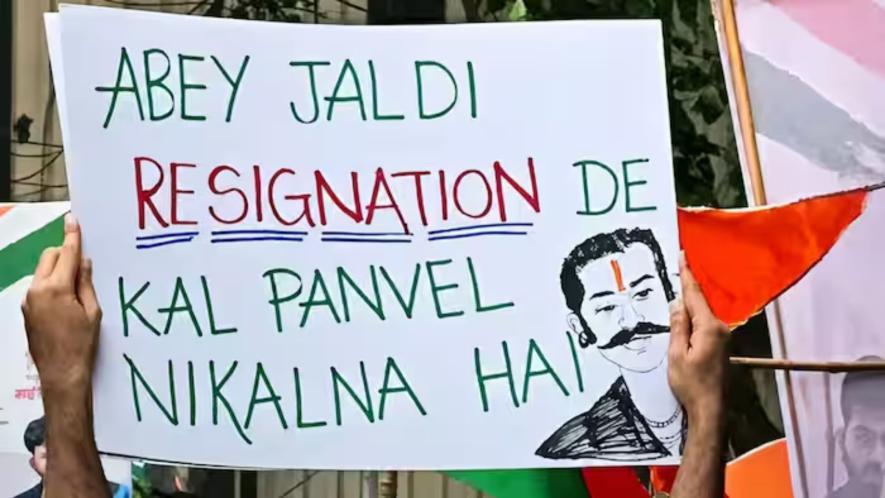
Image Courtesy: @iamneeraj___/X
Every generation is remembered not merely by the issues they confront; but by the language through which they confront them. The freedom movement produced the idiom of sacrifice. The Emergency generation cultivated the ethics of resistance. The anti-corruption movement of the past decade was animated by moral indignation and the promise of institutional cleansing. India’s GenZ, however, has introduced an altogether different discourse into the country’s democratic life. It speaks not through manifestos, ideological treatises or rhetorical flourish, but through satire. Its preferred medium is the meme, its method of irony, and its politics an unapologetic refusal to defer to established authority.
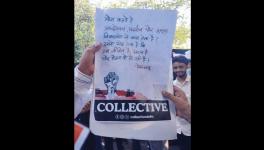
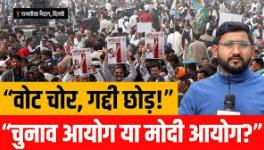
The recent demonstrations at Jantar Mantar illustrate this transformation with remarkable clarity. The immediate trigger may have been public dissatisfaction over competitive examinations, unemployment and the perceived erosion of institutional credibility. Yet, the protests were equally significant for what they revealed about the changing nature of political communication in contemporary India.
One did not merely witness citizens protesting; one witnessed a generation communicating politics through an entirely new vocabulary. Protest placards resembled internet humour, slogans borrowed the rhythm of digital culture, and sarcasm displaced solemnity as the dominant emotional register of collective action.
This deserves to be understood as more than a stylistic innovation. It reflects a deeper sociological transformation. GenZ is the first political generation whose socialisation has been shaped almost entirely within the architecture of the internet. Their consciousness has evolved alongside algorithms, viral content, short-form videos and participatory media. They do not perceive digital platforms as extensions of political life; for them, digital space is political space. Consequently, the meme is not an accessory to politics. It is politics conducted through the cultural logic of the digital age.
The political significance of satire lies precisely in its refusal to recognise inherited hierarchies of authority. Previous generations often approached power with a degree of rhetorical restraint, even while opposing it. Their language retained traces of deference toward institutions. GenZ appears considerably less interested in preserving these conventions.
Governments, ministers, bureaucracies, television anchors, corporate influencers and even Opposition leaders become equal objects of ridicule. Authority, in this imagination, does not command reverence merely because it occupies constitutional office or dominates television studios. It must continually justify itself before a sceptical public that has become increasingly unwilling to separate power from accountability.
Perhaps the most striking feature of this political moment is that the target of satire is not confined to the State. The mainstream media itself has become a central object of public mockery. For decades, television news occupied a privileged position in India’s democratic architecture. It decided which issues deserved national attention and which voices merited public legitimacy. That monopoly appears increasingly fragile.
A significant section of young citizens believe that large sections of mainstream media have gradually substituted journalism with performance, reducing public debate to spectacles of outrage while neglecting questions that shape everyday life -- education, employment, examination integrity, inflation and institutional transparency.
Whether this criticism is entirely justified is, in many ways, secondary. What matters politically is that an entire generation increasingly regards the media not as an independent intermediary between citizens and power but as another institution that must itself be held accountable. Consequently, satire directed at television studios is not merely criticism of journalism; it is an assertion that no institution in a democracy enjoys immunity from public scrutiny.
This explains why humour has acquired extraordinary political significance. Traditionally, satire functioned as commentary upon politics. Today, satire increasingly constitutes political participation itself. A meme circulated among millions does not simply entertain; it performs the democratic act of questioning authority. It compresses criticism into an image, irony into a sentence and political argument into cultural symbolism. In an age where attention has become the scarcest political resource, brevity often acquires greater persuasive power than elaborate rhetoric.
Media theory offers a useful framework for understanding this shift. The classical agenda-setting model assumed that mainstream media exercised considerable influence over determining what societies considered politically important. Digital platforms have fundamentally unsettled this assumption. Public attention no longer flows exclusively from newsroom to citizen. Increasingly, it travels in the opposite direction.
Narratives originating in university campuses, Telegram groups, anonymous Instagram accounts or student collectives frequently compel established media organisations to respond rather than lead. The architecture of political communication has become radically decentralised.
This decentralisation has also altered the relationship between fear and dissent. Satire possesses a peculiar democratic quality. It diminishes the psychological distance between ordinary citizens and political authority. Laughter strips the power of its aura. The ruler becomes a character, the institution becomes a meme and the spectacle of authority becomes vulnerable to parody.
Political theorist Mikhail Bakhtin recognised this dynamic when he described carnival as a temporary inversion of established hierarchies, where laughter suspended the symbolic superiority of power. James C. Scott similarly argued that humour and disguised transcripts allow subordinate groups to articulate resistance in ways that conventional political discourse often cannot. GenZ appears to have instinctively rediscovered these democratic possibilities within digital culture.
The meme, therefore, functions as what might be described as a democratisation of political speech. It requires neither institutional sponsorship nor editorial approval. It emerges from ordinary citizens equipped only with a smartphone, an internet connection and cultural imagination. In doing so, it redistributes communicative power away from traditional elites towards decentralised digital publics. The barriers separating the producer of political discourse from its audience have never been thinner.
Yet this transformation should neither be romanticised nor dismissed. Satire possesses undeniable strengths, but it also carries inherent limitations. It excels at exposing contradictions, puncturing official narratives and mobilising public attention. It is considerably less effective at constructing durable political alternatives or sustaining institutional reform. Memes simplify. Democratic governance inevitably requires complexity. Irony can dismantle legitimacy; it cannot by itself produce administrative capacity or constitutional consensus.
The transition from viral outrage to meaningful public policy remains one of the central challenges confronting digitally mediated democracies.
Nevertheless, reducing GenZ’s politics to internet frivolity would constitute a profound analytical error. Beneath the humour lies a serious political claim. Their satire reflects a demand for institutional credibility rather than institutional collapse; for responsive governance rather than symbolic performance; for journalism that interrogates power rather than amplifies spectacle. Their irreverence should not be mistaken for cynicism. It is, instead, an insistence that democratic legitimacy must continually be earned rather than inherited.
The Jantar Mantar protests, therefore, may ultimately be remembered less for the immediate demands they articulated than for the political language they normalised. They announced the arrival of a generation that no longer experiences politics through party offices, newspaper editorials or televised debates alone. It experiences politics through networks, humour, visual culture and digital participation. The meme has ceased to be an artefact of internet culture. It has become a constitutional language of democratic accountability.
Democracies often recognise profound transformations only after they have already occurred. India’s GenZ is quietly rewriting the discourse of political dissent. It has been discovered that in an age overwhelmed by spectacle, the sharpest form of criticism is often not anger but irony; not denunciation but ridicule; not ideological certainty but satirical clarity. That is not the abandonment of politics. It is politics adapting to the cultural conditions of a new century.
The writer is an independent researcher based in Srinagar, Kashmir. The views are personal. Zahidcuk36@gmail.com
Get the latest reports & analysis with people's perspective on Protests, movements & deep analytical videos, discussions of the current affairs in your Telegram app. Subscribe to NewsClick's Telegram channel & get Real-Time updates on stories, as they get published on our website.