





Religious Festivals: New Ground for Spreading Hate
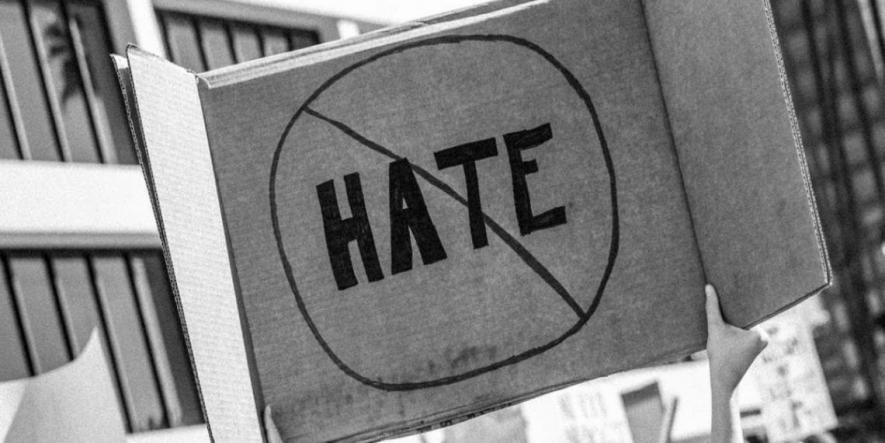
Image credit: The Leaflet
Eid-Ul-Adha (Bakra Eid) is the second most important festival for Muslims. Bakra Eid, widely known as Eid al-Adha or the Festival of Sacrifice, is a major Islamic holiday. It honours Prophet Ibrahim’s (Abraham) unwavering faith in Allah, commemorating his willingness to sacrifice his son, Ismail, as an act of obedience before Allah provided a ram in the son's place. Muslims who can afford to do so, perform a ritual sacrifice of an animal, such as a goat, sheep, cow, or camel. This serves as a physical and symbolic re-enactment of Prophet Ibrahim's sacrifice.
It is a profound spiritual festival for Muslims and it highlights the spirit of sacrifice and sharing, as the meat from the sacrificed animal is divided into three strictly regulated portions -- one for the immediate family, one for relatives and friends, and one-third dedicated entirely to the poor and needy. This underscores the Islamic pillars of empathy, charity, and community solidarity. It has been celebrated so far on a regular basis in India.
Read Also: Cow-Beef Politics: Coming Full Circle
As we witness the increasing use of Hindu festivals as yet another occasion to spread hate against Muslims, Muslim festivals are also increasingly coming under the radar of vigilante groups and the ruling Bharatiya Janata Party (BJP) politicians to turn these into yet another occasion to spread hate against Muslims.
This year during Bakra Eid, Mumbai's Muslim community faced significant challenges in performing ritual goat sacrifices, despite existing municipal rules and a 2019 Bombay High Court order allowing sacrifices within residential premises (but not inside houses) under certain conditions. This year, permissions for three housing societies were controversially withdrawn at the last minute, largely due to the intervention of politically connected individuals, such as BJP Maharashtra vice president Kirit Somaiya along with Bajrang Dal, and Vishwa Hindu Parishad activists. This led to a public spectacle and media focus, fuelling outrage against Muslims.
Jyoti Punwani, a freelance journalist, in her article in Frontline magazine points out: “Every local and many national TV channels focussed on the story, repeatedly playing visuals of Muslims forced to take their goats out of the building societies. The result: the hounding of a community on its second most important religious festival became a public spectacle. Social media was awash with revulsion and outrage against Muslims, based as always on half-truths and hyperbole.” She tells us that in three housing complexes the sacrifice has been done in the housing complexes with Hindu majority (for years). In one such society, the goats were kept inside the complex till Eid and then taken out for sacrifice at the designated place.
This year, much ruckus was created in one of the complexes in Mumbai’s Mira Road. In Poonam Estate cluster, a lot of communal tension was created between the afternoon of May 25 and the morning of May 26. As per earlier years, the animals were kept in a temporary shed inside the compound. Many Bajrang Dal and VHP workers created a ruckus that animals cannot be kept inside the complex. No rule was being violated. But police and municipal authorities sided with those creating tension. To cap it all, they brought pigs inside the compound to scare away the Muslims.
Usually, festivals are an occasion to spread peace and joy. But VHP-Bajrang Dal and company are not sparing even these occasions to spread communal tension. India has a long history of celebrating the spirit of festivals together and associating with each other, cutting across the religious boundaries. These incidents have created a lot of tension. This type of tension is running parallel with the rise in communalism in the society.
Since the past few years, we have observed that Muslim youth were not permitted to participate in the Garba festival, particularly in Gujarat. A strict watch and checking of Aadhaar cards were done before giving entry into Garba pandals. While threatening warnings are being given against observing namaaz (Jumma, Friday) on the road, the Muslim community has to face the brunt of hate even in Hindu festivals.
At another level, we painfully observe that the during the Kanwar Yatra, which stalks the streets without any rules being observed, food and fruit stall owners are instructed to display the names of owners. The idea is that participants of these yatras should not buy anything from Muslim hotels or fruit stalls. The ‘purity-pollution’ practices are being imposed with the help of State authorities.
Ram Navami and Krishna Janmashtami processions have changed their character drastically. In my childhood, I used to participate in the processions with joy and happiness as prasad was distributed to all passersby. Many Muslim groups used to put up stalls to offer sharbat to those who were part of the processions.
Now, there is an emerging pattern in these festivals -- to pass via the route dominated by Muslims and to shout anti-Muslim slogans. There are enthusiasts who dance and shout abusive slogans in front of the mosques. And to cap it all, they even climb on the top of mosques to remove the Islamic green flag and hoist the saffron flag.
Where this hate is taking us is a painful question. India has been the place of syncretic culture. All aspects of our culture have benefited from the ‘other’ streams, respected those streams and enhanced the joy of community life. Festivals are an occasion of interaction, joy and relief from daily mundane life. Communalism is taking away this pleasant aspect of our life.
A recent study by author duo Irfan Engineer and Neha Dabhade, ‘Weaponisaton of Hindu festivals’ (Pharos, Delhi) is a detailed ground-level study on the issue and is an eye- opener about the dangers of misuse of our festivals. As communal hate is erecting the walls of hate, the Muslim community is facing more and more intimidation. This is definitely the major problem facing our society. This is an assault on the values of our Constitution and in particular on the core values of fraternity.
There is an urgent need to restore love and harmony between diverse sections of our society to keep our democracy alive and in good health.
The writer is a human rights activist, who taught at IIT Bombay. The views are personal.
Get the latest reports & analysis with people's perspective on Protests, movements & deep analytical videos, discussions of the current affairs in your Telegram app. Subscribe to NewsClick's Telegram channel & get Real-Time updates on stories, as they get published on our website.