





Political Marginalisation of Kayasthas Within BJP Since 2014
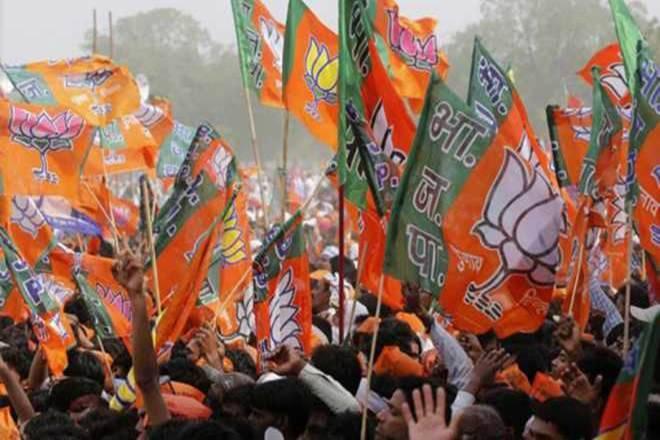
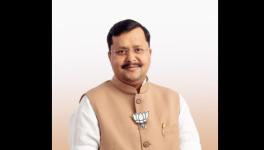
Though Nitin Nabin, a Kayastha from Bihar—the caste to which the first Indian President Rajendra Prasad, second Prime Minister Lal Bahadur Shashtri and Lok Nayak Jaya Prakash Narayan belonged--took over as the national president of Bharatiya Janata Party (BJP) on January 20, 2026, there is an increasing feeling among many in this community that notwithstanding their strong loyalty toward the saffron party, the latter is taking them for a ride, especially in Bihar.
Today, there is just one MLA from this once influential social group in the House of 243 against 21 in 1952 when the strength of the Bihar Assembly was 331—Jharkhand was hewed out in November 2000. And that lone legislator is from Janata Dal (United) and not BJP, the party to which the community have been consistently voting across large parts of India since the implementation of the Mandal Commission report (on reservation) in 1990.
As this is an urban-centric educated caste traditionally engaged in record-keeping, accounting, teaching and related administrative and legal works, the community felt cheated after the coming into effect of reservation in government jobs. Ever since the British replaced Persian with English and Urdu (or Hindustani in Arabic script) in 1837, the Kayasthas were among the earliest to learn these two languages and thus got government jobs.
Hindi replaced Urdu in 1949. Among the Hindus, the Kayasthas were the first to adopt modern education. Therefore, their population is concentrated in cities and towns. To promote social reforms and spread modern education, the Akhil Bharatiya Kayastha Mahasabha was formed in Allahabad in 1887. It was the first caste organisation which came up with this objective.
With such a background, the manner in which BJP lost the Bankipur bypoll recently by fielding a political lightweight against Jan Suraaj Party chief Prashant Kishor, has compelled many Kayasthas to do some introspection. It is claimed by one leading light of this social group that the Bankipur Assembly segment (known as Patna West till 2008) has the highest concentration of Kayasthas in Bihar to be followed by Kumhrar (Patna Central). Instead, the JD(U) last year won from Sikta, a rural Assembly segment of Paschim Champaran, which is not such a strong Kayastha bastion.
Patna, Home-Turf of Kayastha Bigwigs
The above two Assembly constituencies of Bihar’s capital are the home turf of JP (Jay Prakash Narayan), former Union ministers Yashwant Sinha, Shatrughan Sinha and Ravi Shankar Prasad (his father Thakur Prasad was among the founder member of the Bharatiya Jan Sangh), former vice Army chief of staff and governor of Jammu and Kashmir and Assam Lt Gen S K Sinha, founder and Group Chairman of India’s largest private security agency, Security and Intelligence Services (SIS), R K Sinha, television host Shekhar Suman, etc.
Yashwant Sinha and Hindi film actor ‘Shotgun’ (Shatrughan Sinha) had a long association with BJP, yet they were in one way or the other, shown the door in post-2014 years. This was so notwithstanding the fact that Yashwant Sinha had advocated the name of the then Gujarat chief minister Narendra Modi as a prime ministerial candidate before it was formally announced in the party’s parliamentary board meeting by the then BJP president Rajnath Singh on September 13, 2013. Incidentally, Lal Krishna Advani did not attend the meeting—thus obviously not approving the name of Modi.
Thirteen years later, Bankipur and Kumhrar have no Kayastha MLA though they were considered as their pocket-boroughs for many years. In Kumhrar, which BJP won last year, too, it replaced Arun Kumar Sinha, who had represented it between 2005 and 2025, with Sanjay Gupta, who comes from trading community.
On the other hand, R K Sinha’s term as Rajya Sabha MP of BJP ended in 2020, and he was not re-nominated. Ravi Shankar Prasad was (among a dozen ministers) asked to resign from the Modi cabinet hours before the July 7, 2021 cabinet reshuffle. He is at present just a Lok Sabha MP from Patna Sahab.
Though the emergence of Nitin Nabin came as a small consolation, there is no dearth of Kayasthas who are feeling let down as he is no match to the towering BJP personalities named above. The general argument within the caste is that it would have been much better had the BJP made any Kayastha of Bihari origin, who was more talented and with good educational background, as the party’s national president. Ravi Shankar Prasad, a Supreme Court lawyer or for that matter IIT-ian Jayant Sinha, till sometimes ago a minister in the Modi cabinet, may have been better suited than Nabin, who has no college degree. Jayant Sinha, son of Yashwant Sinha, represented the Hazaribagh seat in Jharkhand for the party in Lok Sabha between 2014 and 2024.
But technically speaking, Jayant Sinha is no longer in active politics, as ahead of the 2024 parliamentary election, he requested the party to relieve him as wanted to work on climate change. Whether he refused to contest or was denied a ticket cannot be ascertained, yet the way in which he was served a show-cause notice by the then BJP president J P Nadda had come as a shock for him. The then Hazaribagh MP was accused of not campaigning for the party’s new candidate Manish Jaiswal and not voting for him. In reply, the 1962-born Sinha said he was being “unjustly targeted” as he was out of country on the polling day and had sent his vote through postal ballot. He termed the show-cause notice as “demoralising”. So, this was another case of a talented Kayastha leader pushed out.
The political marginalisation of Kayasthas within the BJP eco-system in Bihar is almost complete. Their population, according to the Bihar Caste Survey of 2023, is meagre 0.57% of the total—the smallest among all the four Hindu upper castes. In rest of North and Central India, there is no influential BJP leader from the caste right now.
Past Record
Compare this with past when in 1960s, two caste-men, K B Sahay and Mahamaya Prasad, became chief minister of Bihar. Similarly, Naveen Patnaik of Odisha and Jyoti Basu of West Bengal are Kayasthas who had served as chief minister of their respective states for the second and third longest period in India’s history.
In North India, the Kayasthas tilted toward BJP in 1990s, not necessarily out of love for the Ram Janambhoomi movement but due to the quota policy of the then Janata Dal. As apart from jobs, they had little other options and they hoped that BJP would reverse the reservation policy. About 36 years later, the Kayasthas are feeling cheated, as neither former BJP Prime Minister Atal Bihari Vajpayee nor the current Narendra Modi government could do anything for them. Instead, the policy of liberalisation, privatisation and globalisation introduced by the Narasimha Rao government opened some scope for them and other general castes.
In industrially-starved Bihar in particular, Kayastha politics is at the crossroads. Lack of job opportunities in the state has compelled many in the community to migrate to greener pastures in India or abroad. Like the other castes, they have been earlier associated with Congress, but during the 1974 students’ movement, a large number of youths from the caste took part. As JP was the torch-bearer, it was quite natural for them to get attracted toward the movement, which actually started from campuses. As Lalu Prasad, Nitish Kumar and some other backward castes students were in forefront, a new equation came into being.
Years later, when Lalu Prasad became Chief Minister of Bihar on March 10, 1990, he posted several Kayastha bureaucrats and academics on important positions.
However, all this started changing after Kayasthas across the country strongly opposed the announcement of the implementation of the Mandal Commission report by the then Janata Dal Prime Minister V P Singh on August 7 the same year. The BJP withdrew support to the alliance government leading to its collapse. The Kayasthas were pleased by this gesture of the saffron party, though many of them never approved its Hindutva policy.
Three and a half decades later, after the Bankipur poll debacle, a new thinking has started emerging. Has the BJP taken the Kayastha caste votes for granted? Perhaps that was the reason for some Kayasthas voting for Prashant Kishor.
The writer is a Patna-based freelance journalist. The views are personal.
Get the latest reports & analysis with people's perspective on Protests, movements & deep analytical videos, discussions of the current affairs in your Telegram app. Subscribe to NewsClick's Telegram channel & get Real-Time updates on stories, as they get published on our website.