






Opposition's Crisis is Not That of Leadership
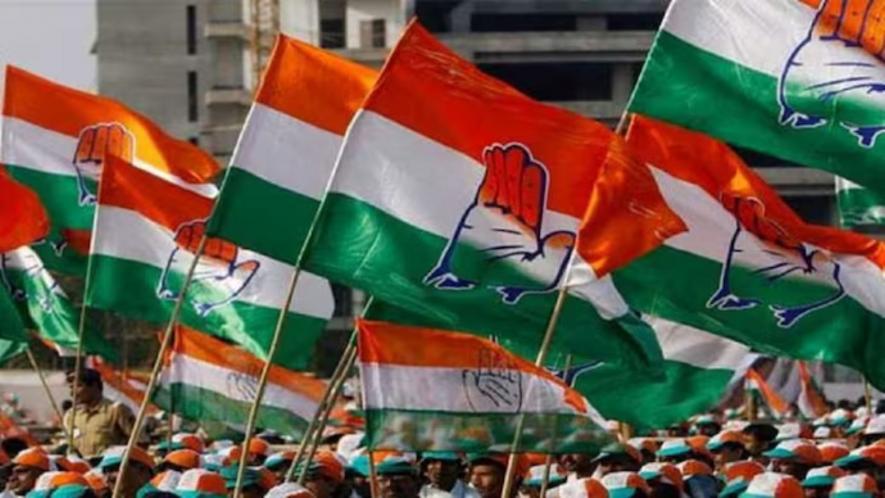
Representational Image. Image Courtesy: PTI
Some liberal critiques of the Indian Opposition, and especially of the leadership of the Congress party, remain confined to themes such as charisma, diligence, gravitas, communication skills and dynastic compulsion, while the systemic underpinnings of the hegemony of the neo-fascist dispensation, and the Congress Party's own role in sustaining them, go largely unexamined. This focus on personal epiphenomena allows the broad consensus on economic policy shared by mainstream political parties, including the neo-fascist dispensation, to conveniently recede into the background.
An authentic critique of the challenges facing the Opposition in India must shift its focus from personalities to the material processes that have left the Congress Party incapable of leading the Opposition in presenting a coherent political alternative. That shift requires moving beyond the personalities that dominate public commentary and asking a question that liberal frameworks cannot readily accommodate: why has an economic model, the neoliberal project, that produces persistent precarity and unemployment, widening inequality, agrarian distress and calibrated repression, not been effectively challenged politically?
The routine reduction of crises of political economy to leadership deficits is not unique to liberal commentary. Mainstream Indian political discourse frequently interprets Opposition weakness through the lens of who lacks gravitas, who works harder, who communicates better, or who possesses greater political instincts. According to this approach, the failure to dislodge the neo-fascist dispensation becomes a matter of the Congress leadership's psychological and professional inadequacies, as though the Indian people would rally around Congress or an alliance led by it if only its leadership were more industrious or more proficient in political communication.
What such approaches obscure is the foundational question of what, in terms of substantive policy and political organisation, the Opposition actually stands for that differs fundamentally from the dispensation it seeks to replace. Once that question is posed, the limits of a personality-centred critique become immediately evident.
The first cardinal deficiency of Congress politics is not alleged dilettantism but an unwillingness to break decisively from the neoliberal project that both Congress and Bharatiya Janata Party (BJP) have jointly entrenched since 1991. The Congress-led United Progressive Alliance governments, especially during their second term when they no longer depended on Left support, deepened the neoliberal trajectory through liberalisation, privatisation and fiscal conservatism. These policies weakened public provisioning in healthcare, education and employment generation, while facilitating the concentration of wealth and income.
In the Opposition after 2014, Congress made rhetorical gestures toward combating inequality and addressing agrarian distress. Yet, it consistently refused to articulate a genuinely alternative economic programme capable of breaking with the neoliberal project. This refusal persisted even as the neo-fascist dispensation intensified the squeeze on working people through labour market flexibilisation, privatisation, rising economic insecurity and growing concentration of economic power.
In the absence of an economic programme that breaks with the neoliberal project, it is impossible to mobilise the hundreds of millions who have borne the costs of four decades of neoliberal restructuring. No quantum of personal industry, organisational competence or oratorical refinement can compensate for the absence of a substantive alternative. The crisis of the Opposition is, therefore, not primarily a crisis of leadership. It is a crisis of political economy.
This policy stasis is not merely a failure of imagination. It reflects a deeper capture of mainstream Opposition parties, especially Congress, by the ideological assumptions of neoliberalism itself. The neo-fascist dispensation is unmatched in its fidelity to the neoliberal project, but it does not stand alone in accepting its basic premises.
Yet the persistence of neoliberalism in India cannot be explained simply by the failures of the Opposition. If neoliberalism has generated unemployment, precarity, agrarian distress and widening inequality, why has it not produced a correspondingly powerful anti-neoliberal political movement?
The answer lies partly in the fact that neoliberalism has reshaped common sense itself.
A generation raised after the neoliberal project achieved ideological hegemony has been steeped in a culture of purported individual aspiration. Exaggerated success stories dominate public discourse. Social media platforms continuously celebrate entrepreneurs, investors, influencers and exceptional achievers. Success is made highly visible; failure is rendered largely invisible. Structural barriers to securing a living wage disappear behind narratives of individual unemployability, skills deficits, irrational choices and insufficient initiative.
The result is a profound depoliticisation of economic distress. Unemployment ceases to be understood as a systemic problem of inadequate job creation and becomes a question of employability. Poverty becomes a question of skills. Economic insecurity becomes a consequence of personal decisions. In this manner, neoliberalism reproduces itself not simply through economic institutions but through culture, media and everyday assumptions about success and failure.
The durability of the neoliberal project also depends upon its ability to coexist with a carefully calibrated welfare regime. The neoliberal state does not necessarily retreat; rather, it reconstitutes itself. Welfare is deployed not to transform the social relations that generate distress but to manage the consequences of those relations.
The neo-fascist dispensation has increasingly mastered this art. Small transfers are strategically sequenced before elections, often appearing larger than they actually are because of their concentration in time. After elections, however, the larger processes of extraction, privatisation, labour market insecurity and inflation continue largely unabated. The net effect on working people remains adverse when viewed over a longer horizon. Welfare thus becomes a mechanism through which distress is administered rather than overcome.
The Congress party is unable to expose this contradiction convincingly because it offers a milder variant of the same neoliberal trajectory. It criticises the excesses of the neo-fascist dispensation while accepting many of the underlying assumptions that make those excesses possible.
However, the hegemony of the neo-fascist dispensation rests upon a fusion of calibrated repression, illfare masquerading as welfare, ultra-nationalism, majoritarianism and centralisation, among other related processes.
Indeed, the neo-fascist dispensation's driver's seat in the neoliberal project survives not despite majoritarian politics but partly through it.
Economic insecurities generated by the neoliberal project do not automatically produce anti-neoliberal politics because these insecurities are differentiated by design. They can, therefore, be redirected into irrational cultural anxieties, manufactured communal resentments and civilisational narratives based on reinvented history. Majoritarian politics provides precisely such a mechanism. It converts material frustrations deriving from the neoliberal project into purportedly cultural grievances. Questions of employment, wages, inequality and agrarian distress are displaced by propagandistic narratives of manufactured primordial identity, spurious belonging, ultra-national pride and ahistorical civilisational resurgence.
In this sense, majoritarianism performs an important stabilising function for neoliberalism. It fragments potential solidarities among working people while simultaneously providing symbolic forms of inclusion that purportedly compensate for material exclusion.
Citizens who experience growing economic insecurity are offered the choice of a passive participation in a supposedly grand national or civilisational project. The result is a political formation in which economic concentration and cultural mobilisation tend to reinforce one another if adherence to the neoliberal project is accepted as premise by the mainstream Opposition, especially Congress.
This limitation of Congress extends to the terrain of federalism. Congress has never proposed thoroughgoing fiscal devolution, autonomy over natural resources or genuine political decentralisation that would signal a rupture with the centralising and homogenising logic of the neo-fascist dispensation. The rhetorical celebration of diversity by Congress remains largely untethered from institutional reforms capable of giving federalism material force.
Equally damaging, and no less invisible in personality-centred critiques of the opposition, is Congress's strategic behaviour toward other non-BJP forces in India's federal landscape. In large parts of India, Congress has repeatedly ceded, without even a semblance of meaningful resistance, political space to the neo-fascist dispensation without undertaking the sustained grassroots political-organisational work required to build a broad anti-BJP front.
Where Congress is not the principal non-BJP force, its posture has often appeared shaped by an anxiety about the growth of other Opposition parties. It is as if the Congress leadership seeks to limit the size and scope of other non-BJP parties in order to preserve its status as the principal national alternative and thereby curry favour with US-centred international finance capital.
Expectations of such behaviour from Congress are not entirely irrational from the standpoint of US-centred international finance capital. International finance capital generally prefers policy predictability, centralised authority and familiar governing formations as long as its priorities predominate. The Congress party, despite its electoral decline, remains a known quantity for US-centred international finance capital. Regionally rooted parties, by contrast, are often more difficult to discipline because they are anchored in specific social coalitions, regional demands and local political dynamics that may not instantaneously sync with a political economy within which US-centred international finance capital predominates.
Genuine decentralisation and stronger federal arrangements can reduce the leverage of both domestic and international capital by dispersing power across multiple political centres. It is, therefore, not difficult to understand why a centralised Opposition led by a familiar national party might appear preferable to US-centred international finance capital.
Yet, this logic is politically self-defeating. A successful challenge to the neo-fascist dispensation will not emerge through the subordination of regional parties to Congress. It will require a genuinely federal Opposition in which Congress Party be the largest component but not the sole centre of political authority.
An effective challenge to the neo-fascist dispensation, therefore, requires more than defending constitutional values in the abstract, however indispensable that task may be. It requires integrating constitutional values with a political economy that breaks decisively from the neoliberal project. It requires addressing the material insecurities that shape popular discontent: unemployment, precarity, agrarian distress, regional inequality, communalism, gender injustice and social exclusion. Above all, it requires transforming these grievances that are dispersed by the designs of the neo-fascist dispensation into a united programme of political and organisational mobilisation.
India does not merely need more effective Opposition politicians. It needs a political-organisational process capable of challenging both the common sense of neoliberalism and the neo-fascist dispensation, which is both its principal driver and political beneficiary. Otherwise, the mainstream Opposition, especially Congress, will inadvertently reinforce the very hegemony of the neo-fascist dispensation they claim to oppose. Until such a process of authentic resistance emerges, debates about personalities will continue to dominate public discourse.
Shirin Akhter is Associate Professor at Zakir Husain Delhi College, University of Delhi: C. Saratchand is Professor, Department of Economics, Satyawati College, University of Delhi. The views are personal.
Get the latest reports & analysis with people's perspective on Protests, movements & deep analytical videos, discussions of the current affairs in your Telegram app. Subscribe to NewsClick's Telegram channel & get Real-Time updates on stories, as they get published on our website.