





Nigerien Forces Thwart Terror Plot at Niamey International Airport
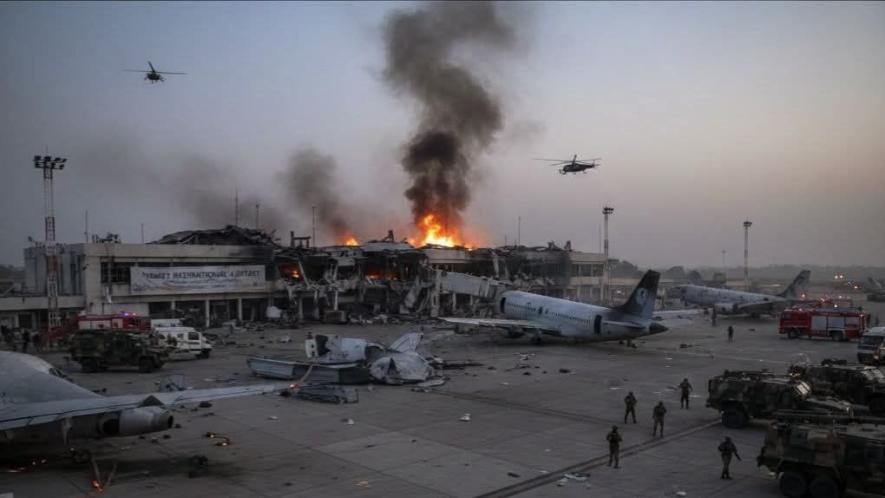
Terrorist attack on Niger's international airport on January 29 at 2am. Photo: Aviators Cafe/FB
Nigerien defense and security forces said they thwarted a coordinated militant attack on Diori Hamani International Airport in the capital, Niamey, late last week. Nigerien forces killed 20 assailants, and four soldiers were wounded. The assault, which occurred on the night of January 28-29, 2026, reportedly resulted in damage to three aircraft at the airport complex.
The Islamic State (IS) group claimed responsibility for the attack, claiming that it had inflicted significant damage on the site. Nigerien authorities said the attackers attempted to infiltrate the airport and airbase, facilities that host key military installations and the headquarters of the Niger, Burkina Faso, and Mali Joint Force, a regional mechanism established to combat armed groups operating across the Sahel. The airport lies approximately 10 kilometers from the presidential palace, and is of strategic importance within Niger’s security architecture. In the aftermath, authorities reinforced security measures across the capital and heightened vigilance around critical infrastructure.
Speaking to People Dispatch, Aboubakar Alassane, a Nigerien leader of the anti-imperialist West Africa People’s Organization (WAPO), said “The attack on Niamey Airport amounts to an act of sabotage against Niger, given the airport’s strategic importance and its proximity, second only in security significance to the presidential residence.”
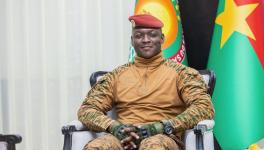
In public remarks following the incident, President General Abdourahamane Tchiani described the attack as an attempted infiltration by “mercenaries”, alleging that the assailants were operating under external direction. The government said the incident prompted senior leaders to visit the site to assess the damage and to coordinate with defense and security forces and allied partners, including Russian personnel, who were acknowledged for their role in the response.
Russia confirmed that joint efforts by the African Corps of the Russian Ministry of Defense and the Armed Forces of Niger repelled the attack by the terrorists, and further said that they intend to further develop its comprehensive cooperation with the AES states, including Niger, and will continue to make a constructive contribution to strengthening regional security and combating terrorism – including by assisting in enhancing the combat capability of national armed forces and through the training of military personnel and law-enforcement officers.
AES condemnation
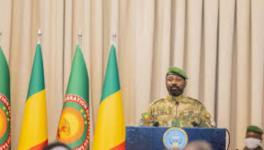
The Confederation of Sahel States (AES), the political and security alliance comprising of Niger, Mali, and Burkina Faso, issued a strong statement condemning the attack. The bloc described the incident as a “barbaric and cowardly aggression” that deliberately targeted both strategic infrastructure and civilian installations, placing populations and civilian property at grave risk.
“All evidence indicates that this was a premeditated, coordinated, and blind attack,” the AES said, warning that such actions threaten not only a member state but also regional stability and collective efforts toward peace and development in the Sahel.
The AES stated that the Niamey attack forms part of a broader strategy of destabilization sustained by complex support networks, the bloc cautioned against any form of complacency or support for violent groups and reaffirmed that perpetrators and alleged sponsors would be held accountable.
The confederation expressed solidarity with the people and government of Niger and commended the country’s defense and security forces for their response. It reiterated the alliance’s commitment to a coordinated, sovereign approach to counterterrorism, stating that the determination of Sahelian states to defend their sovereignty and protect their populations “cannot be undermined”.
African Union response
The African Union (AU) also condemned the Niamey airport attack. In a statement dated January 30, 2026, the chairperson of the African Union Commission, H.E. Mahmoud Ali Youssouf, said he had learned with deep concern of the assault on Diori Hamani International Airport and expressed solidarity with Niger.
He praised the “swift and effective response” of Nigerien security forces, which he said helped contain the attack, and extended condolences to victims of a separate deadly assault earlier in January in the village of Bosiye in western Niger, where around 30 civilians were killed.
The AU chairperson also acknowledged ongoing efforts by Nigerien authorities to combat violent extremism, including recent military operations in the Tillabéri region that reportedly disrupted armed groups and recovered property looted from local populations. He reiterated the African Union’s readiness to support Niger and its regional partners in confronting terrorism, protecting civilians, and safeguarding territorial integrity.
Regional tensions
The Nigerien government has accused the governments of Benin, Côte d’Ivoire, and France of involvement in destabilization efforts.
The attack comes amid heightened diplomatic and security tensions in the region following a series of popular military takeovers and a realignment of alliances. Niger, Mali, and Burkina Faso have withdrawn from several Western-led security arrangements and have emphasized greater autonomy in their counterterrorism strategies.
But, Alassane added, “while the Nigerien government has called out the governments of Benin, Côte d’Ivoire, and France of involvement in the sabotage, it is crucial to distinguish between West African governments and their people. The peoples of West Africa are one; responsibility lies with political leaders of these states and with France under President Emmanuel Macron, not with ordinary citizens.”
Persistent challenges
The Niamey incident shows the continuing volatility of the central Sahel, which has experienced sustained militant violence in recent years. Multiple jihadist groups operate across porous borders in Niger, Mali, and Burkina Faso, most prominently Jama’at Nusrat al-Islam wal-Muslimeen (JNIM) – an al-Qaeda-linked coalition – and Islamic State affiliates. These groups have carried out attacks on military bases, transport hubs, public infrastructure and civilian communities, contributing to widespread displacement and humanitarian strain.
Despite intensified military operations and regional coordination under the AES framework, attacks have persisted, highlighting the scale of the challenge facing Sahelian states, but one that they are determined to defeat.
Courtesy: Peoples Dispatch
Get the latest reports & analysis with people's perspective on Protests, movements & deep analytical videos, discussions of the current affairs in your Telegram app. Subscribe to NewsClick's Telegram channel & get Real-Time updates on stories, as they get published on our website.