





New Rafale Deal Almost Sealed: Some Posers
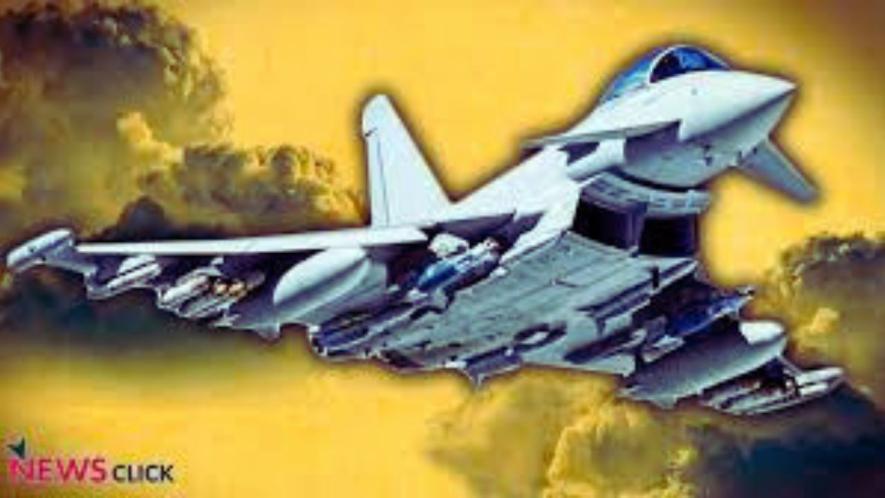
It has been reported that the Defence Procurement Board, headed by the Defence Secretary, has approved the Indian Air Force’s (IAF) proposal to acquire 114 Rafale fighter jets from Dassault of France under the Multi Role Fighter Aircraft (MRFA) tender. The deal now awaits clearance from the Defence Acquisition Council, headed by the Defence Minister, and finally from the Cabinet Committee on Security, headed by the Prime Minister, which will finally bring the curtains down on one of the most long drawn out defence acquisitions India has been involved. And in true Indian defence procurement style, the haggling over prices will begin after that, inverting the standard commercial practice of considering a deal clinched when a price is agreed upon!
Brief History: Confusion Confounded
Readers will no doubt recall the tortuous historical developments of this acquisition process. In the face of the gathering obsolescence of the IAF’s MiG21 fleet, other ageing aircraft, and delays in the indigenous Light Combat Aircraft (LCA) project, combined with a menagerie fleet of numerous fighter types each bought as a stop-gap other than the work-horse Su-MK30i, the IAF started working in 2001 on rigorous study of fighter aircraft requirements for the medium term in sizeable numbers.
The IAF proposed a need for 126 medium-weight fighters with an option for an additional 74, and issued a call for initial offers in 2004 which, after many changes in the procurement process and the types of aircraft available from different manufacturers, finally attracted firm offers from six aircraft manufacturers to whom tenders were issued in 2007.
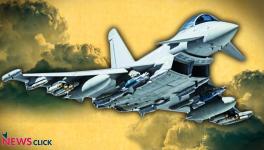
The Eurofighter Typhoon and the Dassault Rafale were shortlisted, rigorous field tests conducted, and the Rafale finally emerging in 2011 as the winner. The deal was to involve delivery of 18 fighters directly from Dassault, and the remaining 108 to be made in Hindustan Aeronautics Limited (HAL), Bangalore, through technology transfer.
The financial and other negotiations dragged on till 2014, with the government of the day apparently worried about high cost, allegations of favouritism or worse, and all the nitty-gritty of domestic manufacture, offsets etc. Before a final decision could be taken, a new government led by the Bharatiya Janata Party or BJP was elected.
In 2015, the BJP-led government abruptly changed direction, cancelled the MMRCA tender, and announced a decision to acquire 36 Rafales, all in fly-away condition, in a government-to-government deal. In one stroke, heralding it as a master-stroke by a “decisive leadership,” it negated the scheme carefully worked out over 13 years to acquire a sizeable complement of 126 fighters, including substantial domestic manufacture and indigenisation.
Read Also: Rafale Deal Gets Murkier with yet Another Exposé
All manner of explanations were advanced by the government, including shortage of funds, need for an emergency acquisition even of a limited number of fighters, lack of capability with HAL and high cost cited by it. With offsets apparently going to favoured parties with little experience in aviation manufacturing, there was a strong smell of something fishy. Anyway, 36 Rafales were delivered starting in 2018 and all entering into service with the IAF by 2022.
MRFA Deal: Full Circle
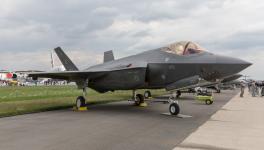
However, the IAF fleet strength continued to dwindle, the LCA Tejas was still far from entering service, and the security situation in India’s neighbourhood was worsening. As predicted by many, including in these columns, India issued a fresh call for offers of 114 fighter jets (dropping the medium weight criterion) in 2018. Since the available options among defence majors were the same as before, the applicants were also the same, only with the Lockheed Martin F16 now appearing in a new “India-specific” avatar as the F21, and the F15-Eagle EX being added. Since this was known, the new deal could have been negotiated as an extension of the earlier one with new terms including indigenous manufacture, technology transfer and so on.
An additional development, meanwhile, was the acquisition process for 26 aircraft carrier-based fighters for which the leading contenders were the Boeing F/A-18 and the Rafale-M (for marine). Commonality of aircraft type among both Navy and Air Force would increase the order size, simplify and reduce costs of spares, maintenance and other logistics. A Rafale flight‑training and Maintenance, Repair, and Overhaul (MRO) facility is already operational at IAF, Ambala. All this was known or planned even in 2015 and a single deal would have substantially reduced costs and increased India’s bargaining strength in negotiations. But all this was tossed away by the “decisive government.” So here we are with a new version of the 2007 tender!
For the reasons discussed above, now being cited as recently discovered justification for the deal, the IAF and government have again settled on the Rafale. The aircraft was originally selected from six contenders after extensive field testing and has apparently more than satisfied the IAF during Operation Sindoor.
The new MRFA acquisition is now set to go ahead, again as a government-to-government deal cutting out all the agonising details of a multi-vendor tender, which was never appropriate for defence contracts anyway. It may well be signed during the forthcoming visit to India of French President Emmanuel Macron on February 19-20, 2026 for the AI Impact Summit, with the visit also expected to further cement the deepening strategic and defence partnership between France and India.
The deal is believed to involve 18 off-the-shelf Rafale fighters, followed by domestic production of the remaining 96. Compared with the F3R version, with the 13 much-debated India-specific enhancements at additional cost, the current aircraft are believed to be 90 of the F4.1 standard and 14 of the F5 standard. The total cost is estimated to be around Rs.3.25 lakh crore or $38 billion.
Questions on Fleet Mix
Some commentators have questioned the wisdom of procuring a foreign aircraft, when a successful indigenous programme in the form of the Light Combat Aircraft (LCA) with its many variants is well underway, even if delayed. The IAF has issued firm orders for 190 Tejas Mk1A light-weight fighters with the American GE-404 engine, with a planned requirement for another 200 heavier Tejas Mk2 with the more powerful GE-414 engine.
Read Also: India’s Combat Helicopter: Re-discovering Self-reliance?
It is argued that, with the earlier ‘stop-gap’ acquisition of 36 Rafales, there was ample space for the indigenous medium-weight Tejas Mk2 fighters, but with an additional 114 Rafales, the IAF may scale down its Tejas Mk2 requirement and abort the full-scope evolution of the indigenous progamme, even though the 5th Generation Advanced Medium Combat Aircraft (AMCA) programme is yet to unfold.
However, this anxiety may not be well-founded. The original MMRCA tender was always for 126 aircraft which the then BJP-led government pruned down to 36 Rafales for whatever reasons. The MRFA acquisition of 114 Rafales merely makes up the unnecessary deficit.
Further, the much-quoted “approved strength” of 42 squadrons harks back to a past that has long receded into the sunset. Contemporary security realities are very different and call for serious rethinking of IAF fleet composition and size. Toward that end, and considering the forthcoming rapid induction of 5-Gen fighters into the South Asian theatre, the IAF is said to be seriously considering the offer being pressed by Russia for Su-57 stealth aircraft as a 3 squadron or 54 aircraft stop-gap acquisition till the AMCA becomes reality in the mid-2030s.
New Model for Manufacture in India?
A new model is apparently being prepared by Dassault for manufacture of over 90 Rafales in India as part of the MRFA deal. Dassault is believed to be seriously planning to manufacture as many as 24 Rafales annually at a new Dassault assembly line in Nagpur near its current joint venture facility for Falcon 2000 executive jets. This would be a first for Dassault and very much a new idea in India. Question is: is this a preferred indigenisation model for “atma nirbhar bharat” (self-reliant India)?
Apparently, this would be much more than an assembly plant. It would be a full-fledged industrial model with various parts and components being supplied by Indian industrial partners, similar to the parent Dassault plant in Merignac in France, but with major critical parts being flown in from France. The exact percentage of indigenisation is still under discussion, but is believed to be in the order of 55-60% or so by value, similar to that in the Russian SU30 Mk-I and even in the Tejas LCA but planned to increase to 65% soon, and going up to 90% in the Mk2.
The capacity of 24 Rafales per year from Nagpur would double the Rafale production volume globally if, as believed to be Dassault’s plan, the Nagpur facility is fully integrated into Dassault’s global supply chain.
When successive governments in India kept increasing the FDI (foreign direct investment) limit up to 100% for defence manufacturing, the hope was that foreign defence majors would be tempted to set up fully-owned manufacturing plants in India taking advantage of lower costs. The catch was, of course, that no OEM would set up base in India unless it was assured of domestic orders, which is almost impossible to do in the defence sector. It appears that, with the MRFA and Rafale-Marine orders, Dassault may just have got that.
It is not known if Dassault is planning to run the new Rafale line in partnership with anyone. Tata, for example, is already supplying Rafale parts to Dassault. But Dassault has now raised its stake in Dassault Reliance Aerostructures Ltd (DRAL) to 51% from the earlier 49%, making DRAL a Dassault subsidiary, and may well entirely buy out industrialist Anil Ambani, who does not bring much to the table.
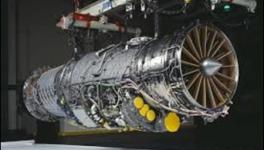
French defence firms seem to realise they have managed to get deep stakes in the Indian defence sector. A long-term collaboration between Safran and DRDO (Defence Research & Development Organisation) to jointly develop an advanced engine for the AMCA 5-Gen fighter is around the corner. So Safran is working on a plan to set up a facility in India to make the around 200 M88 engines that would be needed to power the IAF Rafales. Safran is already setting up an MRO for M88 engines in Hyderabad.
However, all this does not mean India will acquire the advanced technology involved. It will not involve the kind of transfer of know-how there would have been if, say, HAL were Dassault’s partner in India.
In Nagpur, Dassault would control the flow of technology, not share it, and its Indian partners would be sub-contractors, seeing only small parts of the whole package. This is a good model for Dassault or Safran. Sure, some know-how would seep into the Indian defence industrial sector. But this will not mean self-reliance for India.
The writer, a qualified aeronautical engineer, is associated with the Delhi Science Forum and All India People’s Science Network. The views are personal.
Get the latest reports & analysis with people's perspective on Protests, movements & deep analytical videos, discussions of the current affairs in your Telegram app. Subscribe to NewsClick's Telegram channel & get Real-Time updates on stories, as they get published on our website.