





Mexican Tariffs and India’s Position
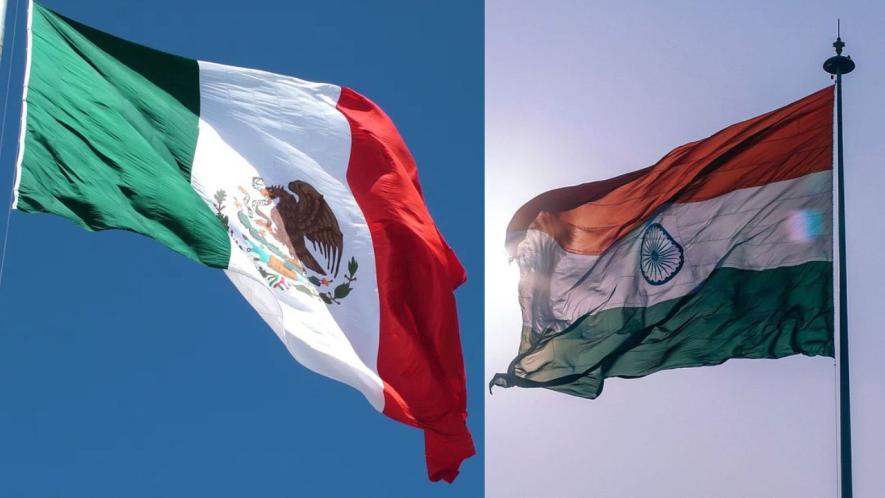
Representational Image. Image Courtesy: Rawpixel
Mexican President Claudia Sheinbaum’s government on December 10, 2025, approved tariffs of up to 50% against several Asian countries with whom Mexico does not have a Free Trade Agreement (FTA), including India. In reality, these tariffs have been in place since April 2024. What has changed, however, is that the earlier tariffs were put in place by the Andrés Manuel López Obrador administration and were a temporary measure that was limited to 544 product lines from countries with whom Mexico did not share an FTA policy. It was set to expire in April 2026.
The new set of tariff legislation by the Mexican Congress, however, is set to transform this temporary measure, which was initially passed as an executive decree, into a Congressional Law whose ambit would now extend to 1,463 product lines.
This is to take effect from January 1, 2026. These tariffs are on automobiles, auto-parts, motorcycles, iron & steel, aluminium, smartphones and electronics, textiles and apparel, footwear and leather goods, industrial machinery, and plastics and chemicals. While most of the tariffs are capped at 35%, automobiles face the maximum 50% duty.
These developments have significant consequences for India’s industry. Particularly so because Mexico is India’s third largest car export market. Manufacturers, such as Maruti-Suzuki and Tata, could find their vehicles uncompetitively priced overnight.
Why have these tariffs been implemented? This primarily has to do with Mexico’s trade relations with the US. Mexico and the US share an FTA. However, goods from Asia, and particularly China, were being shipped to Mexico, where minimal assembly was taking place, and then sold to the US after being branded ‘Made in Mexico’, thereby exploiting the US, Mexico and Canada Trade Agreement. Because of this, on February 1, 2025, the Donald Trump administration had imposed a blanket 25% tariff on all Mexican exports.
These newly extended tariffs by the Sheinbaum administration are effectively a peace offering to Washington as well as a sign that Mexico is willing to cooperate to build a ‘Fortress North America’ against Asian industrial imports.
The Mexican government would also have in mind the upcoming USMCA (United States-Mexico-Canada Agreement) joint review meeting on July 1, 2026. This would allow them to enter into the negotiations with a clean slate. By raising tariffs against non-FTA countries, a major American pain point, which is the flood of cheap Asian steel and electronic vehicles, is addressed.
Amidst the present protectionist trade climate, the Mexican government is also trying to protect domestic jobs. These tariffs would force companies that presently source parts from India and China to purchase them from Mexican factories instead. What would also weigh on the mind of the Mexican government is the present trade deficit with China, with whom $14 are imported for every $1exported. The goal appears to be to promote local manufacturing to diminish that gap. There is also the country’s national deficit to keep in mind. The tariffs that have been levied will generate $3.76 billion for the government, allowing it to fund its social programmes and infrastructural projects without raises taxes.
The Indian government is aware of how this will impact the country’s exports and that an FTA may take years to negotiate. Commerce Secretary Rajesh Agrawal has said that talks were on for a Preferential Trade Agreement in its place. Regarding the balance of trade between India and Mexico at present, the value of merchandise that crosses borders is $8.74 billion as of 2024, with exports consisting of $5.73 billion, imports consisting of $3.01 billion and a trade surplus of $2.72 billion.
Indian industry will now have to at least temporarily find an alternative market for the share of its automotive and engineering goods that in the pre-tariff era found purchase in Mexico. This is not necessarily a glum situation, as India has on July 24, 2025, signed FTAs with the United Kingdom allowing duty free access to automobile components, textiles and leather commodities that were hit by Mexican tariffs.
Apart from the UK in 2024, a deal was signed with European Free Trade Association countries, such as Switzerland, Norway, Sweden and Lichtenstein. This opens a market for engineered goods and pharmaceuticals. There is also the Comprehensive Economic Partnership Agreement or CEPA between India and the United Arab Emirates that can be utilised to re-route Mexican-bound products. It is worth noting that both the UAE and Saudi Arabia are seeing double digit growth in the demand for electronics from India.
For lower cost vehicles and motorcycles, Indian exporters are looking to African countries, such as Egypt, Nigeria and South Africa. Egypt itself saw a growth of 27% as a market for Indian exports as of 2025. To the East, while there is significant competition from China, Indian exports of auto components find markets in Vietnam and Indonesia.
Domestically there has been a noted demand for SUV’s and mid-sized cars which can offset some of the production intended for Mexico. This market is projected to grow at 6 -8% in 2026.
The writer is an independent journalist, pursuing his PhD. The views are personal.
Get the latest reports & analysis with people's perspective on Protests, movements & deep analytical videos, discussions of the current affairs in your Telegram app. Subscribe to NewsClick's Telegram channel & get Real-Time updates on stories, as they get published on our website.