





Mediterranean Dockworkers Launch Historic International Strike
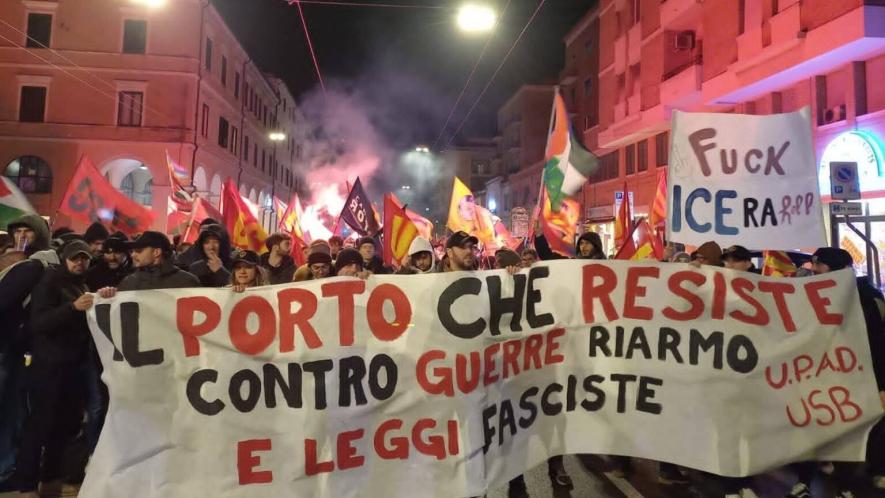
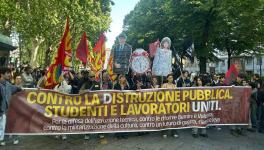
Strike banner in Ancona, reading: "The port that resists wars, rearmament, and fascist laws." Source: Potere al Popolo Terni/Facebook
Dockworkers in more than 20 ports across the Mediterranean marked a historic moment today as they launched an international day of strike and protest against war and rearmament. Dockers also protested the privatization and militarization of port infrastructure.
Unionists involved in preparing the action described it as the result of a long and complex process, built on dockworkers’ solidarity with Palestine and their struggles for dignified working conditions at home.
The impact of the strike was felt even before it fully unfolded on February 6, as reports emerged of ships – vessels that regularly transport military cargo to Israel – disrupting their itineraries due to the actions.
“Ports are places of sweat, not blood”
Demonstrations began in the morning in the Greek ports of Piraeus and Elefsina, in Türkiye’s Mersin, and in Bilbao and Pasaia in the Basque Country. The trade union Liman-İş Sendikası rallied hundreds of its members to send a message against genocide and in solidarity with Palestine, echoing similar dispatches by their comrades from LAB in the Basque Country.
In Greece, dockworkers highlighted the contradiction between massive European investments in rearmament and the imposition of austerity on public services and infrastructure, which is leading to increasingly unsafe working conditions. “We won’t accept work without rights,” said Damianos Voudigaris of the Greek union ENEDEP later in the day. “Development should mean going home alive. Ports are places of work, not war. They are places of sweat, not blood.”
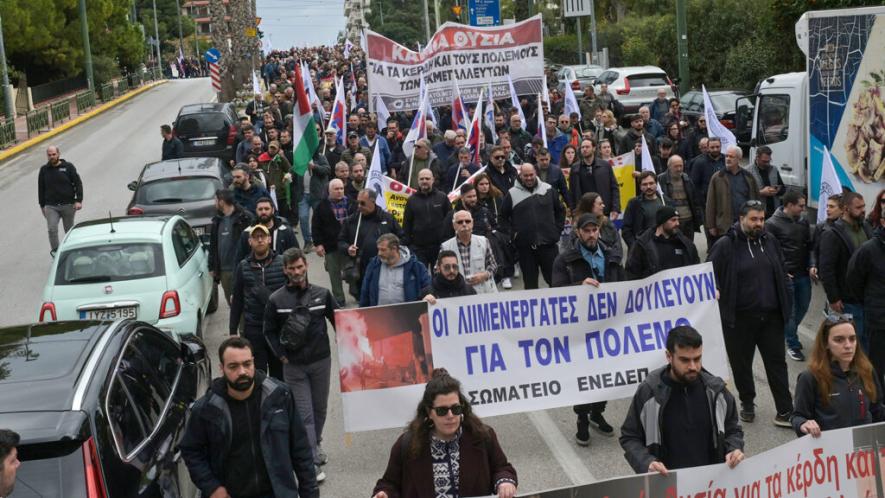
Demonstration during the strike in Piraeus Port. Source: PAME International
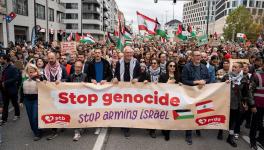
Some of the largest mobilizations of the day took place in Italy. Strikes were organized in Ancona, Bari, Cagliari, Civitavecchia, Crotone, Genoa, Livorno, Palermo, Ravenna, Salerno, and Trieste, involving not only dockworkers and port employees but also students and members of the public. The map of the strikes once again underscored the momentum built by Italy’s labor movement over the past year, including three general strikes for Palestine – mobilizations that have drawn inspiration from some of the dockers collectives’ anti-war activism.
The trade union Unione Sindacale di Base (USB) reported from all striking ports, with union representatives addressing assemblies prominently displaying Palestinian and Cuban flags. Workers stressed that Europe’s labor movement must find an internationalist orientation in order to block the anti-worker agenda of the European Union and right-wing governments. Governments including that of Prime Minister Giorgia Meloni, which, as USB activists noted during live broadcasts, was rattled by the determination shown by workers after years of stagnation. According to trade unionists, this panic has translated into a new wave of repression, including measures targeting union members involved in Palestine solidarity actions. USB, however, insisted that resistance to Meloni’s policies would only intensify in the coming weeks.
“Today it’s the ports, tomorrow it will be the entire logistics sector”
While uniting around shared demands – to prevent the militarization of ports, reject rearmament, and stop a war economy from stifling all other priorities – striking workers also raised local concerns. Dockworkers in Trieste warned against port privatization. Elsewhere, including in Bari and Ravenna, workers and students described how port infrastructure was being used, sometimes covertly, to transport military and dual-use materials to Israel. “Everyone here has had enough of that,” one activist in Ravenna said.
Demonstrations held in Civitavecchia, Livorno, and Ancona on Friday evening were notable, with strikers in Ancona describing the day as “monumental.” In Genoa, as has become customary, turnout was massive. Members of the collective CALP – who had previously vowed that “not one nail” would leave the port if Israel attacked the Global Sumud Flotilla en route to Gaza – led the protest. Speaking to media and fellow activists, they stressed that the success of the international strike once again proved that dockworkers keep their promises.
“We promised to block everything – and we blocked everything. We promised a general strike – and we had a general strike. We promised an international strike – and here we are,” they said.
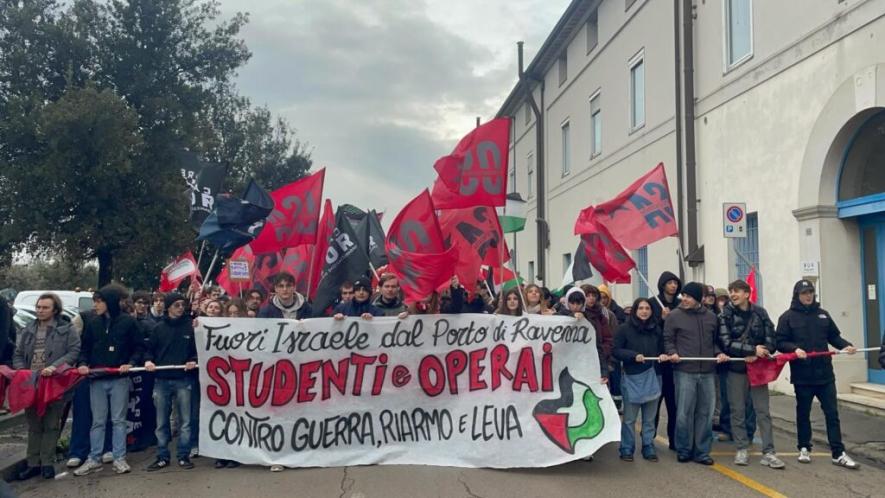
Students in solidarity with dockworkers in Ravenna. Source: Cambiare Rotta Bologna
The international dockworkers’ strike, however, is not the end of the road, workers emphasized. “Today it’s the ports, tomorrow it will be the entire logistics sector, and then it will be all workers,” strikers in Ravenna concluded.
Actions were also reported in the ports of Fos-sur-Mer near Marseille, the German hubs of Bremen and Hamburg, and in Corsica. Dockworkers from Morocco’s Democratic Labor Organization (ODT), who had been involved in preparing the strike throughout the process, were forced to postpone their industrial action due to extreme weather conditions that led to port closures.
Courtesy: Peoples Dispatch
Get the latest reports & analysis with people's perspective on Protests, movements & deep analytical videos, discussions of the current affairs in your Telegram app. Subscribe to NewsClick's Telegram channel & get Real-Time updates on stories, as they get published on our website.