





Manipur Gang-Rape Death: State Govt Failed us, Centre Must Ensure Swift Justice, says Kuki Zo Community
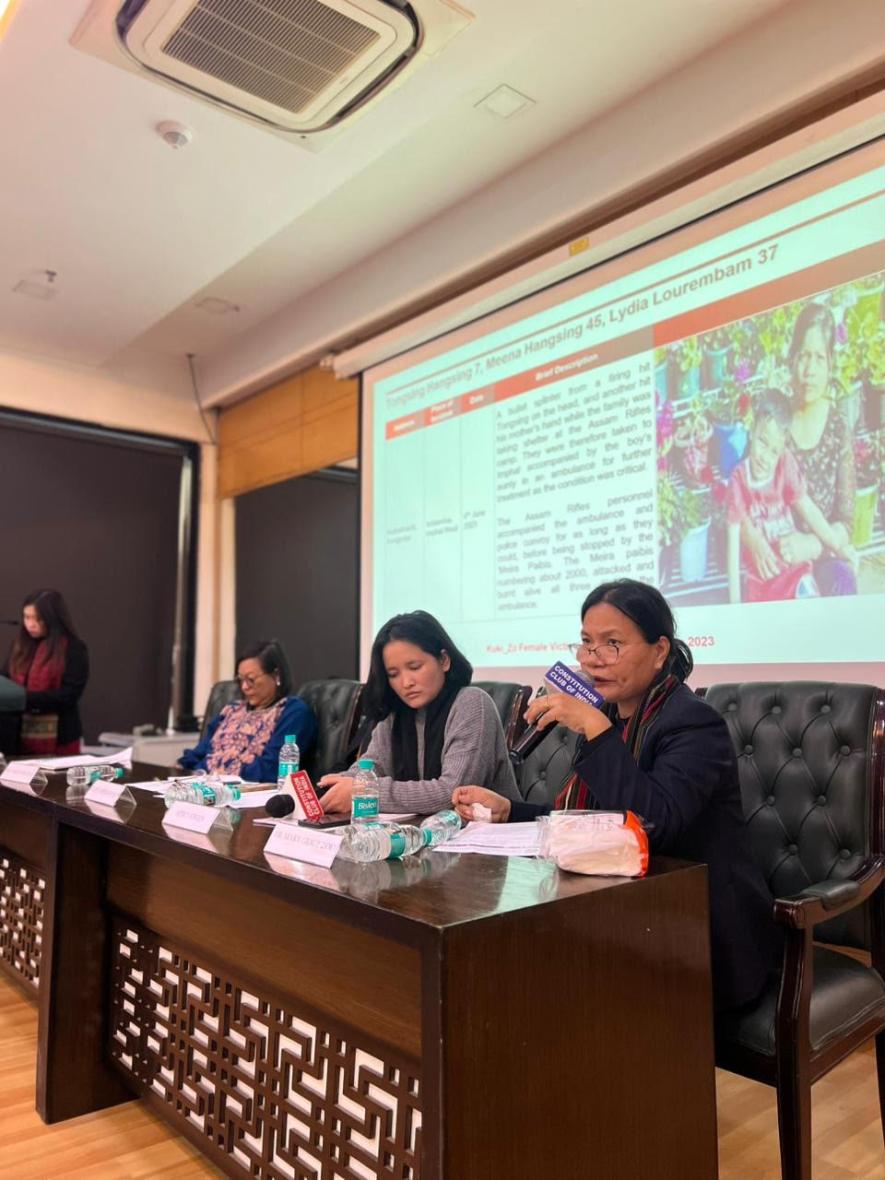
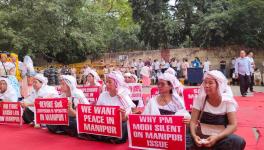
Members of the Kuki Zo community in Delhi-NCR demanded a separate administration in Manipur and speedy justice for the deceased gang-rape victim, at a press conference held at Delhi's Constitution Club recently.
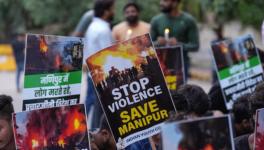
New Delhi: Following the death of Nintinghang Haokip, rape victim of Manipur violence that shocked the conscience of the nation, the members of Kuki Zo community, under the banner of Kuki Students Organisation Delhi & NCR, have demanded swift action in the case to ensure justice to the bereaved family.
The status of the investigation in the case has not yet been updated by the Manipur government. The members of the community maintained that a separate administration in the state was necessary to reverse the rift that has ripped apart the North Eastern state. They articulated this demand at a press conference held in the Constitution Club of India in the national capital recently.
Background
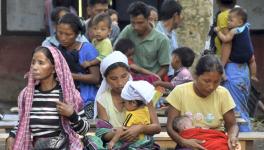
Ethnic violence erupted on May 3, 2023 between the Meitei people, who live in the Imphal Valley, and the Kuki-Zo tribal community from the surrounding hills. The proximate cause was a dispute over a Manipur High Court order that recommended Scheduled Tribe status for the dominant Meitei community, which tribal groups opposed. The state effectively split into two ethnic zones, separated by buffer areas. The state is under President’s Rule after Chief Minister Biren Singh resigned in February 2025 after audio tapes allegedly linked him to instigating the violence. Over 50,000 displaced people remain in relief camps with limited access to healthcare, sanitation, and nutrition
Narrating the trauma faced by the girl, Sheila, a relative of late Haokip, said the victim had nightmares and would scream for help. “The memories of the assault haunted her. She would see their faces; she would see the colour of what they were wearing. Until her last breath, she was crying for justice. Nobody could give her justice till today. The state government has completely failed us. She had nobody to ask for justice, so she would always ask her parents for justice. She was already isolated from her friends. She would just stay in a dark place. Sometimes, she would fear her own brothers,” she said.
Describing the trauma of the victim, Sheila added: “For over two years, she was bedridden. Traumas, insomnia, depression—this was her daily routine. Whenever she saw a white Bolero passing, her body would go numb, and she cried out for help. She was haunted by the memory of the assault on her. We had to force her to eat food. Today, we lost her. It's not just our loss; it's a national loss. We say, "Beti Bachao, Beti Padhao" and we hail women as the pride of India, our nation. I want to ask everyone, every media, every Hindustani—was she not my sister, our country’s daughter, a Hindustani daughter? Today, we ask the government of India, every leader: how many more daughters more daughters must we lose to get justice?”
Demanding justice, Sheila said only systemic change can heal the society that lies wounded by mutual distrust and violence. “We are also the Hindustan ki beti, Bharat ki beti. We do not just mourn for my sister, Nintinghang Haokip; we also mourn for the teachers, the doctors, the social leaders, the politicians. We need systemic change. The state government has failed us. We beg the Central government to give us justice. We will fight for Haokip as she herself fought for justice,” she added.
Glad Vaiphei, an activist who has consistently spoken about the broken trust in Manipuri society, said the relatives of the deceased still await justice. She said she spoke to Haokip’s mother. “I said, "I'm sorry you have to tell this story again and again. I know it's not easy." And her mother said, "My daughter has suffered a lot. In two and a half years of her being in the hospital, not a single government official visited her. The FIR was filed. It must have been kept in some file—nobody took it up." The mother added, "My daughter wants justice." When asked "in what form?" She said, "My daughter has paid the highest price, and I don't want anybody—anybody, any young girl—to go through what she went through."
She said the dead girl’s grandmother was inconsolable. "My grandchild was such a young girl, so promising, only 18, didn't know anything about this world, and she went through this. I want justice," she added.
Vaiphei said she had a list of all the women who had suffered in the Manipur violence—all the women. “And in this, I highlighted it: shot, murdered, raped, assaulted, lynched, dragged out, paraded naked, videotaped—the video went all over the world. If you and I keep silent today, this is going to continue. Manipur is not normal today. Most media have moved on, many of us have moved on, busy with our own work. But in Manipur today, there is a separation between the Kuki-Zo and the Meitei, created by the militia acting like demons.”
She recalled the time when “we were living like friends and family in Imphal Valley. We happily had friendships, and all of a sudden, they attacked us. They chased us out like animals. In a few days, they cleared the entire valley. How can this happen without the state government knowing?”
Vaiphei questioned: “How can all this continue for six days and wipe out every Kuki-Zo in the valley based on three false narratives? How can everyone—the officers, the doctors, the engineers, people working in government sectors, and businessmen of the Kuki-Zo community—be defamed as poppy planters? None of them are farmers in the valley. None of them crossed the border from Burma to come into India. All these three false narratives continue to this day..”
Emphasising the need for a separate administration, Mary Grace Zou, former convenor of the Kuki Zo Women’s Forum said the horrific incidents of May 2023 came as a nightmare for the Kuki people living in Imphal who had lived in the valley for generations. Only, a separate administration can ensure justice.
“Why do the Kuki-Zo need a separate administration? Why do the Kuki-Zo want to be separated from the Meiteis? These are things the nation has to really think about. It's not what we want; it's a need, and this is only for survival. Because the Constitution of India grants that the life of every citizen is precious. The duty of the state, as written in the Constitution, is to protect the lives and property of the citizens. And who allowed a Chief Minister who went on a rampage against a community to rule for more than a year?” she said.
She went on to ask, “Why did the Centre take more than a year to announce President's Rule? So, our question to the nation is: what is going to shake the conscience of the nation? Because I think, if we all recall, on the 19th of July, people thought it was an ethnic conflict between the Kuki-Zo and the Meitei people. One thing the ruling dispensation keeps saying is that there's always a historical context to it—meaning that tribes in Manipur keep fighting among themselves. But today I am here to say—not my words, but what many have already proved—the PUCL tribunal has proved this is state-sponsored and mediated violence.”
Questioning the “dubious” role of N Biren Singh, former Chief Minister, Zou said, “When we go back, we need to know that it didn't happen suddenly. All of you must have known how the houses were marked; I don't have to mention that again. But can you imagine 60,000 people displaced from their settlements in a state, a small state where just 3 to 3.5 million people live? Who is to be blamed for that? Who allowed the Chief Minister to do that? These are things that are disturbing.”
Raising the question on women safety, she said, “We are now in 2026. Why did the Supreme Court drag this on? What has happened to the judiciary? What has happened to the wheels of our democracy? Are they standing still while the people pay the price for all this? I think it's high time that all of us start thinking: it's not just the Kuki-Zo today. If you really analyse the whole of India—I won't quote any names because they all involve high-profile figures—if you go to the Himalayan side, if you go to the UP side, you hear about so many women who have been molested, who have been gang-raped. Is this how we are going to raise our future generations? Is the number of gang rapes, the number of rapes committed, going to qualify someone to be one of the tallest leaders? This is something we have to think about.”
Mercy Kipgen, a researcher at Delhi University, said, ”She (Haokip) did not simply die; she was worn down. The exhaustion was not medical or psychological alone. As her grandmother has said: food could no longer feed her soul. Her exhaustion was not just medical or mental. This is what long-term trauma does. This brings us to the central question we ask: Can her death be understood separately from the trauma she endured and the justice that never arrived?”
Get the latest reports & analysis with people's perspective on Protests, movements & deep analytical videos, discussions of the current affairs in your Telegram app. Subscribe to NewsClick's Telegram channel & get Real-Time updates on stories, as they get published on our website.