





Left's Crisis is Not a Vocabulary Problem
In the final season of drama series, Game of Thrones, Tyrion Lannister argues that power doesn’t belong to bloodlines, armies or wealth, but to the force of a compelling story. “Who has a better story than Bran the Broken?” he asks, while proposing Bran Stark as king.
Congress leader Shashi Tharoor’s recent essay in The Indian Express on the decline of Indian Left appears to make a similar argument. He suggests that the Indian Left has failed to find a new “vocabulary” for a changing India. In an aspirational and consumer-driven society, the older language of class and anti-capitalism no longer resonates.
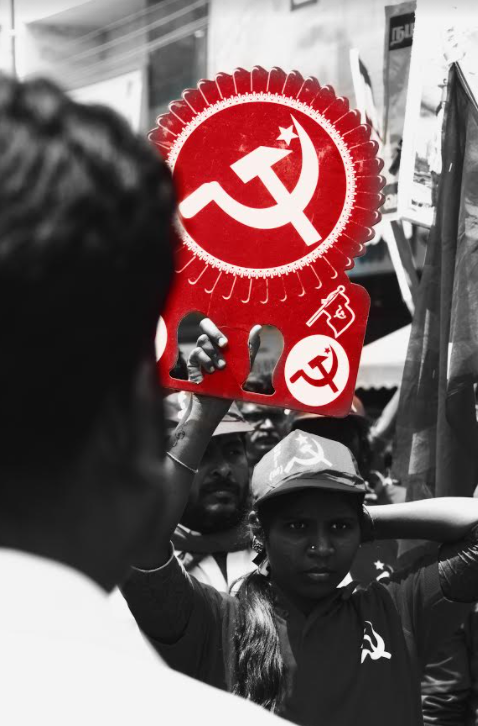
The crisis of the Indian Left is undeniable. The communist movement that once shaped national political discourse has been reduced to the margins electorally. West Bengal is gone. Tripura is gone. Kerala, too, has delivered setback. An ageing leadership, weakened cadre and inability to expand beyond traditional electoral pockets are key failures that cannot be looked away.
However, Tharoor’s analysis of the crisis mistakes a structural transformation in India for a problem of political communication. The issue is not merely of Left failing to invent a new vocabulary, but rather of liberalisation that transformed the very conditions under which politics and aspiration are now experienced.
Consider the example Tharoor himself invokes: a young coder in Gurgaon and a delivery gig-worker in Kolkata-- both finding Left vocabulary to be a barrier to their aspirations. The study conducted by World Inequality Lab finds that India's top 1% controls 40% of national wealth while the bottom 50% receives 15% of national income.
The Fairwork India Report 2024 assessed 11 major gig platforms and found not one scored above six out of 10 on basic labour standards that includes wage theft, arbitrary deactivation, no social security, no accident insurance. India's Code on Social Security recognises gig workers but makes welfare provision discretionary on the concerned state government. The legislation doesn’t provide them rights of protection and there is no Central scheme yet. Millions work without social protection, fixed hours, healthcare. App-based labour has fragmented workers into isolated units competing against one another for more orders rather than organising collectively.
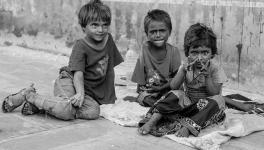
Exploitation has not disappeared in post-1991 India. It has become individualised and insanely normalised. A few decades ago, exploitation was experienced collectively in factories, mills, fields and other workplaces with unions. Today, the workers often experience this precarity alone. The gig-worker’s aspiration and their structural exploitation are not contradictory positions. They may still aspire to upward mobility but aspiration itself does not abolish class reality. Neoliberalism thrives by convincing working class to see themselves as future entrepreneurs temporarily struggling on the path to success and not as labourers structurally trapped. India has not become post-class after liberalisation.
Class itself has become fragmented and less visible. Tharoor treats the weaking of class politics as evidence that class itself has lost relevance. The decline of collective class consciousness does not mean the end of exploitation. Why do millions of Indians continue to desperately seek government jobs despite so-called booming success of private enterprises and startup culture? The answer lies in the fact that government employment still represents stability, legal protection, predictable income and social dignity and these are absent in much of private sector. The persistence of this aspiration reveals the hidden anxiety underneath the rhetoric of liberalised growth.
Tharoor is correct that the Left no longer possesses a monopoly over welfare politics. Welfare delivery has now been adopted across the political spectrum. However, Left has historically viewed the contemporary welfare State as a managerial form of temporary relief in the broader politics of redistribution and social transformation. Direct cash transfer does not substitute for decades of investment in public health infrastructure.
Kerala, under the Left, went from 60% poverty in the 1970s to declare itself free from extreme poverty in 2025. It built K-FON, making Kerala the first state in India declaring internet access a fundamental right. It provided free connectivity to 20 lakh BPL (below poverty line) households. It converted 45,000 government school classrooms into hi-tech learning centres that was followed by a historic reversal where students began moving from private schools back to government ones. It managed two catastrophic floods, Nipa virus outbreak and a global pandemic and won a re-election.
Tharoor acknowledges that the Left became a victim of identity politics. The rise of caste and communal mobilisation is at the expense of class solidarity. However, he seems to treat this as an autonomous shift in political behaviour rather than mentioning what produced it.
Identity politics was intensified against the backdrops of neoliberalism that restructured the Indian economy after 1991. It dismantled organised labour, weakened working class and created conditions in which material solidarity became harder to sustain and cultural belonging became immediately available as a form of socio-political identity. Economic anxieties have found expression through nationalism and majoritarianism. Tharoor sees the political consequences of this process without naming the economic transformation that caused it.
The Congress leader writes that the questions the Left raised will continue to haunt 'New India'. Under what conditions a politics organised around those questions can gain traction? The answer has less to do with vocabulary and more with the structural conditions under which political mobilisation occurs: the money-muscle economy of Indian elections, the consolidation of media, the fiscal strangling of Opposition-governed states.
The transformation of Indian democracy receives no attention in Tharoor’s essay. Contemporary electoral politics is now shaped by huge financial resources, corporate backed media propaganda and patronage-based campaigning. CMS reported that Lok Sabha election 2024 saw approximately Rs 1.35 lakh crore spent. Parties backed by capital enjoy advantages in visibility and narrative production. Cadre-based parties like the Left are disadvantaged within such an environment.
Tharoor’s article reveals the limitations of traditional liberal analysis which has treated electoral decline of communists as ideological irrelevance. An electoral defeat shaped by a decade of anti-incumbency, fiscal siege and political economy that drains out parties without corporate backing is not an ideological verdict.
The sun has not set on Indian communism. The question worth asking is not who has a better story but who built and could build the better world. The decline of the Left parties is real. But the contradictions that gave rise to this remain deeply alive -- and no amount of elegant prose from the Congressman will make those disappear.
The writer is a student at Dept of Political Science, University of Delhi. The views are personal.
Get the latest reports & analysis with people's perspective on Protests, movements & deep analytical videos, discussions of the current affairs in your Telegram app. Subscribe to NewsClick's Telegram channel & get Real-Time updates on stories, as they get published on our website.