





From Kerala to Keralam: Identity, Federalism and the Politics of Naming
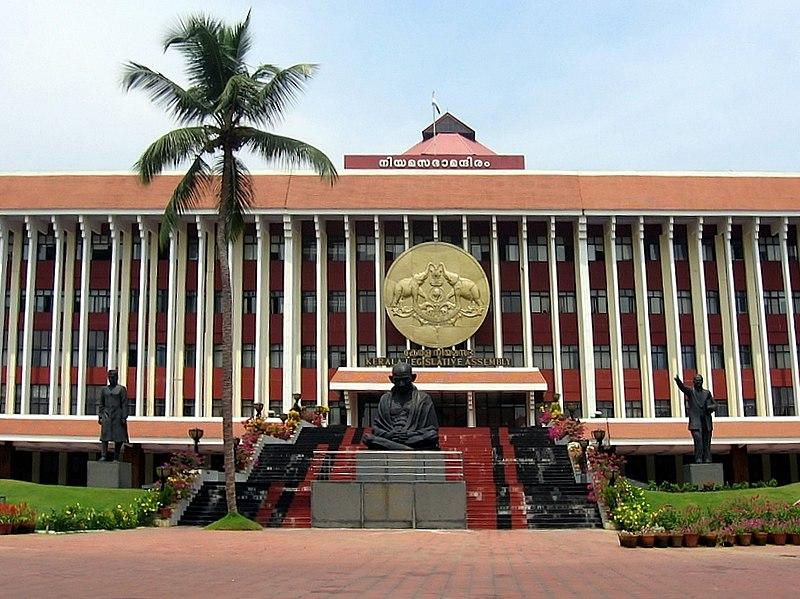
Image Courtesy: Wikipedia
In 2023, all the members of the Kerala Legislative Assembly voted to ask the Union government to change the state's name from "Kerala" to "Keralam." When I first heard the suggestion, it seemed mostly symbolic—a small change in how the name is pronounced to match how it is pronounced in Malayalam. On the other hand, the debate about the change shows how language, federalism, subnational identity, and the politics of cultural assertion all work together in India today.
It's not just about the suffix. It concerns the manner in which regions convey their identities within a linguistic federal union, as well as how names transform into venues for historical and political negotiation.
The Language Question: Authenticity and How to Say It
In Malayalam, the main language of the area, the state is called Keralam (കേരളം). ‘Kerala’, on the other hand, is an Anglicized name that became official and constitutional during the colonial and early postcolonial periods.
The need for correction is based on the fact that language is real. Many people think that keeping the name "Kerala" is more about colonial spelling than the region's actual sounds and culture. The action is similar to other name changes in India, like changing Bombay to Mumbai, Madras to Chennai, and Calcutta to Kolkata. Each shift was framed as a way to reclaim the linguistic identity of indigenous people.
The Kerala-to-Keralam issue is more sensitive than the other examples, where colonial names were replaced with names that already existed in the area. ‘Kerala’ is not a colonial name in the same way; it is a shorter form of Keralam. The difference is small, but it matters politically. Adding "-m" means that the grammar and pronunciation of Malayalam have been fixed, not that the history has been completely changed.
Federal and constitutional aspects
Article 3 of the Indian Constitution says that any change to the name of a state must be approved by parliament. A state assembly can pass a resolution, but Parliament has the last word.
This raises a basic question for the federal government: how much can smaller groups create their own symbolic identities without the Union's help? In theory, India's federalism gives states a lot of freedom to make their own cultural choices. In real life, symbolic changes often have political meanings, depending on how the state and central governments work together.
The Left Democratic Front, led by the Communist Party of India (Marxist), governs Kerala. This makes Kerala a unique ideological zone in the Indian Union. So, the idea of changing the name should be seen as more than just a cultural statement; it should also be seen as a way to show regional identity in a politically charged environment.
Identity politics without violence?
The Keralam resolution was passed by the state assembly without any arguments, unlike some other renaming exercises that have been met with strong language. This agreement shows that the change was seen as a way to support language and culture, not as a way to leave people out.
In the past, Kerala's political culture has put literacy, social change, and pride in one's language ahead of outright majoritarianism. Since the state was reformed linguistically in 1956, Malayalam has been a way for people of different religions and castes to come together.
In this context, Keralam pertains to linguistic fulfillment rather than ethnic assertion. It is a form of linguistic nationalism that has grown up alongside constitutional federalism instead of being separate from it.
Historical Layer: Memory and State Reorganization
The States Reorganisation Act, which mostly changed boundaries based on language, created Kerala on November 1, 1956. The state was formed because people wanted Malayalam-speaking people to be recognized as part of a single government.
So, the question is: If linguistic identity was enough to make a state, why keep the name in English? The name proposal can be seen as a cultural follow-up to the 1956 reorganization that never happened. But it's also important to keep history going. For almost seventy years, the word "Kerala" has been used in constitutional texts, international diplomacy, and domestic governance. Changes necessitate bureaucratic, legal, and diplomatic adjustments, which, although feasible, are not insignificant. The weight of bureaucratic inertia often stifles symbolic ambition.
Comparisons around the world: Naming as a way to assert yourself
In many parts of the world, the names of states have changed to reflect native languages or changes in government. Sri Lanka took the place of Ceylon, and Myanmar took the place of Burma. These movements were often connected to bigger changes in politics. The case in Kerala is different. There is no change in government, ideology, or the constitution. The process of renaming, on the other hand, is progressive and evolutionary. It means that identity politics doesn't always cause problems; it can just be a matter of following the rules and getting along.
At the same time, these kinds of symbolic actions help to shape a person's whole identity. In a time when language politics and nationalism often mix, even small changes can have effects that go beyond what the government can control.
A Negotiation of Identity
The idea of going from Kerala to Keralam is not extreme or unimportant. It shows that Indian federalism can handle cultural change without breaking the law. The process highlights three features:
- Importance of language dignity in societies after colonialism.
- A strong Union with a strong subnational claim.
- Symbolic politics as a way to negotiate identity without violence.
In the end, it doesn't matter if Parliament agrees to the change or not; the resolution has already done something important: it has made people rethink how names carry memory, authority, and affiliation.
A state quietly adds an "m" to its name to find a balance between history and modernity, between inherited spelling and lived pronunciation, and between Kerala and Keralam.
Anusreeta Dutta is a columnist and climate researcher with experience in political analysis, ESG research, and energy policy. Views are personal.
Get the latest reports & analysis with people's perspective on Protests, movements & deep analytical videos, discussions of the current affairs in your Telegram app. Subscribe to NewsClick's Telegram channel & get Real-Time updates on stories, as they get published on our website.