





Kashmir: Return of the Unfinished
File Photo
Politics in Kashmir has always had an unusual relationship with finality. Every proclamation of closure eventually encounters the stubborn endurance of what it presumed buried. Every declaration of victory is quietly interrupted by memory. The Valley has repeatedly exposed a truth that modern States are reluctant to acknowledge: political questions rarely disappear simply because institutions are dismantled. They retreat, mutate, disperse into society, and await more hospitable forms of expression.
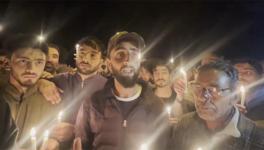
It is in this context that the recent funeral of a former leader of Jamaat-e-Islami in Kulgam deserves attention, not as a passing controversy over slogans, nor merely as an emotionally charged gathering, but as a revealing political moment.
Funerals in Kashmir have seldom been private rituals of grief. They often become theatres of collective memory, sites where unresolved anxieties briefly acquire public language. The significance of this event lies not in reducing it to a spectacle of mourning or outrage, but in the uncomfortable political question it forces upon us: how does a banned organisation continue to cast such a durable shadow?
For years, New Delhi has framed the post-2019 political moment as the beginning of a decisive rupture. The abrogation of Article 370 was not presented merely as a constitutional act; it was narrated as the inauguration of an entirely new political discourse. We were told that the old architecture of separatist sentiment, ideological ambiguity, and exceptional politics had been decisively dismantled. A muscular State promised resolution. Constitutional normalcy, administrative integration, and security stabilisation were projected as the foundations of a “new Kashmir.”
Yet, Kashmir has always possessed an inconvenient habit of resisting official certainties.
For, if the political challenge represented by Jamaat-e-Islami was conclusively defeated, why does its social vocabulary continue to echo through political life? If the organisation was successfully neutralised, why do traces of its symbolic influence still appear politically resonant? And if a ban was intended to produce ideological closure, why does the residue of an older political imagination continue to circulate- sometimes openly, sometimes subtly, but rarely invisibly?
The temptation is to interpret this paradox narrowly through the language of law and security. But such a reading mistakes the nature of political movements.
Organisations are not defeated merely by proscription. States may criminalise institutions; they cannot easily legislate away memory. Political history offers a sobering lesson on this front. Whether one looks at ideological parties in Latin America, religious movements in West Asia, or nationalist formations elsewhere, bans often succeed in disrupting organisational infrastructure while failing to eliminate emotional attachment. What survives is often more elusive and, therefore, more resilient: networks of trust, symbolic legitimacy, inherited grievance, moral vocabulary, neighbourhood solidarities, educational influence, and social memory.
The office disappears; the idea migrates into society.
This distinction is essential to understanding Kashmir after 2019. The central question is no longer whether Jamaat survives formally. That is a narrower legal inquiry. The more consequential political question is whether aspects of its worldview continue to shape social imagination, political vocabulary, and electoral behaviour, even when translated into the softer language of democratic participation.
This is where the post-2019 political settlement becomes intellectually uncomfortable for both New Delhi and Kashmir’s political class.
The Indian State appears to have made a mistake common to triumphalist political projects: it conflated institutional dismantling with ideological transformation. A ban can close offices, disperse cadres, restrict funding, and weaken formal networks. But ideologies are not housed in buildings. They survive in conversation, kinship, sentiment, religious worlds, and inherited political anxieties. When a movement possesses social depth, repression rarely destroys it outright. More often, it mutates.
And mutation is precisely what Kashmir’s politics now appears to demand closer scrutiny of.
For what increasingly confronts us is not necessarily the persistence of a formal organisation, but the possible survival of an ideological discourse, a set of political instincts, emotional reflexes, and symbolic vocabularies that continue to shape public life through new vehicles. Electoral actors emerge. Alliances shift. Democratic participation expands. But beneath the language of constitutional politics, one must ask: has the underlying political imagination changed, or merely adapted?
This is not an argument against democratic engagement. Democracies require engagement with difficult constituencies. Nor is this an argument for exclusion as a political principle. Rather, it is an argument for intellectual honesty.
And here Kashmir’s political class deserves more scrutiny than it often receives.
One of the defining features of contemporary politics in the Valley is not ideological conviction but calibrated ambiguity. Political actors increasingly inhabit multiple moral universes simultaneously. They speak the language of constitutional moderation before New Delhi while preserving emotional resonance with constituencies shaped by decades of political grievance. Symbolic gestures are carefully calibrated. Public language becomes elastic. Every constituency hears something different.
This is often celebrated as political pragmatism. It is not. At its worst, it represents moral ambiguity masquerading as political sophistication.
The problem is not that parties engage socially conservative, religiously shaped, or politically aggrieved constituencies. Democracy demands precisely that. The real question is whether political leadership seeks to transform inherited political imagination, or merely adapts itself to those inheritances for electoral survival.
Increasingly, parts of Kashmir’s political class appear invested in symbolic borrowing: retaining emotional grammars inherited from older ideological worlds while translating them into electorally acceptable language. The vocabulary softens. The posture moderates. The language becomes democratic. Yet beneath the surface, difficult questions remain conspicuously unasked.
What exactly is being politically challenged? What ideological assumptions are being reconsidered? What moral clarity is being offered?
Too often, ambiguity itself becomes the method. And ambiguity has consequences.
It produces a politics where accountability weakens because every actor speaks in coded language. Public postures become exercises in plausible deniability. Every alliance means different things to different audiences. Democratic participation exists, yet ideological clarity disappears. The result is a political field crowded with rhetoric but starved of intellectual courage.
Meanwhile, New Delhi confronts an equally uncomfortable dilemma, one it appears increasingly reluctant to acknowledge openly.
Is the persistence of these ideological continuities the result of strategic permissiveness, or is the Indian State being fundamentally misinformed about the changing texture of politics on the ground?
Neither possibility inspires confidence.
If New Delhi is permitting these continuities deliberately, then one must ask an uncomfortable but unavoidable question: strategic toward what end? States confronting ideologically embedded movements often justify limited accommodation as an exercise in containment. Better, perhaps, to domesticate than exclude; better to absorb than radicalise. Democratic participation, in this view, functions as a moderating force. Electoral incentives are expected to tame ideological absolutism. Political actors who once occupied confrontational spaces are gradually pulled into institutional logic.
This reasoning is neither unprecedented nor irrational. Across conflict zones, states have often attempted to convert ideological actors into constitutional stakeholders. The wager is simple: institutions civilise politics.
Yet the wager carries risk.
History repeatedly warns that deeply rooted ideological formations rarely disappear merely because they alter organisational form. More often, they adapt to changing political environments with remarkable agility. They learn the language of democracy without necessarily abandoning deeper political instincts. The rhetoric moderates; the symbolic world often survives. Political participation becomes less a surrender of conviction than an adjustment of method.
This is why the post-2019 moment in Kashmir demands more strategic honesty than triumphalism.
For, if New Delhi believes that participation alone guarantees transformation, it risks repeating a familiar mistake: confusing institutional compliance with ideological conversion. Elections can integrate actors into procedural politics without necessarily altering the emotional and intellectual inheritances that shape political life. A candidate may contest elections while still speaking to constituencies whose political imagination remains deeply informed by older grievances, inherited symbols, and unresolved aspirations.
The challenge, therefore, is not merely political management. It is political understanding.
And here emerges the second, perhaps more troubling possibility: what if New Delhi is not strategically permissive at all, but strategically misinformed?
Kashmir has historically suffered from the production of flattering illusions. Governments have repeatedly mistaken periods of reduced violence for political settlement. Administrative quiet has too often been confused with emotional consent. Surface calm becomes evidence of transformation, even when deeper currents remain unsettled.
This tendency toward misreading is particularly dangerous in Kashmir because political sentiment in the Valley rarely announces itself dramatically. It accumulates quietly, through conversation, memory, symbolism, social institutions, and generational inheritance. Political emotion often survives invisibly before revealing itself suddenly.
The Valley has repeatedly demonstrated that silence is not necessarily agreement. Participation is not always endorsement. And constitutional involvement does not automatically imply ideological surrender.
This is precisely where the contradiction of post-2019 Kashmir becomes difficult to ignore.
On one hand, New Delhi publicly narrates the period as one of decisive ideological rupture. The political challenge has supposedly been weakened. Constitutional integration has been completed. The language of exceptionalism has ended.
On the other hand, the ground appears more ambiguous.
Political actors continue to engage constituencies shaped by ideological worlds they rarely interrogate honestly. Social legitimacy often still flows through inherited networks. Symbolic vocabularies remain politically useful. Even those who publicly speak the language of constitutionalism often appear careful not to alienate emotional inheritances that continue to command resonance.
This creates an uneasy contradiction: a State that claims ideological victory while appearing simultaneously compelled to negotiate the social residue of the very politics it claims to have transcended.
And contradictions in politics rarely remain harmless.
The tragedy of statecraft is that governments often become prisoners of short-term tactical success. Immediate stability begins to substitute for deeper political thinking. Quiet streets become mistaken for settled politics. Electoral participation becomes interpreted as ideological transformation. Tactical accommodation slowly acquires the appearance of strategic wisdom.
But states rarely falter because of dangers they identify clearly. They stumble because of contradictions they normalise.
If New Delhi is quietly permitting ideological continuities in pursuit of temporary stability, it risks reproducing the very anxieties it sought to weaken. For socially embedded political vocabularies do not disappear through administrative management alone. They persist when political conditions continue to grant them emotional relevance.
The danger is not necessarily dramatic resurgence. Politics rarely returns in familiar form. The greater danger lies in reinvention.
Ideas adapt to democratic space. Old political instincts acquire new institutional language. Emotional vocabularies are softened, repackaged, and made electorally acceptable. The symbolism changes. The deeper architecture sometimes remains surprisingly intact.
And this is where Kashmir’s political class deserves harsher scrutiny than it often receives.
Too many political actors appear content to inherit inherited anxieties rather than transform them. Electoral politics increasingly rewards ambiguity. Leaders learn to speak in multiple registers at once: constitutional moderation for Delhi, symbolic reassurance for local constituencies, rhetorical elasticity for politically fragmented audiences. That is crude survival politics.
The problem is not engagement with difficult social worlds. The problem is the refusal to provide moral and political clarity. When leadership merely translates inherited grievances into softer democratic language without interrogating their assumptions, politics becomes an exercise in management rather than transformation.
Every constituency is reassured. No difficult truth is spoken.
And therein lies the danger.
For unresolved political inheritances do not disappear because institutions become available. They remain suspended beneath the surface, waiting for moments of uncertainty, grievance, or symbolic mobilisation.
Which brings us back to the funeral in Kulgam.
Perhaps the real question was never about slogans. Public fixation on isolated moments often obscures larger political truths. The more consequential question is this: what social and political conditions still permit certain symbolic worlds to command emotional resonance?
Societies do not gather around symbols accidentally. Political memory survives where political questions remain psychologically unresolved.
This is the difficult challenge confronting New Delhi.
If the post-2019 order was meant to inaugurate ideological closure, then why does the older grammar still speak- sometimes quietly, sometimes indirectly, but still recognisably?
And Kashmir’s political class must confront an equally difficult question:
Are they leading society toward intellectual honesty, or merely inheriting unresolved political anxieties, translating them into electorally convenient language, and mistaking ambiguity for wisdom?
For politics without clarity eventually becomes performance. And performance, however persuasive, cannot indefinitely substitute for political truth.
Kashmir has always had an unforgiving relationship with premature declarations of victory. Its politics rarely collapses in dramatic moments; it accumulates quietly beneath certainty- through memory, symbols, networks, and silences, until one day the State realises that while it was celebrating administrative success, the deeper political current had already begun moving beneath its feet.
For the unfinished, in Kashmir, has an unsettling habit of returning.
The writer is a Kashmir-based independent researcher. The views are personal. Email: zahidcuk36@gmail.com
Get the latest reports & analysis with people's perspective on Protests, movements & deep analytical videos, discussions of the current affairs in your Telegram app. Subscribe to NewsClick's Telegram channel & get Real-Time updates on stories, as they get published on our website.