





Interesting Times: End of All US-Russia Nuclear Treaties
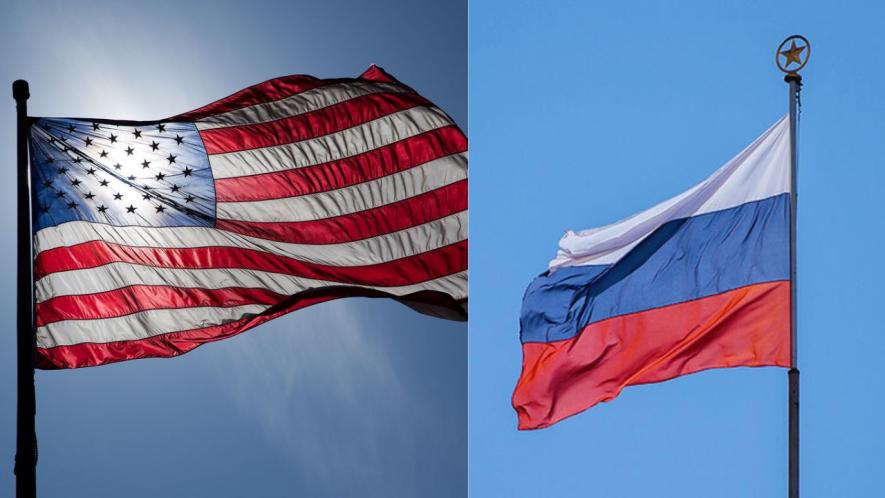
Image Courtesy: Flickr
With the end of the Strategic Arms Reduction Treaty (START 1991 and New START 2021), the last major nuclear arms control treaty between the United States and Russia, all nuclear arms control treaties between the US and Russia have now ended. New START was the last remaining arms control treaty, starting with Strategic Arms Limitation Treaties SALT 1 and SALT 2 in the 1970s, the 1972 Anti-Ballistic Missile Treaty (ABM Treaty) and the 1987 Intermediate-Range Nuclear Forces Treaty (INF Treaty).
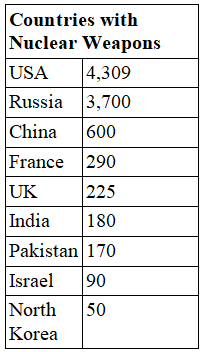
Though nuclear weapons were not eliminated by the nuclear arms control treaties, they brought down the number of US and Russian nuclear warheads from a mind-boggling 70,000 to 1,550 actively deployed strategic nuclear warheads each, and more warheads and more in stock. Though the stockpiles of weapons both sides still have are larger (see Table), the immediate usability of these stored warheads is uncertain. Countries such as China, the United Kingdom, France, Israel, India, Pakistan, and North Korea also have nuclear weapons, but they are nowhere near the size of the US and Russia’s nuclear arsenals.
Though countries like Japan, Germany, South Africa, Brazil, Turkey and many others have the capacity to develop nuclear weapons, they have not done so in the belief that they are protected by nuclear umbrella of other countries; or in the belief that nuclear weapons do not promote security but only brings us nearer destruction with one mad man with his finger on the nuclear trigger ending the world.
It is no accident that the peace movement that sprang up after the Second World War was led by major scientific figures who believed that it was their social responsibility as scientists to inform the world about the real danger of ending all civilisation in the case of a nuclear war, or even in a limited nuclear exchange.
This is one of the reasons that the world believed that the US and Russia need to take the lead in bringing down their nuclear arsenals before other nuclear countries join. None of the others had undergone a nuclear arms race of the kind that took place during the Cold War.
During the Cold War, the US and the Soviet Union stockpiled larger and larger numbers of nuclear weapons in the belief that nuclear safety was in a country having a large enough stockpile for a response which would survive a decapitating strike. That was the logic of nuclear deterrence based on Mutual Assured Destruction, rightly named as MAD. For those who have not seen the film, I highly recommend Dr Strangelove or: How I Learned to Stop Worrying and Love the Bomb, as a primer on the danger of nuclear weapons and the end of human civilisation.
In these columns, we have addressed the US withdrawal from the Intermediate-Range Nuclear Forces (INF) Treaty in 2019 and the hypocrisy of the Trump administration. Earlier, the US had also withdrawn from the Anti-Ballistic Missile Treaty (ABM Treaty) in 2002. With the end of the last remaining nuclear restraint treaty, we now have an end to any arms control regime and every possibility of a renewed, unrestrained nuclear arms race.
The Trump administration's argument against the New START has been two: a) It was a bad treaty, b) China should be included. However, Donald Trump has made no attempts to negotiate a better treaty or to discuss expanding the Treaty with China. In the absence of both, the history of the US withdrawing from earlier Arms Control Treaties bolsters the broader case that the US is treaty-incapable. It has pulled out of almost all major international treaties, not simply on arms control treaties, but also on global warming, outer space, and many others.
The US swears by Freedom of Navigation but has never ratified UNCLOS, the United Nations Convention on the Law of the. The “international” laws it upholds are for others. For itself, the US believes its national laws trump all international laws and conventions.
The US believes that it was the arms race that weakened the Soviet Union by bleeding its economy, and caused its downfall. It believes that it might no longer be the largest industrial economy, but it still is the world’s largest military power, and controls the global economy by virtue of its control over the dollar, the world’s reserve currency.
The Trump strategic vision is, at its heart, a very simple one: “In the short run, I can beat any country into submission by virtue of my big military stick and my ability to freely print the dollar. In any case, in the long run, all of us will be dead, so all that matters is the short run.” A true real estate operator’s strategic view of the world: one part power of money and two parts power of the stick.
With the end of the Second World War, two major processes unfolded. For the settler-colonial US and the European colonial powers—the UK, France, the Netherlands, Belgium, Spain, and Portugal—it signalled the beginning of decolonisation.
The second was the challenge of a socialist Soviet Union, which had paid the highest price, along with China, in the War against the Axis powers: Germany, Japan and Italy. It was the combination of these two strands of history—decolonisation and socialism—that challenged the dominant imperialist powers, who then controlled the advanced centres of production and financial centres, and therefore controlled the world’s industries, finances, and most of Asia and Africa. Latin American countries, though not colonies, were under the Monroe Doctrine, US neo-colonies.
The crisis of global capitalism, even after the fall of the Soviet Union, is that a handful of capitalist countries may call themselves the “Rule-Based International Order”, but these rules do not exist. They never did, but the rules were made up by capital as it transitioned from industrial to financial power, with the US military.
The world order today is no longer decided by the G7, and as the capitalist world weakens, so does its cohesion. Increasingly, the imperial powers are transforming from industrial-finance capital to finance-vulture capital, led by the US, in which the US is also to feast even on the flesh of its allies. This explains Trump’s attitude toward Greenland and Canada, even if it means alienating its allies.
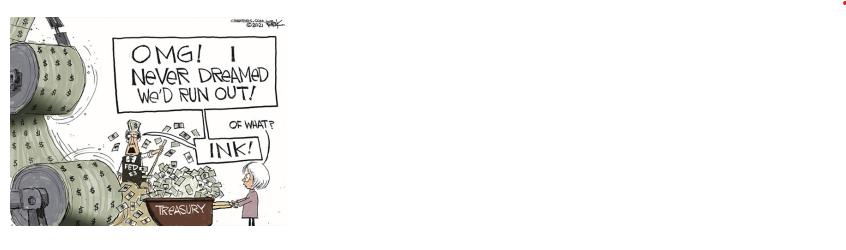
This is Trump’s version of the dystopian ‘Brave New World.’ And as a cartoon shows, the US dollar printing machine may now be even running out of ink. In the words of the Chinese curse, we are indeed living in interesting times.
Get the latest reports & analysis with people's perspective on Protests, movements & deep analytical videos, discussions of the current affairs in your Telegram app. Subscribe to NewsClick's Telegram channel & get Real-Time updates on stories, as they get published on our website.