





India’s Data Centre Boom Is Creating Next Environmental Conflict
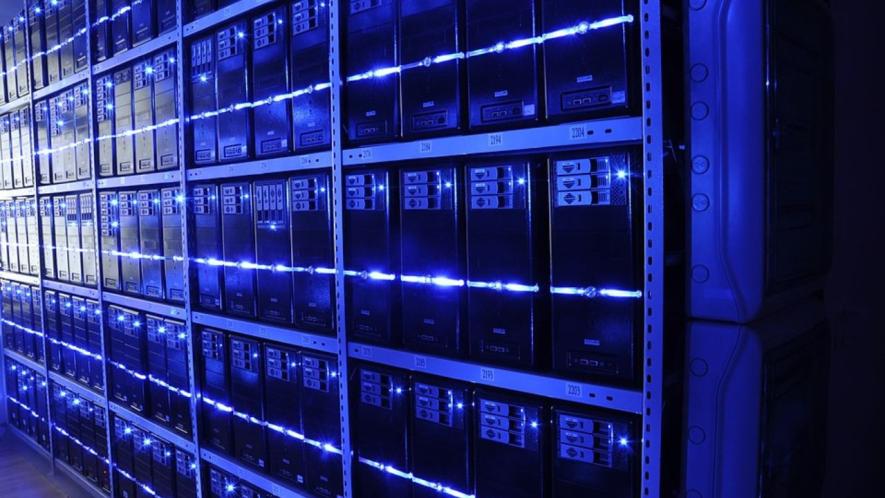
Image Courtesy: Wikimedia Commons
The defining tech race of this decade has been artificial intelligence or AI. Governments are competing to lure investment in data centres, cloud infrastructure, and semiconductor manufacturing, viewing digital infrastructure as the bedrock of future economic growth.
India is no exception. The country is positioning itself as a global digital hub with the India AI Mission, good State incentives, and billions of dollars in private investment into hyperscale data centres. Cities like Chennai, Hyderabad, Mumbai, and Noida are fast becoming the epicentres of this transition.
Policy makers may be praising the digital economy, but a different story is unfolding around the world. Large-scale data centres have drawn protests from residents in the United States over rising electricity usage, excessive water consumption, land acquisition, and public subsidies. We've seen this kind of opposition emerge in Ireland, the Netherlands, and Malaysia, where communities are increasingly questioning whether local residents are footing the bill for digital infrastructure while the benefits are flowing elsewhere.
At first, these protests may seem unconnected to India’s digital objectives. What they really contain is a vital warning. Every technical breakthrough leaves a physical footprint, and every physical footprint poses a political question. In the popular imagination, the cloud is sometimes imagined as an intangible, a limitless digital ecosystem in which information travels invisibly across networks. But the cloud is not weightless or invisible.
Every AI model, every digital payment, every online search, every streaming service relies on massive warehouses full of servers running around the clock. Such facilities require uninterrupted power, large cooling systems, reliable water sources, high-capacity transmission infrastructure, and huge parcels of land.
Environmental infrastructure is the bedrock of the digital economy. That is a fact that the Indian policy discourse is slow to recognise. Data centres are regularly cited as sources of innovation, jobs, and foreign investment. But little attention is paid to their environmental impact.
The need for computer power is likely to skyrocket as artificial intelligence applications become more common in healthcare, finance, manufacturing, and governance. Fulfilling that demand will take not just more computers, but more power, substations, transmission lines, and water-guzzling cooling systems. That has major political implications.
India’s infrastructure disputes have traditionally revolved around highways, dams, mining projects, and industrial corridors. More recently, renewable energy projects have sparked new debates about land ownership, biodiversity, and community rights. Solar parks in Rajasthan, transmission corridors in Gujarat, renewable infrastructure across Kutch have demonstrated that even projects designed to fight climate change can become areas of local conflict if issues of compensation, participation, and environmental protection are not addressed. Data centres will remain the same.
Unlike a typical manufacturing plant, data centres don’t normally produce visible pollution. They are less obvious, but they still have a big impact on the environment. A hyperscale plant can draw the power of a medium-sized town and needs constant cooling to prevent it from overheating.
As India’s digital ambitions grow, so do its power demands—and serious concerns: Should scarce renewable energy be prioritised over AI infrastructure, industrial production, or agricultural supply? How to operate water-intensive cooling systems in regions that are already under chronic water stress? Why should states subsidise land and power for international technology companies when many public utilities are still operating at a loss? These are technical issues. These are concerns for fairness of distribution.
Renewable energy changed the land conversation, and the rapid spread of AI infrastructure could change the conversation around electricity, water, and public goods. India’s digital revolution, like its green transition, is reaching a point where techno-optimism will no longer suffice. But the challenge is not just to build the digital infrastructure anymore. It is determining how such infrastructure fits within the country’s environmental constraints and development priorities.
The flare-ups of conflicts across the globe hint that data centers are no longer mere symbols of technological progress. They are becoming battlegrounds for competing visions of development, sustainability, and the public good. If renewable energy taught India that clean power projects are ultimately about land politics, the arrival of data centres is teaching a different lesson: that the digital economy is fundamentally an environmental economy. All AI apps, cloud services, and digital platforms depend on physical resources, and their availability is becoming more at risk. This is not an argument against digital infrastructure or against AI. India cannot afford to stay on the sidelines of the AI revolution. Data centres have become as strategically important as ports, roads, and industrial corridors for countries vying to build sovereign AI capabilities and woo global investors. These are essential to economic competitiveness, digital governance, and technology innovation.
The question is not if India should build data centres. That’s how they should be built. The world experience shows the political price of ignoring this issue. In the US, proposals for data centres have met resistance from communities concerned that the facilities will strain already stressed electricity grids, raise utility costs, and consume huge amounts of water. But with data centre, electricity demand in Ireland exploding, so too did concerns about grid stability and energy security.
Similar concerns have arisen elsewhere, and they reflect a larger reality: digital infrastructure is no longer seen as environmentally benign. Today, it’s part of larger conversations about public resources, environmental sustainability, and municipal accountability. India’s policy debate has not yet confronted the trade-offs fully.
Much of the debate around AI is about innovation, investment, and global competitiveness. And very little attention is paid to the environmental costs of that growth. Data centres need dependable power supplies, dedicated transmission infrastructure, and large cooling systems. These projects’ rapid growth will certainly further strain electricity generation, land, and water resources, especially in states already facing climate stress, groundwater depletion, and rising urban demand. This raises big questions about energy justice.
Governments compete for tech investment with land subsidies, tax breaks, and cheap electricity, and policymakers need to consider whether the benefits and costs are spread fairly. Should public money be used to prop up energy-hungry digital infrastructure without more efficiency and environmental safeguards? How should governments best use electricity for AI infrastructure, for homes, for farmers, and for small businesses? And who suffers the most from the environmental fallout when the local ecosystem is the one that absorbs the stress of nationally heralded technology investments?
Such questions have been raised before—over mining projects, industrial corridors, and, more recently, renewable energy parks. In each case infrastructure has been justified as a national development priority, but its environmental and social consequences have been largely local. Data centres are unlikely to be any different. Their effects may be less visible than a smokestack or an open-cast mine, but they are just as important in terms of resource allocation, environmental governance, and democratic accountability.
To see is to change public policy. Environmental assessment frameworks must factor in cumulative electricity use, water usage, and climate resilience instead of treating data centers as commercial real estate projects. Urban planning should incorporate digital infrastructure into wider resource management systems. More transparency about public subsidies and environmental performance may help build public trust before tensions arise. It is also important that there is meaningful participation with local communities so that decisions on large-scale digital infrastructure are not reduced to administrative details.
India’s digital transformation is often touted as an example of the country’s capacity to do better than older models of development. History, however, tells us that every infrastructure revolution eventually runs up against ecological limits. Railways transformed the landscape. Highways contributed to forest fragmentation. Renewable energy has transformed debates over commons and conservation. AI will transform the conversation around energy, water, and environmental justice. The next environmental fight in India might not be a coal mine or a thermal power plant. It could be coming out of a windowless warehouse full of servers.
The potential should not serve as a deterrent to India’s digital ambitions. Instead, it reminds us that technological progress cannot be separated from the control over the environment. The success of India’s AI economy will be measured not just by the number of data centres built but also by its ability to prove that digital growth, ecological sustainability, and social equity can coexist. If data is the 21st century, then data politics will be shaped more and more by land, water, and energy politics. The challenge for India is to recognise this truth before today's digital infrastructure becomes tomorrow's environmental conflict.
The writer is a columnist and climate researcher with experience in political research analysis, ESG research, and energy policy. The views are personal.
Get the latest reports & analysis with people's perspective on Protests, movements & deep analytical videos, discussions of the current affairs in your Telegram app. Subscribe to NewsClick's Telegram channel & get Real-Time updates on stories, as they get published on our website.