





Hindu Nationalism: Democracy on Free Fall
Representational image. Image Courtesy: Flickr
The recent Assembly Elections results (May 2026) were eagerly awaited. In Assam, delimitation helped the Himanta Biswa Sarma-led Bharatiya Janata Party (BJP) government win the elections yet again. His main message was about ghuspaithiye (infiltrators) and slogans that spread hate.
In West Bengal, the election looked more like an invasion of Bengal, with the fertile ground prepared by the Election Commission (EC) and later the presence of nearly 2.5 lakh paramilitary forces. Ironically, the place where the forces were required most was Manipur. In Bengal, with BJP’s victory, celebratory violence was widespread right under the noses of paramilitary forces. What was the role and purpose of these forces in the state, is a matter of conjecture. The Union Home Minister had stationed himself in the state for weeks.
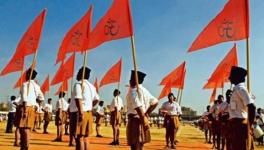
In Bengal, just before the elections, Rashtriya Swayamsevak Sangh (RSS) chief Mohan Bhagwat had a long tour, putting all the RSS affiliates to work for Hindu unity. By now, selling the slogan ‘Hindu khatre mein hai’ (Hindus are in danger) has been made part of the ‘social common sense’. Bhagwat’s visit was not much highlighted but it formed the backdrop of BJP efforts in the state.
The states of Kerala and Tamil Nadu did not respond much to BJP propaganda, still Prime Minister Narendra Modi held many rallies in these states. The importance given to these elections by Modi and company becomes clear from the fact that the ’18-hour a day working’ Prime Minister did not attend his office for over a month.
The West Bengal election was the kernel round which the interest of people revolved. Here, adding on to the anti-incumbency factor that worked against the Trinamool Congress (TMC) were BJP machinations, starting from the Special Intensive Revision (SIR) of the electoral rolls to the presence of massive paramilitary forces.
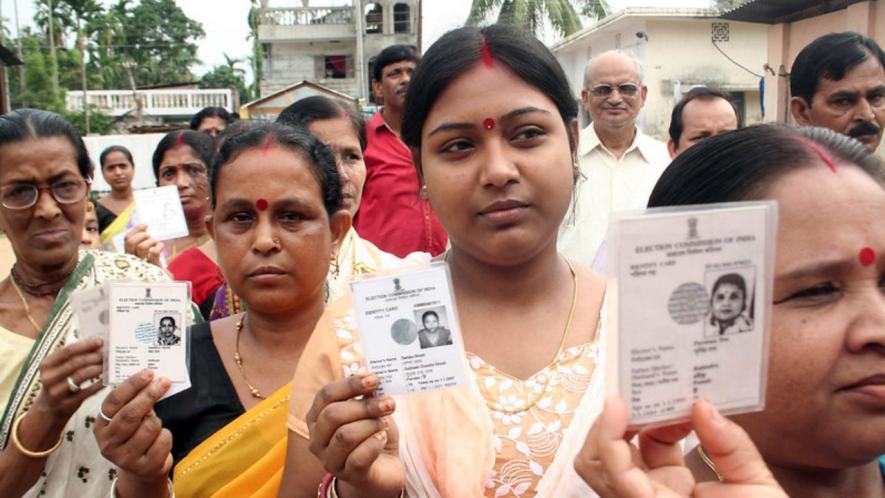
Here the Election Commission’s role was crucial for BJP’s victory. It had deleted over 91 lakh voters, more from the Muslim areas and probably opponents of BJP. Journalist Arfa Khanum Sherwani tweeted, “91 lakh voters were deleted, of which 27 lakhs never even got a chance to have their case heard by the tribunal. In at least 50 seats, the SIR deletions are higher than the winning margin.”
Anjali Bhardwaj, noted human rights worker, added, “Will we at least NOW see the Supreme Court act on the farcical SIR? During the SIR hearings, Justice Bagchi had raised a pertinent question - What if the winning margin is less than the number of voters who have been denied their right to vote? His apprehension seems to have come true.” Sherwani also reminded us about Justice Bagchi’s comments that if the winning margin is 2% and 15% could not vote the result does look questionable.
BJP won by a huge margin and formed the government. Quite a deviation from democratic norms. This doubt about the democracy deficit in West Bengal is supplemented by the happenings in Tamil Nadu, where Joseph Vijay’s party, a major actor having sympathies for Dalits and the deprived sections, emerged as the single largest party. The Tamil Nadu Governor, who is a die-hard Hindutva nationalist, refused to entertain Vijay’s two attempts to remove him from the government, as is the norm. Later, he could garner support of the majority in the Assembly, to add to this even a section of a big section of AIADMK, supported him.
In Bengal and Tamil Nadu, we see the gross violation of democratic values. We call ourselves the largest democracy in the world, but the happenings of the past decade and the actions of BJP as such, tell us that this party is out to erode our democratic ethos, hard earned through our freedom struggle.
It was no coincidence that RSS, the parent organisation of BJP, kept aloof from the freedom struggle. Democracy does not drop from a tree, it is earned through the blood and toil of the democracy aspiring sections of society -- the Dalits, Adivasis, Other Backward Classes or OBCs, workers, women and to some extent the rising industrial class. RSS had a main base among the feudal lords, the Brahmins and upper layers of society, so being a part of democratic aspirations was in no way acceptable to it.
RSS upheld the Manusmriti as opposed to the Indian Constitution. We know that RSS mouthpiece Organiser did criticise the Indian Constitution, as it has “no values which are there in Manusmriti.”
The second and more visible part of the RSS agenda, upheld and magnified by Bhartiya Jansangh and BJP, has an anti- Muslim, anti-Christian core. RSS’s second sarsanghchalak, M.S Golwalkar, in two of his major books underlined it. In ‘We or Our Nationhood Defined’, while appreciating Hitler and fascism, he writes, in India “non-Hindus must adopt the culture and language of the Hindu nation, learn to hold the Hindu religion in reverence, and abandon any distinct identity. If they fail to do so, they should be treated as foreigners” and they should "...wholly subordinate to the Hindu Nation, claiming nothing, deserving no privilege, far less any preferential treatment—not even citizen's rights” In his book, “Bunch of Thoughts”, he states that Muslims, Christians and communists are “internal threats to the Hindu nation.”
It seems the Election Commission is out to achieve what Golwalkar wrote. The BJP is pushing the direction of a Hindu Nation in which democratic values are a big obstacle. But the RSS combined, in a very shrewd manner, is trying to remove the citizenship of Muslims to begin with. The targeting of Christians may be next in line. In a way we are gradually following the path of Pakistan, where Muslim communalism was the dominating force. While Mohd Ali Jinnah in his August 11, 1947 speech gave secularism a place of importance, the communal forces gradually took grip of Pakistan, with the military and Mullahs taking the place of dominance. Democracy is in shambles there.
In India, the other markers of democracy -- freedom of expression and freedom of faith -- are also falling drastically during the past few years. The health of democracy is gauged by the safety, security and liberty of minorities, and in the last few decades the intimidation of minorities is visible in the ghettoisation of minorities, which is on the rise. The intimidation of Christians on the pretext of conversions and targeting of Muslims through different ‘jihads’ is the fate of Muslims.
These Assembly elections have given a good glimpse into the further erosion of democracy, which is under threat with the current regime.
The writer is a human rights activist, who taught at IIT Bombay. The views are personal.
Get the latest reports & analysis with people's perspective on Protests, movements & deep analytical videos, discussions of the current affairs in your Telegram app. Subscribe to NewsClick's Telegram channel & get Real-Time updates on stories, as they get published on our website.