





Higher Education: Kashmir’s Classrooms Go Corporate

File Image
The passage of the Jammu and Kashmir Private Universities Bill in April 2026 has been presented as a pragmatic step toward modernising higher education and stemming the steady outflow of students to institutions outside the region. At first glance, the argument appears reasonable. Yet, a closer look suggests that what is being framed as reform is, in fact, a deeper shift in the very idea of education itself. The Bill does not so much solve the crisis of public education as it quietly accepts it, and then builds policy around that acceptance.
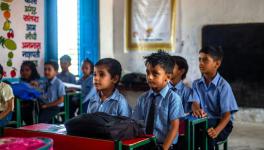
For years now, government colleges across Jammu and Kashmir have been witnessing a worrying decline in enrolment. Institutions like GDC Baghi Dilawar Khan and GDC Chattisinghpora reporting negligible admissions are often cited as evidence that students are “choosing” private alternatives. But this reading is misleading. Students are not abandoning public institutions out of preference alone; they are being pushed away by years of neglect.
Poor infrastructure, outdated courses, lack of faculty stability, and bureaucratic inertia have gradually hollowed out public institutions. What we are witnessing is not a natural transition but something closer to a manufactured decline, where public institutions are allowed to weaken until their replacement by private actors begins to appear inevitable.
This pattern is not unique to education. It reflects a broader political economy logic where the State retreats, the public sector deteriorates, and private capital steps in under the promise of efficiency and innovation. In Jammu and Kashmir, however, this shift carries particular weight. Historically, public education has been one of the few reliable avenues of social mobility in the region. To dilute its role is not just a policy decision, it is a restructuring of opportunity itself.
There is also a deeper ideological question that needs to be asked. The political formation currently dominant in Jammu and Kashmir traces its lineage to the “Naya Kashmir” manifesto, a document that placed universal access to education at the heart of its vision for society. Education, in that framework, was not a commodity but a right, something that the State was morally and politically obligated to provide.
The present embrace of privatisation raises an uncomfortable question: has there been a quiet departure from that foundational commitment? Or has the ideological space once shaped by egalitarian and, at times, Left-leaning influences, been gradually eroded, giving way to a policy orientation more aligned with market-driven governance?
The diminishing imprint of Left-oriented thinking in the region’s policy imagination is difficult to ignore. For decades, strands of progressive politics—whether through formal party structures or broader intellectual currents, kept alive the idea that education must remain a public good. Today, that language seems increasingly absent. In its place, we hear the vocabulary of investment, efficiency, and competitiveness. While these terms are not inherently problematic, their dominance often signals a shift in priorities, from equity to profitability, from inclusion to selectivity.
This transformation becomes even more troubling when viewed through the lens of critical pedagogy. Thinkers like Paulo Freire remind us that education is never neutral; it either reproduces existing inequalities or challenges them. When education is shaped by market logic, it tends to become transactional. Knowledge is packaged, priced, and consumed, rather than collectively produced and critically engaged with. The danger here is not merely economic exclusion but intellectual narrowing. Students begin to see education less as a means of understanding and transforming their world, and more as a tool for individual advancement within it.
Freire’s idea of “conscientization”, the development of critical awareness, becomes particularly relevant in this context. Public institutions, despite their many shortcomings, have historically offered spaces where diverse social groups could encounter each other and engage with ideas beyond immediate economic utility. Privatised systems, by contrast, often segment students along class lines. Those who can afford high fees access better facilities and networks, while others are left with shrinking and underfunded public options. The result is not just inequality of access, but inequality of experience, and ultimately, inequality of voice.
Supporters of the Bill argue that private universities will help retain students within the region and reduce the outflow of capital. But this assumption deserves scrutiny. Students do not migrate merely because institutions are unavailable; they leave because they perceive better quality education and, crucially, better employment prospects elsewhere.
Without parallel investments in local industry, research ecosystems, and job creation, the presence of private universities alone is unlikely to reverse this trend. Instead, there is a real possibility that these institutions will produce graduates whose aspirations cannot be fulfilled locally, thereby deepening the crisis of educated unemployment.
Comparisons are often drawn with global models of educational success, but it is worth noting that some of the most equitable and effective systems, such as those in Finland, Norway, and Denmark, are built on strong public investment rather than privatisation. These societies treat education as a social right, not a market commodity. Their experience suggests that quality and equality need not be opposing goals; in fact, they often reinforce each other.
What is perhaps most concerning about the current policy direction is that it shifts attention away from the urgent task of revitalising public institutions. The decline in enrolment should have triggered a serious effort to reform government colleges, upgrading infrastructure, modernizsing curricula, ensuring faculty stability, and fostering a more responsive administrative culture. Instead, the focus has moved toward creating parallel private structures. This is not because reform is impossible, but because it is politically and administratively more demanding.
In this sense, the Private Universities Bill can be read as a quiet acknowledgment of the State’s retreat from its responsibilities. By positioning itself as a regulator rather than a provider, the State redefines its role in a way that has long-term consequences for citizenship itself. When access to education depends increasingly on one’s ability to pay, the promise of equal opportunity becomes difficult to sustain.
The larger question, then, is not simply whether private universities are good or bad. It is about the kind of society Jammu and Kashmir seeks to build. If education is to remain a means of bridging social divides and enabling mobility, it must be anchored in principles of equity and public accountability. A system driven primarily by market considerations risks doing the opposite, deepening existing inequalities and creating new ones.
The legacy of “Naya Kashmir” reminds us that education once stood at the centre of a broader emancipatory vision. Whether that legacy will continue to inform policy, or be gradually replaced by a more market-oriented approach, remains an open question. What is clear, however, is that the choices made today will shape not just the future of education in Jammu and Kashmir, but the nature of its society for generations to come.
The writer is Assistant Professor (Political Science) at Akal University, Talwandi Sabo, Punjab. He can be reached at waseembhat94@gmail.com. The views are personal.
Get the latest reports & analysis with people's perspective on Protests, movements & deep analytical videos, discussions of the current affairs in your Telegram app. Subscribe to NewsClick's Telegram channel & get Real-Time updates on stories, as they get published on our website.