





Gen-Z Conundrum Holds Answer to India’s Future
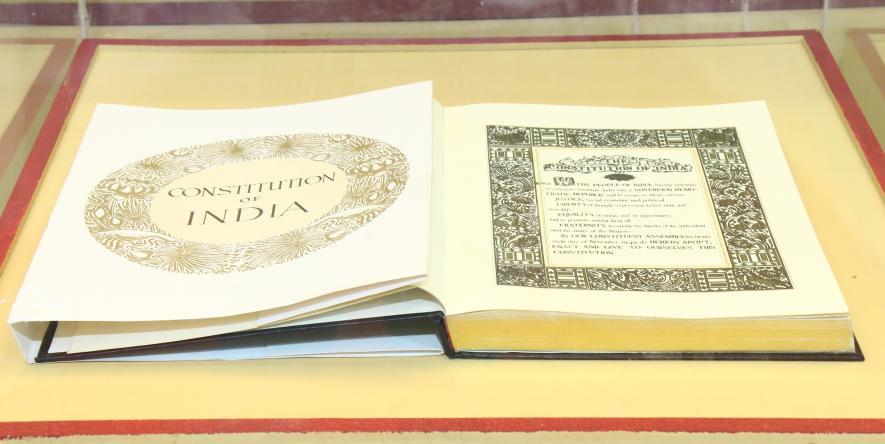
Image Credit: Wikimedia Commons
Hundreds of articles have been written and millions of reels, posts and videos have been churned out about the recent and ongoing Gen-Z protests. And rightfully so. They gave a lease of life to a multitude of Indians who were breathing in oppressive air but were afraid to speak out. However, it is still very difficult to predict if this newfound lease of life will lead to tangible, real changes in the system to usher in a better India.
This question hangs in suspension and the key to its resolution lies with Gen-Z, Gen Alpha and to some extent, the Millennials and Boomers.
India right now is sharply divided on an ideological plane. And so is Gen-Z. Considered to be born between 1997 and 2012 (as defined and popularised by authors Neil Howe and William Strauss), these young individuals are often characterised as the core of India's demographic dividend. But are they?
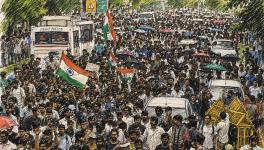
Broadly, mirroring economic classes, there are three sets of Gen-Zs in India: lower class, lower middle/middle class, and upper middle class. The rich-class Gen-Zs are irrelevant. What India witnessed at Jantar Mantar and pan-India protests were the agitated, angry, witty (sometimes beyond acceptable societal norms), and courageous Gen-Zs eager to voice their legitimate rights, against a deeply compromised and regressive education system and much more. Most of these Gen-Zs belonged to struggling lower-middle, and middle-class families. This mass of Gen-Zs doesn't give a damn about caste and religion. They largely come from Gen-X (born between 1965 and 1980) Hindu parentage, which became the first victim of the Right-wing propaganda blitz on WhatsApp and Facebook.
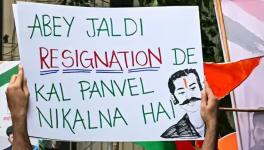
At first, the State treated them with ridicule and apathy, trying to tarnish them with titles like deshdrohi (anti-national). But when they persisted, the State used brutal repression to silence them. But even repression failed to stop these Gen-Zs as similar protests erupted across many cities. They won the first battle they fought under a loosely knit leadership.
The second set consists of Bystander Gen-Zs. These youth generally belong to comfortably placed middle and upper-middle-class that have little stake in the Indian education system or even India. Well- endowed with inheritance and elite family circles, and studying in top-ranking institutes in India and abroad, the lives of most of these Gen-Zs are set. Yet, some of them did protest because of their general anger against the hegemonistic Hindutva cultural values which are alien to their value system and stifle their way of life. The protest was also a curious spectacle for them—a place to party and flaunt their rage. But there were exceptional cases among them too, who had friends among the protesting students and were thus empathetic and eager to join ranks. Such people have existed in every epoch of the human race.
A not very small section also included minorities across classes as the protest gave them hope for an inclusive India and they wanted to lend their support to it in some manner.
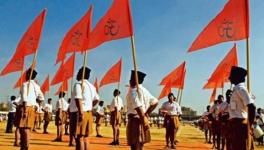
The third set of Gen-Zs belongs to the Hindutva ideology. They wanted to disrupt the protest but had a very thin presence. Since they had no common connection with the protesting students, they were very cautious. In many instances, they were spotted and booed away. However, their numbers, especially in the North Indian states, are substantial, and the current dispensation is trying its best to include more of them to create a vigilant army to help establish a Hindu Rashtra. The majority of the youth in Kanwad Yatras and involved in vigilante groups like Vishwa Hindu Parishad or VHP, Bajrang Dal, Sri Ram Sena, Hindu Yuva Vahini and many others, form a strong cadre base for the ruling party.
The difference between the protesting Gen-Zs and the Hindutva Gen- Zs is stark and frightening. The protesting Gen-Z wields the Indian Constitution, books by great authors and revolutionaries like Bhagat Singh, or their course books in hand, but the other Gen-Z roam free on streets with swords, battle-axes (farsa), knives (chaku) and even pistols and guns in their hands. The first set is inquisitive, eager to learn and make a mark in life and also in society, while the other is rowdy, vulgar and violent, eager to instil fear, especially among the minorities.
The first set of Gen-Z and Alpha are protesting for something that is rightfully theirs, is guaranteed by the Constitution but doesn’t exist on ground—a working and free education system, leak-proof exams, Head Masters, Principals and Vice Chancellors who students can look up to, curriculum based on scientific temperament, schools and colleges with teachers, drinking water and toilets. What they actually have is just the opposite: over one lakh schools don’t have toilets, over 15,000 lack drinking water, schools where a single teacher teaches several classes and schools where classes are being taken by the school peon instead of a teacher.
The third set of Gen-Z has been conditioned not to go to schools or to treat modern education with disdain. Their schools and universities are Right wing WhatsApp, Facebook and Instagram posts, the local shivirs (camps) that impart hate and distribute weapons and films, such as The Kerala Story, that was 95% fiction. At the centre of their focus is hatred against Muslims, followed by hatred against Christians and Dalits (Scheduled Castes). The fodder for this hatred comes from usually fake and imaginary cases of ‘Love Jihad’ (forcible conversion to marry) and ‘Land Jihad’ (acquiring land illegally) most of which have failed to pass a simple judicial scrutiny despite the fact that as of date, 13 states have passed anti-conversion laws with harsh penalties, yet the record of conviction remains abysmal. A paper by Nidah Kaiser convincingly proves the allegations of ‘Love Jihad’ are a farce and are basically driven by ill-conceived notions of national security, patriarchal control over women, and gendered Islamophobia.
The candid acceptance of the Rashtriya Swayamsevak Sangh (RSS) Sarsanghchalak (supremo) Mohan Bhagwat in a recent interview, where he rubbished the claims of protesting Gen Zs as traitors orchestrated by some leaders of RSS’s political arm BJP, is a welcome sign. But there exists little basis to take it seriously, as RSS has long been in the habit of saying one thing and doing another.
What transpired for RSS to take this course seems to be the huge outpouring in the protests of lower-middle and middle-class youth belonging to Hindu families. The propaganda blitz by RSS-controlled outfits and BJP had managed to rope in their parents, the Millennials and Boomers, successfully in believing in the mirage of Vishwaguru and Viksit Bharat or what Sab Changa Si (All is (was) fine) syndrome, articulated by Prime Minister Narendra Modi in several Indian languages in the ‘Howdy Modi’ event at Houston, US, in 2019. Shocked by the anger and frustration of their children, many parents are now being forced to have a relook at their long-held beliefs.
This sudden development has rattled the whole RSS and BJP machine. What recourse they take in the near future is anybody’s guess. But the initial steps indicate that the lessons have not been learned. Public addresses and articles by Right wing leaders and intellectuals continue to question the Gen-Z protests. PM Modi’s speech on India’s 80th Independence Day at best was a red herring and a prompt.
A red herring to distract people from the real issues, such as unemployment, the dismal state of education, schools and universities, divisive politics, corruption, and the breakdown of the constitutional machinery by announcing big-ticket schemes (that are seldom implemented on the ground but serve as good data points, such as Smart Cities).
No one knows how the Modi government will implement free online coaching classes for aspirants of competitive exams, how it will ensure the quality of teachers and logistics of servers etc. What sort of AI training will be given and by whom and how to one crore youth? The previous records of nearly all big-ticket schemes are dismal -- be it Skill India, Swachch Bharat, Airports, Har Ghar Jal or Open Defection Free India. Innumerable ground reports have exposed their government report cards.
The ‘Dimagi Naxal’ remark by Modi seems to be a prompt or a direction to the third kind of Gen-Zs belonging to Right-wing outfits. This is a dangerous sign that can pit two types of Gen-Zs against each other and suck India into an unprecedented war of attrition directed against the Gen-Z youth who actually want to raise India's stature by seeking accountability from the four pillars of democracy: the executive, the legislature, the judiciary and the media.
The only way out is to form a united front of people from all generations who follow the Indian Constitution—believing in justice, liberty, equality, secularism, fraternity and scientific temperament—and support Gen-Z in their struggle for a better India. This dream can be achieved if, as Prof. G.N. Devy said in a recent talk, the people (Millennials and Boomers) are ready to go to jail. The Opposition parties also have no option but to join hands or face dissolution.
The writer is a senior independent journalist based in Delhi. The views are personal.
Get the latest reports & analysis with people's perspective on Protests, movements & deep analytical videos, discussions of the current affairs in your Telegram app. Subscribe to NewsClick's Telegram channel & get Real-Time updates on stories, as they get published on our website.