





Gandhi and Consciousness of Freedom: Why ‘Bina Khadag, Bina Dhaal’ Still Rings True
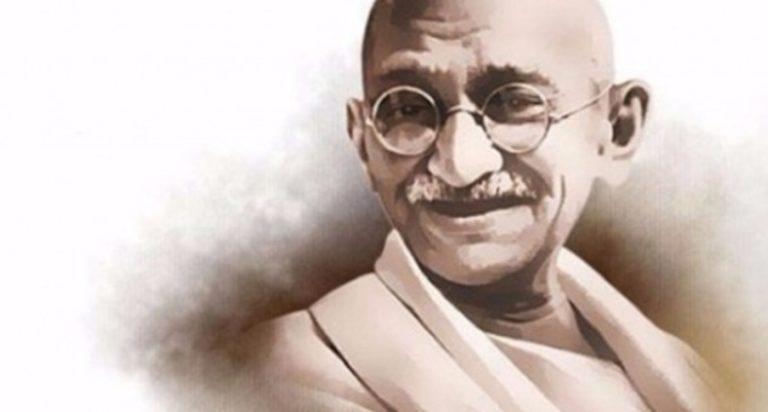
File Image
India did not wake up free on the morning of August 15, 1947 because a few men negotiated a transfer of power, nor because an army of rebels defeated the British militarily. India became free because, over three turbulent decades, the very idea of freedom was sown, cultivated, and amplified until it became a mass consciousness. And in that transformation, no figure mattered more than Mohandas Karamchand Gandhi.
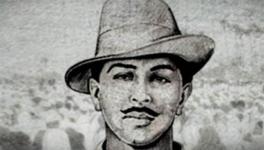
Critics of Gandhi often seize on a literal interpretation of the famous lyric — “De dee humein azadi bina khadag, bina dhaal” — to argue that independence came not through Gandhi’s non-violence but through armed martyrs, Bhagat Singh and his friends’ heroic sacrifices, Subhas Chandra Bose’s INA, or the 1946 Naval Uprising. But this misses the point. The lyric is not a historical ledger of military victory. It is an allegory of what Gandhi uniquely gave India: the consciousness of freedom, the collective imagination of azadi. Without that investment of millions of ordinary Indians in the idea of a nation, the mutinies, martyrs, and negotiations would have remained scattered sparks. Gandhi’s genius was to turn them into fire.
Champaran: The First Experiment
In 1917, Gandhi went to Champaran in Bihar to support indigo farmers oppressed under the tinkathia system. What followed was not a battle of arms but a battle for dignity. Gandhi insisted on public enquiry, on mobilising peasants to stand firm, and on non-violent satyagraha. The British relented; the exploitative system was curtailed.
In the magazine, Young India, Gandhi wrote: “What I did in Champaran was to teach the ryot the lesson of self-reliance… it was not a battle with the planters, it was a battle for the soul of the people.” This was a template. Peasants who never imagined themselves as political actors suddenly discovered their agency. Freedom here did not mean expelling the British; it meant the courage to stand upright.
Bardoli: Collective Resistance as Power
The next year, in Kheda and Bardoli, Gandhi amplified this method. Faced with famine and the British demand for full land revenue, peasants launched a tax satyagraha under Gandhi’s guidance. When the government backed down, it was the first time rural India had won a collective victory against colonial authority.
In his Collected Works, Gandhi noted: “Swaraj will come not by the sword, but by our capacity to suffer for truth. Bardoli has shown the way.” Here again, Gandhi transformed local grievance into collective power, shaping the idea that self-rule was achievable through mass solidarity, not elite petitions.
Jallianwala Bagh: Outrage Becomes National
On April 13, 1919, General Dyer’s troops fired on unarmed civilians in Amritsar, killing hundreds. Left alone, this would have remained a regional atrocity. Gandhi made it national. He called it “Dyerism,” a shorthand for the entire logic of colonial rule — arbitrary violence, contempt for Indian life.
From Young India (1920): “What we have witnessed at Amritsar is not an aberration but the rule of foreign dominion… We must refuse to cooperate with such a government.” By invoking moral outrage across caste, creed, and region, Gandhi converted grief into a shared humiliation, and humiliation into a shared demand for dignity. This was the hinge moment where “India” became a collective subject of injustice.
Non-Cooperation: The First National Vocabulary
The Non-Cooperation Movement (1920–22) was Gandhi’s great amplification. Triggered by Jallianwala Bagh and the Khilafat grievances, it called for boycott of British schools, courts, legislatures, and foreign cloth. It was the first mass movement that swept across India — peasants, workers, women, students, traders. Tilak had spoken of Swaraj, but Gandhi gave it form and ritual: khadi, the charkha, salt, fasts, marches.
At the 1920 Congress session, Gandhi declared: “Non-cooperation with evil is as much a duty as cooperation with good.” In his Autobiography, he reflected: “The call of the spinning wheel, the call to self-respect, was answered from one end of India to the other. That was Swaraj in the making.” Freedom here was not yet political transfer, but the ability of millions to think and act as one.
Why Gandhi Mattered More than Any Other
Other leaders made vital contributions. Tilak thundered about Swaraj. Bhagat Singh’s martyrdom electrified youth. Bose’s INA rattled the loyalty of Indian soldiers. The Naval Mutiny of 1946 shook the British to their core. Each was essential. But none of them could have materialised without the prior groundwork of Gandhi’s national imagination. Before Gandhi, India was not a political nation; it was a patchwork of causes — peasant grievances, linguistic identities, princely intrigues. Gandhi gave them a common undercurrent.
As historian Rajmohan Gandhi has argued, Gandhi had the “verbal and visual vocabulary” to bring the idea of freedom to the grassroots. His spinning wheel, his fasts, his readiness to suffer became symbols ordinary people could grasp and own. He turned moral injury into political energy, and individual anger into national solidarity.
The Meaning of ‘Bina Khadag, Bina Dhaal’
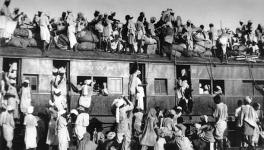
So yes, the lyric is literally untrue. Independence was not achieved without violence — thousands died in Jallianwala, Chauri Chaura, Quit India. The INA fought with arms. The Navy mutinied. Partition itself was soaked in blood. But as allegory, the lyric captures something real: Gandhi gave India freedom of imagination before 1947 gave India freedom of statehood.
To the peasant, freedom now meant relief from oppression. To the worker, dignity of labour. To the student, the right to learn outside colonial curricula. To women, a public voice. To all, it meant standing upright as a citizen, not a subject. This was Gandhi’s azadi: the capacity to think as a free people, to imagine a self-reliant destiny with no emperor, viceroy, or foreign master as paternal authority.
The Blunt Truth
India did not become free because Gandhi outfoxed the British in negotiation rooms, nor because INA soldiers could have defeated the Empire in battle. India became free because, by 1947, the British faced a people who no longer consented to be ruled, who had discovered in themselves the right to azadi. Gandhi had given them that consciousness — fragile, plural, imperfect, but unifying.
So, when we sing “De dee humein azadi bina khadag bina dhaal”, it is not a lie. It is simply poetry: Gandhi gave us not independence, but the idea that independence was ours to claim. With it, India became a nation.
The writer is an independent journalist. The views are personal.
Get the latest reports & analysis with people's perspective on Protests, movements & deep analytical videos, discussions of the current affairs in your Telegram app. Subscribe to NewsClick's Telegram channel & get Real-Time updates on stories, as they get published on our website.