




Free Trade to Strategic Trade: The New World Order
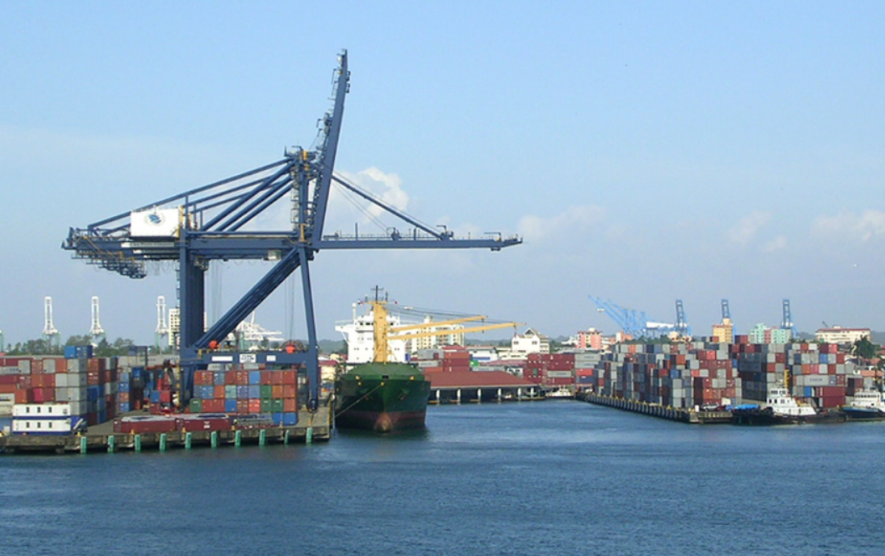
Representational use only.Image Courtesy: Wikimedia Commons
The idea that the world economy used to work under a "free trade" system is, at best, only partially true. It was said that the system was neutral and based on rules, but it was really based on differences in power.
In advanced capitalist economies, trade was mostly free, protected by institutions, and good for everyone. But for a lot of the developing world, it was often coercive, with conditions, unequal bargaining power, and institutional restrictions that made it hard for countries to make their own policies.
The World Trade Organisation, the International Monetary Fund, and the World Bank all said that liberalisation was the best way for everyone to grow. However, data from the past 30 years shows that global trade grew a lot, but profits were not evenly distributed. Advanced economies became even more powerful in high-value areas, such as technology, finance, and intellectual property. At the same time, many developing countries stayed stuck in low-value parts of global supply chains.
Trade was never just about efficiency or comparative advantage in this way. It was always about power.
Myth: A Time of Stable Free Trade
People often call the late 1900s and early 2000s the "golden age" of globalisation. Most economies had higher trade-to-GDP (gross domestic product) ratios, longer global supply chains, and more factories moving to Asia. People often point to China's rise as proof that integration is good.
But this story hides two important truths. First, liberalisation was not fair. While rich countries pushed and encouraged developing countries to open their markets, they kept important sectors safe through subsidies, non-tariff barriers, and control of global financial networks. For example, agricultural subsidies in the US and the European Union make global markets less efficient and limit production in the Global South.
Second, the idea that economic interdependence would make global relations less political, was wrong. Strategic concerns were never lost; these were built into the system. Geopolitical power stayed centralised because of control over energy routes, technology standards, financial networks, and currency systems.
What is Different? Not Logic, But Visibility
People often say that the current trend toward "strategic trade" is a break from a system that was once neutral. In reality, it shows processes that have always been there in a clearer way.
The trade war between the US and China did not add geopolitics to trade; it made it public. Tariffs, export controls, and limits on technology were all part of a bigger fight for economic and technological dominance. Sanctions regimes, especially those against Russia and Iran, show how economic tools have been used in the past to force others to do things.
The COVID-19 pandemic, the conflict between Russia and Ukraine, and instability in key areas like West Asia have all shown how fragile global supply chains are. More importantly, they've shown how interdependence can be used as a weapon. What we're seeing isn't a change from "free" trade to "strategic" trade; it's a change from hidden to open power dynamics in the world economy.
China's Rise and Reconfiguration of Power
China's rise has significantly impacted the structure of global trade. Unlike many developing countries, China used globalisation strategically, combining State-led industrial strategy, regulated market access, and integration into global supply chains to progress up the value chain.
Its emergence has upended the previous equilibrium in which advanced capitalist economies controlled high-value production. As a result, the US and its allies have embraced more protectionist and interventionist policies, ranging from chip export limits to industrial subsidies under laws, such as the CHIPS and Science Act.
This is not a retreat from globalisation, but rather a reshaping of it—in which competition among major powers impacts trade flows, investment patterns, and technical ecosystems.
Global South in a Broken System: Passing the Burden
The effects on poor countries are huge. In several developed economies, the current time of strategic trade is happening at the same time as economic slowdowns, high levels of debt, and tight budgets. As these countries work to stabilise their own systems, they are more likely to push economic costs outside their borders through stricter banking rules, trade policies that make it harder to do business, and selective decoupling.
This puts the Global South in a bad place. Countries may not have easy access to markets and technology, and they may feel pressure to join competing geopolitical groups. Friend-shoring, or breaking up trade into "trusted" networks, could kill off economies that don't fit well into these alignments.
There are also possibilities at the same time. Countries, such as India, Vietnam, and Indonesia have been able to get investments because of the diversification of the supply chain. However, getting these prospects to work for you requires the government to be involved in things like industrial strategy, building infrastructure, and teaching people new skills. It's not enough to just passively integrate into global markets anymore.
Who is resilient?
A big topic of conversation these days is the change from efficiency to resilience. Governments are putting a lot of effort into making sure that the supply chain is safe, that goods are made in the country, and that there are enough strategic reserves. But this brings up an important question: who is resilient?
For advanced economies, being resilient often means relying less on foreign actors while still keeping control of important sectors. For countries that aren't very developed, though, the same change can mean fewer chances to export and a greater risk of being hurt by outside events.
Also, the costs of restructuring global supply chains, such as higher manufacturing costs, inflationary pressures, and shifts in investment, are likely to be spread out unevenly. Historically, these changes had a bigger effect on the Global South than on other parts of the world.
The Illusion of a New Order
The phrase "new global order" means that things will be different from how they used to be. But if you look more closely, you can see that things are still the same.
Power, coercion, and geopolitical calculations have always had an effect on trade. The system's transparency has changed, not its character. Advanced capitalist economies are increasingly employing economic statecraft strategies in response to internal economic pressures and external competition.
In this situation, developing countries need to not only get used to a system that is changing, but they also need to understand how it works. This means going beyond simple stories of free trade versus strategic trade and looking at the political and economic reasons for globalisation.
Trade is Determined by Power, Not Markets
The global trading system is not changing from neutral to politicised; it is showing its basic logic. Markets have never worked without power. Institutions have never been fully impartial. And trade has never been "free" in the strictest sense.
As geopolitical tensions rise and economic uncertainty deepens, the main question is no longer whether strategic commerce will shape the future; it already does. The main question is whether developing countries can work out a deal with this system that gives them more freedom, or will they keep working within systems that keep inequality going. The answer will have an impact on trade in the future and on the world order as a whole.
The writer is a columnist and climate researcher with experience in political analysis, ESG research, and energy policy. The views are personal.
Get the latest reports & analysis with people's perspective on Protests, movements & deep analytical videos, discussions of the current affairs in your Telegram app. Subscribe to NewsClick's Telegram channel & get Real-Time updates on stories, as they get published on our website.