






Education Institutions and Paradox of Growth in India
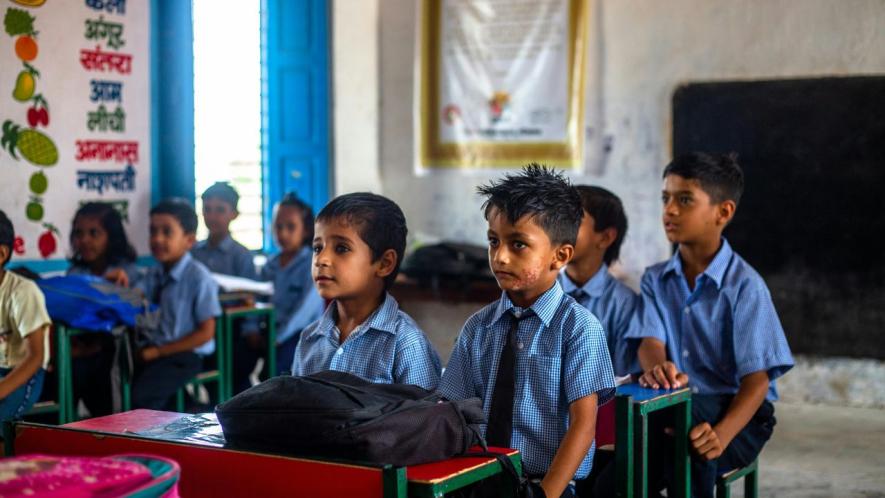
Representational Image. Image Courtesy: Pexels
“In my opinion, the imposing tower of misery which today rests on the heart of India has its sole foundation in the absence of education.”
— Rabindranath Tagore
Daron Acemoglu and James A. Robinson (Nobel Prize winners in Economics in 2024), in their brilliant book, Why Nations Fail: The Origins of Power, Prosperity, and Poverty, argue that the welfare of countries and their economic growth depend on the institutions they have developed. Institutions are important for research, development, economic opportunities, and employment prospects.
Joel Mokyr, in his book, The Gifts of Athena: Historical Origins of the Knowledge Economy, gives us a critical analysis of the accumulation of knowledge in transforming pre-modern Western countries into modern economies.
The living conditions, health, hunger, poverty, education, and human development of a nation depend on the institutions it has developed. They play a role in various fields like economic, social, political, and cultural.
Adam Smith, in his classic, Wealth of Nations, writes about India being one of the most prosperous regions in the globe, and Claudius Ptolemy, a pioneering geographer of the second century, writes about parts of India thriving economically.
India is the second fastest-growing economy in the world. Why is it that despite its economic growth, India is one of the poorest countries in the world? Why is its wealth inequality one of the worst in the world? Why are its social development and global indices among the worst in the world? Why are diseases, living conditions, and inequality at their peak in the world? The reason lies in the institutions it has developed. Adam Smith, in The Wealth of Nations, corroborates the decline of these indices by the decline of political and social institutions it has developed.
In the present regime, educational institutions are rapidly declining because of their own politics. As per the 2021–22 report of the "All India Survey for Higher Education", the Indian university sector has 341 universities and 8,373 colleges added since 2014–15.
Debaditya Bhattacharya, in his book, The Indian University: A Critical History, gives us statistics about a drastic fall in enrolments in the institutions by 32%. Why is it that despite such an increase in the institutions, there is a reduction in enrolment in these institutions? The reason is the government’s flawed educational policy.
The New Education Policy (2020) (NEP), a 66-page document, was ideologically harnessed to bring back a glorified Hindu past on the great model of Indian universities, such as Takshashila, Nalanda, Vallabhi, and Vikramshila, which, as per the NEP, predated all universities in the world. If they had such a long establishment, why did they disappear so quickly?
Bhattacharya argues that these were not universities as the idea of universities is understood at present. The NEP also brought outdated metaphysics, “Indian Knowledge System,” under the guise of decolonisation and to bring pride to millennia-old Hindu science and philosophical systems. It is a silent coup against objective knowledge and institutions.
As Anil Sahasrabudhe, Chairman of AICTE, said, “the plan is to initiate a process of training generations of scholars who will show society the ‘Indian way of being, knowing, and doing things.’ If we want to become a world leader and once again a ‘Vishwaguru,’ we must regain a comprehensive knowledge of our heritage and demonstrate the Indian way of acting to the entire world.”
The NEP historians rewrite history that fits their agenda and knowledge system. Even universities of excellence, such as IIT Gandhinagar, IIT Kharagpur, IIT Madras, and IIT BHU have established IKS centres. IIT Delhi has established a cow urine centre called SVAROR (Scientific Validation and Research on Panchgavya). NEP 2020 takes off from where Murli Manohar Joshi, Union Minister for Human Resource Development (1998–2004), left. Only the methods have changed.
Intellectual and thinker Prabhat Patnaik argues that “NEP will confine education to a socially and economically privileged elite,” evident from its silence on reservations for Dalits, OBCs (Other Backward Classes), and other disadvantaged groups. He further argues that it prepares students as “fodder for neoliberal capitalism,” while infusing Hindutva chauvinism. Rajan Gurukkal characterises it as a techno-capital document.
If a nation wants to prosper, it should build institutions, as institutions generate human capital. But simply building more institutions is not enough. What matters is how they function—whether they allow free thinking, encourage questions, and treat everyone fairly.
When institutions lose their independence or become driven by narrow interests, they stop serving their real purpose. Real progress can only occur if organisations and institutions are open, inclusive, and accessible to all people in society. If many people are excluded from trying to advance their lives through education and job opportunities, then these forms of economic growth will have little meaning.
The future of countries depends upon the quality of their institutions. Institutions that are strong will allow individuals to feel safer, create economic stability through minimised inequality, and promote development of societies. If India is to have growth, it will need institutions that are strong in number, spirit, and intent.
The writer is an independent researcher based in Jammu. An engineer by training from N.I.T Srinagar, he is interested in South Asian history, politics, Islam and cricket. The views are personal.
Get the latest reports & analysis with people's perspective on Protests, movements & deep analytical videos, discussions of the current affairs in your Telegram app. Subscribe to NewsClick's Telegram channel & get Real-Time updates on stories, as they get published on our website.