





Did Gods Eat Meat?
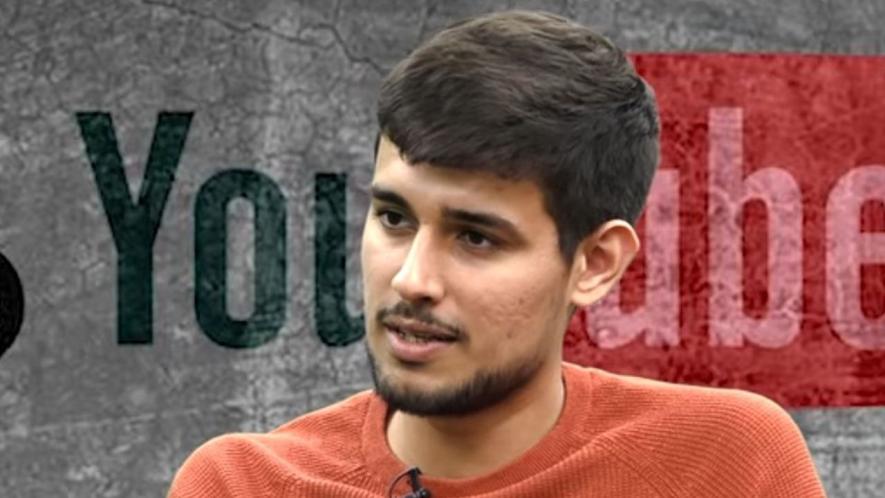
Dhruv Rathee during a interview. Image Courtesy: Wikimedia Commons
Recently a video by popular YouTuber Dhruv Rathee, which narrated the food habits of Lord Ram in particular, was subject of great controversy. In this video, Rathee, whose videos are very popular and based on thorough search, stated that Lord Ram was non-vegetarian. His video (with 9,2 million views) has extensive quotations from Valmiki Ramayan in particular. Based on scriptures, he also narrated the food habits of many gods and the prevalence of meat eating at that time and somaras drinking as part of their menu.
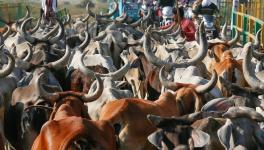
The controversy was how can Gods eat non-vegetarian food? There are extensive quotes from the holy books about consumption of non-vegetarian food in those times. Swami Vivekanand in his book, East and West, also endorses this view. Swamiji, while speaking to a large gathering in the US, said: “You will be astonished if I tell you that, according to old ceremonials, he is not a good Hindu who does not eat beef. On certain occasions he must sacrifice a bull and eat it.” (Vivekananda speaking at the Shakespeare Club, Pasadena, California, USA (2 February 1900) on the theme of ‘Buddhistic India’, cited in Swami Vivekananda, The Complete Works of Swami Vivekananda, Vol 3 (Calcutta: Advaita Ashram, 1997), p. 536.)
This is corroborated by other research works sponsored by the Ramakrishna Mission established by Swami Vivekananda. One of these reads: “The Vedic Aryans, including the Brahmanas, ate fish, meat and even beef. A distinguished guest was honoured with beef served at a meal. Although the Vedic Aryans ate beef, milch cows were not killed. One of the words that designated cow was agonya (what shall not be killed). But a guest was a goghna (one for whom a cow is killed). It is only bulls, barren cows and calves that were killed.” (C. Kunhan Raja, ‘Vedic Culture’, cited in the series, Suniti Kumar Chatterji and others (eds.), The Cultural Heritage of India, Vol 1 (Calcutta: The Ramakrishna Mission, 1993), 217.)
Babasaheb Ambedkar also traces the history of dietary tradition to tell us that with the rise of Buddhism, Brahminism resorted to countering Buddhism by raising the slogan of ‘Cow as mother’. Those who could not afford vegetarianism stuck to beef eating and were made untouchables. As such, on the evolutionary scale, early human beings were hunter food gatherers till the coming up of pastoral society. During this, apart from dairy products, they continued eating animals. Animal sacrifice to please the Gods became a norm. Sacrifice of cows and other animals to Gods was resisted by Gautam Buddha. While Lord Mahavir was for total giving up of eating animals, Lord Buddha did tell his disciples to accept even non-veg food given in bhiksha, by a donor to the begging monk. Emperor Ashoka, a Buddhist, in one of the edicts says that animal sacrifice should be stopped but the animals and birds necessary for eating can be killed.
Through a long journey of time, animal sacrifice continues in many a temple even today. Today, temples of Kamakhya Devi (Assam), Dakshineshwar Kali Temple (West Bengal) amongst others continue this practice of sacrifice of meat and chicken. In Maharashtra, near Lonavala, there is a Temple of Ekvira Devi where chicken and toddy (alcoholic drink) are offered.
As per data by the Anthropological Survey of India, today in India nearly 70% of the population is non-vegetarian. More Jains are vegetarians and only 45% of Hindus are vegetarians. Most of the population in coastal regions consume fish as the first priority. In the Konkan region, this is called ‘Sagar Pushp’ while in regions of Bengal it is called ‘Sagar Fal’. Incidentally, in Bengal, fish has a place of importance in many customs.
Dietary habits are totally diverse from region to region in the world. Right in India, there is the Musahar community, which eats rats out of the compulsion of poverty. In the North Eastern states, the prevalence of beef-eating is higher than in many other states of India.
As beef was made a political issue and lynching of Muslims and Dalits became common by Hindu nationalists, we heard Kerala Bharatiya Janata Party’s (BJP) N. Sreeprakash stating that if he is elected, he will ensure the supply of better-quality beef. In the teaser of the film, Kerala Story 2, we see a Muslim family forcibly feeding beef to a Hindu girl who has married a Muslim. What a parody. To dissuade Hindu girls from marrying a Muslim man, this is shown to discourage girls from making their choice in marriage. The fact is that beef is very common in Kerala as a food item.
Human history is replete with all types of dietary practices. Currently the trend is of veganism. This is on the grounds that milk produced by animals is for their calves, not for humans. This is a welcome moral stand. Practically speaking, vegetarianism is better for environment protection. That apart, the present practices of people have to be respected.
My friend and mentor Dr. Asghar Ali Engineer used to tell me that Gandhiji (a vegetarian)was very open about offering non-vegetarian food to his guests without much hesitation. When requested that he should ensure a ban on cow slaughter, he said that the country belongs to people of diverse food practices so it will be unfair to them to resort to such a law.
What is being popularised by communal forces is that Muslims are violent because of non-vegetarianism. The truth is that a good number of Hindus also consume meat or fish. As far as violent tendencies and non-vegetarianism is concerned, it is an absurd correlation. We have seen the biggest mass murderer, Hitler, was a strict vegetarian after 1933 till his death, and advocates of peace like Nelson Mandela must have been meat eaters. There is no medical correlation between dietary habits and the psychological make up of an individual.
The most dangerous distortion is to deny the consumption of meat in ancient times and the propaganda that Muslims are violent due to their dietary habits.
The writer is a human rights activist, who taught at IIT Bombay. The views are personal.
Get the latest reports & analysis with people's perspective on Protests, movements & deep analytical videos, discussions of the current affairs in your Telegram app. Subscribe to NewsClick's Telegram channel & get Real-Time updates on stories, as they get published on our website.