





Beginning of End of ‘Madrassa’ Education in Country?
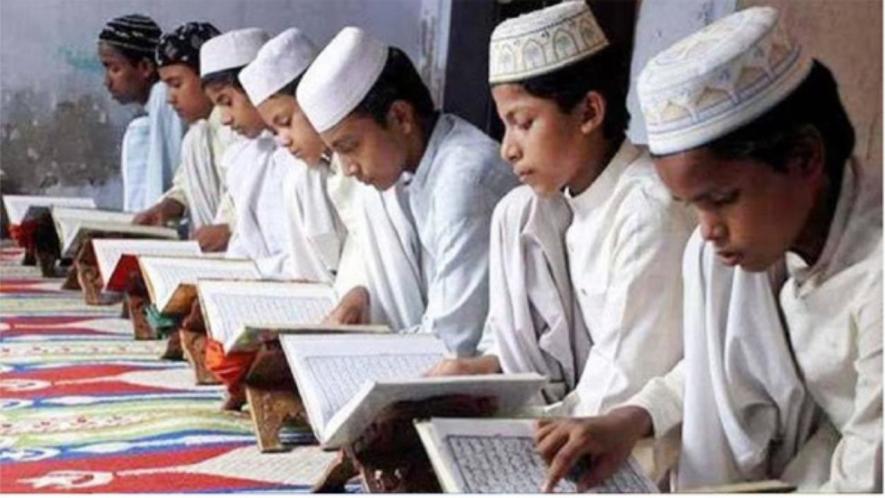
Madrassa students
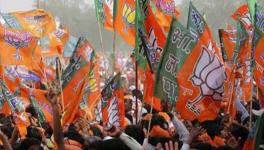
Dehradun: With the abolition of the Madrassa Board by the Bharatiya Janata Party (BJP) government in Uttarakhand and replacing it with the Uttarakhand State Minority Authority, is it the beginning of the end of madrassa education in the country under the present ruling (Rashtriya Swayamsevak Sangh) RSS-BJP dispensation?
The Madrassa board in Uttarakhand has been abolished from June 30, 2026, and a new Minorities Education Authority will be the regulatory authority of minority education in the state.
Although, the nomenclature of Uttarakhand State Minority Authority has been camouflaged covering all the minorities, practically it is aimed at “strangling” religious education being imparted to Muslims through the madrassa education system.
The ‘Jamait-Ulema -a Hind’, a body of clerics along with some madrassa owners, have gone to Nainital High Court against the abolition of the Madrassa Board. The next date of hearing is July 8.
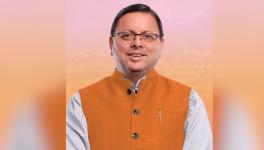
Chief Minister Pushkar Singh Dhami, inaugurating the Uttarakhand State Minority Education Authority on July 1, said that ‘Devbhoomi’ (Abode of Gods) Uttarakhand had taken a lead in minority education to provide quality, modern, and cultured education to all sections of society.
But there is widespread fear that the same template would be adopted by other BJP-ruled states to abolish the madrassa education system in their respective states in the coming days and years. This would be on the lines of the Uniform Civil Code (UCC), which was first implemented by Uttarakhand and later adopted by Gujarat, Assam and now West Bengal.
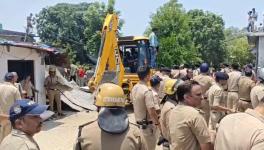
Dhami is the ‘poster boy’ of the RSS Hindutva brigade and pioneered in inventing several forms of ‘jehads” starting with ‘land jehad’, ‘love jehad’, ‘mazaar jehad’, ‘thook jehad’ and ‘nakal jehad’. The Muslim community here believes he has personally led a ‘jehad’ against “madrassas, mazars and masjids” in the state in the past five years. Vilifying the madrassas for spreading bigotry and Islamic fundamentalism, the Dhami government has closed more than 200 madrassas and bulldozed more than 600 mazaars through the state.
The mazaars (shrines) have been demolished on grounds of being illegal and “encroaching” on government land. However, there is no account of Hindu temples and shrines on government and forest land meeting the same fate. Several mosques in the state have also been closed on one pretext or another. While aggressive Hindutva groups have been targeting Muslims almost on a daily basis on some pretext or other, the state BJP has adopted a legal method to target the community.
The Muslim community, which is at the receiving end of ire of ‘Sangh Parivar’ led by Dhami, believes that the new legislation is aimed at targeting Muslim ‘madrassas’ as part of the vilification of the community. They are of the opinion that the new law is a clear violation of constitutional guarantee to the minorities to run and manage their educational institutions.
“We have approached the Nainital High Court and are hoping and awaiting a fair judgement to seek our constitutional rights,” Fazlur Rehman, spokesman of the Jamiat, told this writer. The Jamait is already fighting legal cases against UCC and sealing of madrassas.
As per the new law, the Uttarakhand Madrasa Education Board Act 2016 and the Uttarakhand Non-Government Arabic and Persian Madrasa Recognition Rules 2019, stand repealed from July 1, 2026. As per the new legislation, the Uttarakhand State Minority Education Authority will be established to grant minority educational institution status. Any educational institution established by the Muslim, Christian, Sikh, Buddhist, Jain, or Parsi community will be required to obtain recognition from the authority to qualify for minority educational institution status.
Hafiz Shanazar, a spokesperson of the Uttarakhand unit of Jamait-e-Ulema-e-Hind said that the law was part of the strategy to target Muslims and their educational Institutions. “The law is aimed at hitting the Muslims and ‘madrassas’ as part of a vilification campaign by BJP,” he said.
The law proposes that the proposed Authority will ensure that education is imparted in accordance with the standards set by the Board of School Education, Uttarakhand.
There are 465 madrassas in Uttarakhand that are affiliated with the Madrassa Board. Nearly a hundred madrassas are also affiliated with the education department running regular classes along with religious education of Quran and Urdu.
Interestingly, most of the madrassas were running schools and teaching NCERT books but Chief Minister Dhami and the pliant media have been giving an impression that madrassas are imparting ‘objectionable’ education that needed to be brought under control and streamlined.
“Apart from teaching the Holy Quran, we are having regular classes up to class 12 affiliated with Uttarakhand Education Board having NCERT books,” said Maulana Sharfat who is running a ‘madrassa’ in Jeewangarh area near Vikasnagar town of Dehradun district.
“There are few ‘madrassas’ which impart purely religious education and these are affiliated with Darul Uloom, Deoband. The repeal of the Uttarakhand Non-Government Arabic and Persian Madrasa Recognition Rules 2019 is also a big blow for education of Arabic and Persian languages in the state,” claimed Hafiz Shahnazar.
Muslims form the biggest minority group in the state with 13.95% of the population, as per state government data, followed by Sikhs with 2.34%, as per the 2011 census. Christians are 0.37%, Buddhists - 0.15% and Jains-0.09% of the total population.
But, surprisingly, except Muslims, none of the minority communities having large educational institutions have raised a voice against the law yet. Apparently, the other minorities are presuming that the new law is aimed at targeting Muslims and ‘madrassas’ only.
The new law said that the proposed Authority will ensure that education is imparted in accordance with the standards set by the Board of School Education, Uttarakhand. A simple understanding says that all minority-run educational institutions would have to adhere to the Board of School Education, Uttarakhand.
In Dehradun and Mussoorie, there are old Christian missionary educational institutions which are affiliated to a different board like ICSE, CBSE and even International Baccalaureate. Will all these schools be asked to adhere to the Uttarakhand School Board curriculum like ‘madrassas’?
Children of most ministers, bureaucrats and business persons are studying at these Christia- run schools. “Will the BJP government dare to implement its ‘agenda’ in these schools?” said Hafiz Shah Nazar.
Another interesting aspect of the new Authority, as explained by the Secretary, Minority Welfare, Parag Madhukar Dhakate, was that the minorities would be free to impart religious education but with a rider. The first half of the day would be devoted to general studies like Maths, Science, English, Hindi and Social Sciences while the students would be free to get lessons in religious studies. Meaning thereby that after studying for six hours, the students of madrassas would again study for six hours. Nobody dared to ask him if it was humanly possible for young students to study for so long in a day?
“The madrassas under Madrassa Board were teaching general subjects along with religious education but it was propaganda by RSS-BJP that ‘anti-national’ things were being taught,” said Khurshed Ahmed Siddiqui, a social worker of Dehradun.
Another aspect that has further worried the Muslim community is a clause in the Uttarakhand State Minority Authority Act that no educational institution would force it’s students to indulge in any religious activity. “This clearly shows that Muslims would not adhere to their religious practices in madrassas any more. The madrassas are training young Muslims to teach Islam and its basic tenets, which includes ‘namaz’ (prayers) and ‘roza’ (fasting). So now onward, Muslims students would not offer prayers in their madrassas, as most of these have mosques attached. They would not be allowed to wear skull caps,” said Maulana Sharafat of Jeewangarh Madrassa in Vikasnagar tehsil of Dehradun.
The ‘madrassas’ affiliated with the Madrassa Board used to get some benefits under Central government schemes started by the Manmohan Singh government, which were since stopped after the advent of the BJP government in 2017 in the state.
The first scheme was to give money for infrastructure development by the Union government. However, none of the ‘madrassas’ in Uttarakhand was given money on this count. The second scheme relates to providing grant to teachers by the Central government. A B.Ed teacher was to get Rs.12,000 and a graduate teacher Rs.6,000 per month as honorarium to improve the standard of ‘madrassa’ education and encourage them to teach English, Science and Mathematics. The amount was not salary but was to be paid once in a year. The honorarium of 565 such teachers from 187 ‘madrassas’ has not been paid since 2017 and the Central government scheme was stopped and renamed.
The Uttarakhand BJP government has been targeting madrassas for the past several years. In line with this, Principal Secretary of the Minority Welfare Department, L Fanai, in a letter dated December 23. 2024, had ordered all District Magistrates to constitute a high-level investigation committee to investigate the madrasas running without registration.
The writer is a senior freelance journalist based in Dehradun, Uttarakhand. The views are personal.
Get the latest reports & analysis with people's perspective on Protests, movements & deep analytical videos, discussions of the current affairs in your Telegram app. Subscribe to NewsClick's Telegram channel & get Real-Time updates on stories, as they get published on our website.