





Asha Bhosle’s Feminist Legacy: A Voice That Refused to Be Contained
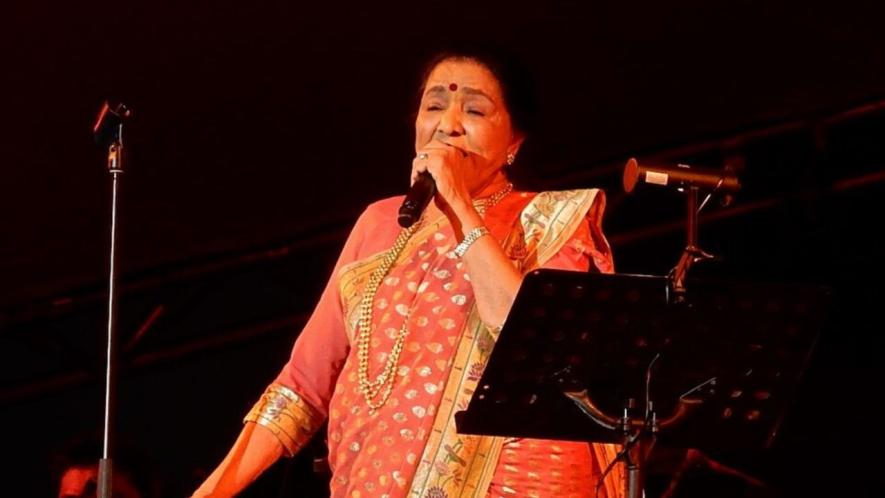
Image Courtesy: Wikimedia Commons
Few voices in the long, male-dominated history of Hindi cinema music have traveled as far—or as definitely—as Asha Bhosle's. Her tale is placed secondary to that of her sister’s, Lata Mangeshkar. However, this framing obscures a far more radical truth: Asha Bhosle did not make a position by herself in the Indian music industry; she also transformed its emotional and cultural lexicon in ways that are highly important to feminist discourse today.
Breaking the Respectability Politics
Post-Independence women’s voices in Hindi cinema were frequently limited to specific archetypes: the virtuous heroine, the suffering wife, and the loyal lover. Asha Bhosle challenged the sonic morality. Her collaborations with music composers O.P. Nayyar and later R.D. Burman established her as the voice of the woman who was fun, sensual, aggressive, and unabashedly visible.
Songs like “Aiyee Maherban” and “Piya Tu Ab to Aja” did more than just entertain; they challenged the notion that women's desires must be hidden or coded. At a time when “good femininity” was associated with restraint, Asha’s voice validated emotions of flirtation, longing, and physical presence. In doing so, she criticised what feminist scholars refer to as “respectability politics"—the belief that women must conform to moral norms in order to be socially accepted.
Owning Reinvention in a Male Industry
Asha Bhosle's career is a lesson in survival and reinvention. Despite entering the industry at a young age, enduring early personal hardships, and being labeled as a “second-tier vocalist," she continued to adapt, moving across genres from cabaret to ghazals to pop and classical.
Her desire to experiment distinguishes her. While many female artistes were supposed to present a single, “pure” image, Asha encouraged diversity. Music composer Khayyam’s album Umrao Jaan (1981) demonstrated her ability to embody delicate lyrical expression, while her collaboration with R.D. Burman introduced Western influences and powerful vocal textures to popular Hindi music. This reluctance to be confined into a single identity is strongly aligned with feminist ideals of agency—the right to identify oneself outside socially imposed identities. Asha Bhosle didn’t ask for legitimacy; she created it on her own terms.
Politics of Voice and Labour
In India, playback singing has historically neglected female artistes, leaving them as unseen contributors to onscreen femininity. This difference is made clear by her huge body of work, which includes more than 12,000 songs in many languages. She was everywhere, but stories written and acted by men often left her out.
She still dealt with this difference in a smart way. She worked with new composers and sang strange songs, which opened up new possibilities for what female playback singers could do. Her career becomes an essential case study in feminist labour politics, demonstrating how women negotiate visibility, authorship, and recognition within industries that often marginalise them.
Desire, Age, and Rebellion
Asha’s relationship with age may be one of the radical parts of her legacy. She kept performing, recording, and reinventing herself well into her late years. Her world tours, partnerships, and even business ventures go against the idea that women should become less important over time.
This act of defiance goes against both ageist and patriarchal stories at the same time. Asha's continued presence brings up an important feminist question: who is allowed to keep power, visibility, and desirability in public culture? Also, her ongoing success makes people worry about how little time women have to work in the entertainment industry. Men are often allowed to grow into respect and authority, but women are told to leave or fit in. Asha doesn't like this imbalance. She takes up space without fear, reminding people that creativity is not based on age, but on being present and open to new ideas.
Because of her legacy, a broader feminist question needs to be asked: who gets to stay important, wanted, and powerful over time? Who is being erased without saying anything? Asha Bhosle does more than just keep her career going by refusing to be erased; she also redefines longevity as a form of rebellion.
Rewriting the Memory of Culture
People often think of Asha Bhosle's legacy as "timeless hits," but it should be seen as a place of resistance and change. When we look at her work again through a feminist lens, we see how cultural production can be political.
Most people didn't want to hear the stories her voice told. It blurred the lines between the "good woman" and the "bad woman," between classical and popular, and between old and new. It did this by making Indian pop culture more welcoming to women of all kinds.
Conclusion
A fair ending to Asha Bhosle's story must go beyond celebration to show how her career was changed in a big way. Asha Bhosle didn't just give female playback singers more songs to sing; she also changed how people thought about what a woman's voice could mean in popular culture. Asha's voice was full of contradictions, risks, and many different sounds, which is different from Lata Mangeshkar's voice, which was often thought to be pure. It laughed, seduced, cried, and fought back without asking for permission.
Her work with R. D. Burman and other people were both musical and cultural. They made sound spaces where women could be open and honest without being judged or limited. This wasn't an accident; it was a shift in how people listened that taught them to see women as complex people instead of just symbols.
Asha Bhosle's legacy serves as a reminder that feminist resistance does not always present itself in explicit political contexts. It can be in the way it sounds, feels, or lasts. It is in the refusal to disappear, the insistence on reinventing oneself, and the quiet disruption of standards that seem too ingrained to question. Her work shows how women move through systems that don't fully support them—not by following the rules, but by pushing them until they move.
The writer is a columnist and climate researcher with experience in political analysis, ESG research, and energy policy. The views are personal.
Get the latest reports & analysis with people's perspective on Protests, movements & deep analytical videos, discussions of the current affairs in your Telegram app. Subscribe to NewsClick's Telegram channel & get Real-Time updates on stories, as they get published on our website.