






Are Hospitals Becoming Humanless Factories?
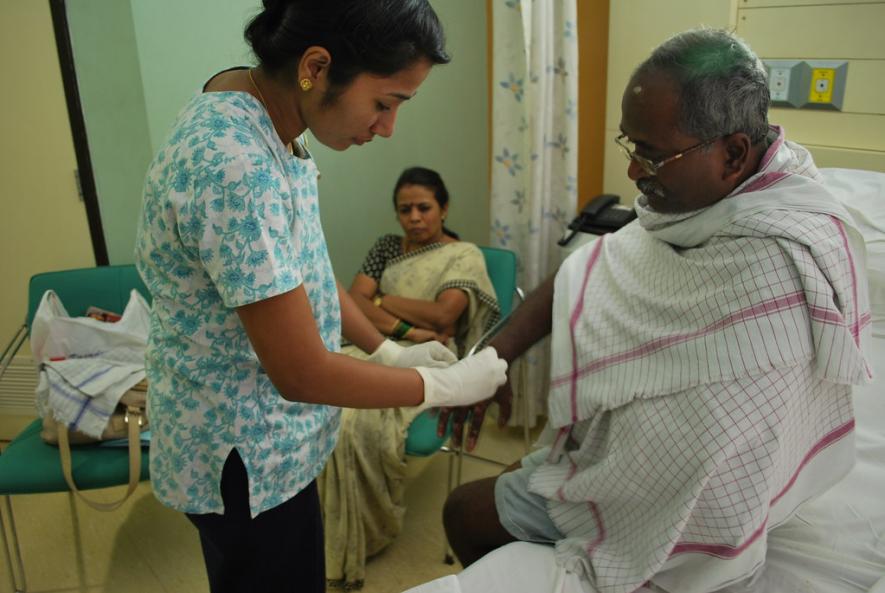
Representational image, Image Courtesy: Flickr
A quiet fear now follows millions of families in hospitals across the world. The fear is not just about disease, infection, or rising medical bills. It is the feeling that elderly patients are slowly becoming “cases” to process instead of human beings to care for.
A powerful warning published in the world's leading medical magazine, The BMJ, says modern healthcare may be losing its “human, moral, and relational foundations” even as medical technology reaches historic heights. The report, written by healthcare experts Don Berwick, Maureen Bisognano, and Bob Klaber, argues that hospitals today have extraordinary machines, precise scans, artificial intelligence tools, and advanced drugs; yet patients increasingly feel lonely, rushed, and emotionally abandoned.
In many hospitals, the scene has become painfully familiar. Doctors type into computer screens while elderly patients sit quietly on examination beds. Nurses move rapidly between overcrowded wards after exhausting double shifts. Long corridors echo with monitor alarms, paperwork and time pressure. The system is becoming efficient, the experts say, but less human.
The authors describe a dangerous imbalance between what they call a “rational” healthcare culture — focused heavily on targets, numbers, efficiency and standardised systems — and a “relational” culture built around kindness, listening, emotional connection and trust.
“The core problem,” the authors wrote, “is that we have accumulated extraordinary technical power while quietly losing the human, moral, and relational foundations of care on which its effectiveness ultimately depends.”
The warning comes at a time when healthcare systems worldwide are facing burnout, staff shortages and growing public frustration. According to research cited in the article, hospitals where workers feel respected, emotionally safe and valued often record lower patient death rates. Studies linked to Britain’s National Health Service found that supportive workplace cultures directly improve patient outcomes.
The report also points to findings from the Institute for Healthcare Improvement showing that “joy in work” is not a soft emotional slogan but a measurable healthcare factor. When doctors and nurses feel heard, protected and connected to purpose, hospitals perform better and staff are less likely to quit.
Experts say many healthcare workers are now suffering from what is known as “moral distress” — the painful feeling of knowing how to care properly for patients but not having enough time, support or freedom to do it. In simple terms, many doctors and nurses feel the system no longer allows them to be fully human.
The article highlights the growing global “What Matters to You?” movement, inspired by an earlier piece in the New England Journal of Medicine. Instead of only asking elderly patients, “What is wrong with you? Healthcare workers are encouraged to ask, “What matters to you?” The shift may sound small, but experts say it changes medicine from mechanical treatment into personal care shaped around the patient’s actual life, fears and dignity.
The authors insist that compassion is not separate from science. Kindness, eye contact, empathy and human conversation can improve recovery, strengthen teamwork and even help save lives. “The evidence is clear,” they wrote. “Patients do better and staff thrive when healthcare systems invest in joy, kindness, and compassionate leadership.”
They warned that healthcare does not need to wait for massive policy reforms before changing course. Every ward round, consultation and conversation, they argued, remains an opportunity to restore humanity inside modern medicine before hospitals become places filled with advanced technology but empty of emotional care.
The writer is a Delhi-based freelancer who writes on health issues and medical discoveries.
Get the latest reports & analysis with people's perspective on Protests, movements & deep analytical videos, discussions of the current affairs in your Telegram app. Subscribe to NewsClick's Telegram channel & get Real-Time updates on stories, as they get published on our website.