





Ambedkar Beyond Symbolism: A Warning India Still Ignores
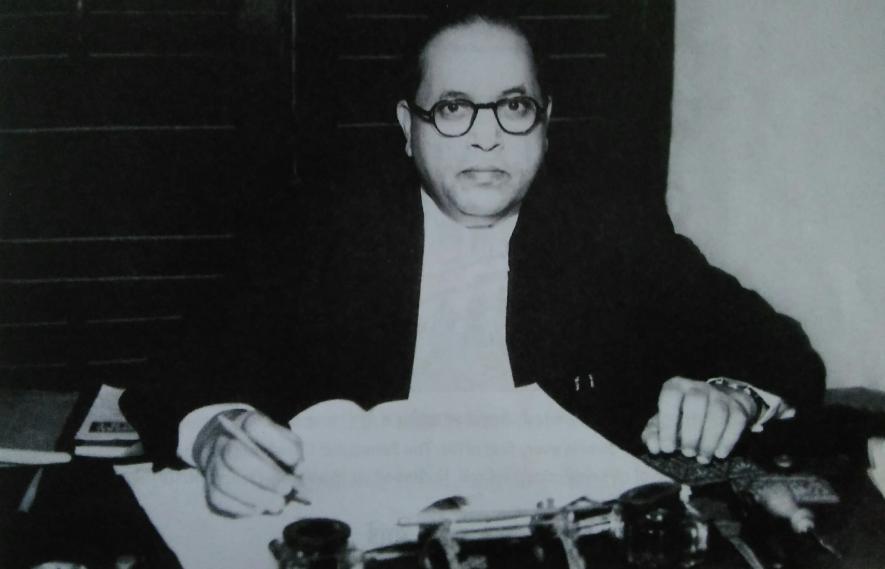
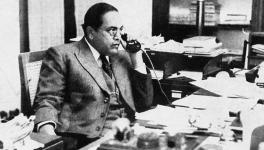
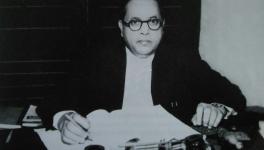
Dr Babasaheb Ambedkar. Image Courtesy: Wikimedia Commons
Every year, India celebrates B. R. Ambedkar with flowers, speeches, and slogans.
Every year, it forgets what he actually demanded.
Born in 1891 into a marginalised Mahar family, Ambedkar rose to become the chief architect of the Indian Constitution. He earned doctorates from Columbia University and the London School of Economics. He led the drafting of our Constitution that promised equality, liberty, and dignity. Yet, his life’s work was not about symbolism. It was about dismantling caste and building a society based on justice.
The central argument is clear. Ambedkar is widely celebrated but poorly followed. India remembers his image but resists his ideas.
The data exposes this gap. According to the National Crime Records Bureau (NCRB), more than 50,000 cases of crimes against Scheduled Castes (SCs) were registered in 2022 alone. Despite legal bans, manual scavenging persists, with official surveys continuing to identify thousands engaged in the practice. Reports by the Ministry of Social Justice and independent studies show that caste-based exclusion still affects housing, employment, and education. These are not isolated failures. They reflect a structural problem that Ambedkar warned about decades ago.
Ambedkar’s warning was precise. Political democracy cannot survive without social democracy. He argued that equality in law means little if inequality dominates society. Today, India has universal adult franchise and regular elections. But social hierarchies still shape opportunity and dignity.
A recent example makes this reality clear. In 2023, a Dalit student, Darshan Solanki, died by suicide at IIT Bombay. His family alleged caste-based discrimination. Investigations and protests that followed raised serious questions about exclusion within elite institutions. This was not an isolated tragedy. It exposed how caste operates even in spaces that claim merit and equality.
Second, consider the persistence of caste violence. Cases of assaults over inter-caste marriages, land disputes, and access to public spaces continue to be reported across states. The NCRB consistently records thousands of such incidents each year. These are not remnants of the past. These are part of the present.
Third, examine economic inequality. Data from the Periodic Labour Force Survey shows that SCs remain overrepresented in informal and low paying work. Land ownership remains uneven. Access to credit and upward mobility is limited. Ambedkar argued that without economic power, social equality would remain hollow. That insight still holds.
Ambedkar also offered solutions. He pushed for reservations in education and employment to correct historical injustice. He emphasised constitutional morality, the idea that institutions must act on principle, not prejudice. He called for annihilation of caste, not its adjustment.
His actions reflected this clarity. During the Mahad Satyagraha of 1927, he led thousands to assert their right to access public water. This was a direct challenge to caste exclusion. In 1956, he embraced Buddhism along with hundreds of thousands of followers, rejecting a system he believed denied dignity.
There is a counter view. Some argue that India has already moved beyond caste. They point to legal safeguards, reservations, and increased representation of marginalised groups in politics and administration. This argument has some merit. Progress has occurred.
But progress is not complete. Legal equality does not erase social reality. If discrimination persists in institutions, if violence continues in villages and cities, then the problem remains. Ambedkar never claimed that laws alone would solve inequality. He warned that society must transform its mindset.
This gap between law and lived experience is the core issue. India has a progressive constitutional framework. Yet its implementation is uneven. Ambedkar described this as a life of contradictions, where political equality coexists with social and economic inequality. That contradiction continues.
Ambedkar Jayanti should not be reduced to ritual. It should be a moment of reflection and accountability. His ideas demand action, not admiration.
The path forward is clear. Enforce laws against caste discrimination strictly. Improve access to quality education for marginalised communities. Expand economic opportunities through targeted policies. Promote social reform through education and public engagement. Most importantly, challenge caste in everyday life, not just in public speeches.
Ambedkar’s relevance lies in his honesty. He did not offer comfort. He offered a challenge.
The takeaway is direct. Celebrating Ambedkar without implementing his ideas is empty. India does not need more symbolism. It needs to act on his vision of equality and dignity. Only then will his legacy move from memory to reality.
The writer is a researcher in South Asian history. He writes on the Socio-political & Cultural history of Kashmir with special focus on the history of the Ahmadiyya community. The views are personal. Shabeerhistory18@gmail.com
Get the latest reports & analysis with people's perspective on Protests, movements & deep analytical videos, discussions of the current affairs in your Telegram app. Subscribe to NewsClick's Telegram channel & get Real-Time updates on stories, as they get published on our website.